






The Rule on the Books
The Government of India has clarified its position on the environmental regulation of the country's booming AI and data center industry. In a statement to Parliament, the Ministry of Environment, Forest and Climate Change (MoEFCC) stated that AI data centers
do not, by themselves, require a standalone environmental clearance (EC). However, this doesn't mean they get a free pass. The ministry specified that prior environmental clearance is indeed mandatory if a data center is part of a larger building and construction project with a built-up area exceeding 20,000 square metres. The same applies if it's part of a township project covering over 50 hectares or with a built-up area of 1,50,000 square metres or more. In these instances, the project is treated like any other large construction project under the existing Environmental Impact Assessment (EIA) Notification of 2006, with clearance granted by the respective State Environment Impact Assessment Authority (SEIAA).
The Hidden Cost of Cloud Computing
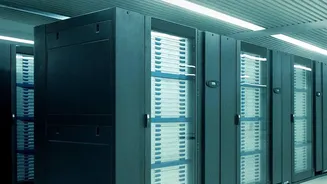
The push for clearer regulations stems from the immense and often invisible environmental footprint of data centers. These facilities are the backbone of the digital economy, but they are incredibly resource-intensive. They require vast amounts of electricity to power servers and, critically, enormous quantities of water for cooling. Projections show India’s data center capacity is skyrocketing, from 375 MW in 2020 to an estimated 1,575 MW currently. This growth carries a significant environmental price. According to one UN report, the water footprint from data centers' electricity consumption in 2025 was estimated at 4.5 trillion litres. This is a staggering figure, especially as many data centers are planned in regions already facing water stress. Furthermore, the constant 24/7 operation generates noise and requires significant land, sometimes in ecologically sensitive areas. This has sparked protests in communities from Visakhapatnam to Thane, where citizens are raising concerns about the strain on local water, power, and land resources.
A Balancing Act for a Digital Superpower
This regulatory stance places India at a crucial intersection of policy. On one hand, the government is aggressively promoting the nation as a global hub for AI and data infrastructure, offering incentives and tax holidays to attract investment. The national ambition is clear: to have the digital economy contribute 20% of the GDP by 2030. On the other hand, the government is signalling that this growth cannot be unchecked. By applying existing EIA norms, the MoEFCC is ensuring that factors like freshwater availability, water recycling plans, and overall environmental impact are assessed before large projects get the green light. This approach avoids creating a separate, potentially cumbersome, AI-specific regulatory framework while still holding large-scale developments accountable. It reflects a maturing understanding that sustainable practices must be integrated into the tech boom from the ground up, not as an afterthought.
Industry Impact and the Path Forward
For the tech industry, this clarification provides a degree of certainty. Instead of navigating a brand-new set of rules, companies can operate within the established EIA framework for construction projects. However, it puts the onus on them to meticulously plan for environmental compliance, especially concerning water management and energy efficiency. Environmentalists have argued that classifying data centers merely as 'buildings' understates their industrial-scale impact and have called for them to be treated as a distinct category requiring more rigorous public consultation. The government's current position is a middle ground. While there is no separate category for data centers yet, existing laws like the Water Act and Air Act, along with Bureau of Energy Efficiency guidelines, provide a framework for regulation. A working group has also been set up to further examine energy efficiency and water management in AI infrastructure, suggesting that the conversation around this topic is far from over.