




The Full Mission Profile
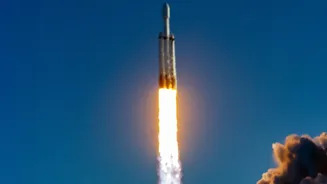
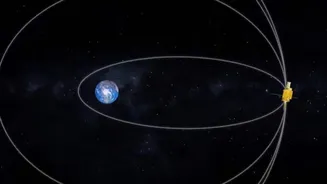
The primary goal of the first uncrewed flight, designated G1, is to simulate a complete human spaceflight mission from start to finish. This involves launching the Gaganyaan spacecraft into a low Earth orbit of around 400 kilometres, having it circle
the Earth, and then bringing it back for a safe splashdown in the sea. Every phase—the powerful ascent, the performance of the spacecraft in orbit, the fiery re-entry through the atmosphere, and the final recovery—is a test in itself. ISRO will monitor thousands of data points to ensure the vehicle behaves exactly as designed. This end-to-end demonstration is essential to verify that all systems work together seamlessly before a crew is placed on board.
The 'Human-Rated' Launch Vehicle
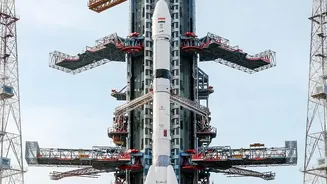
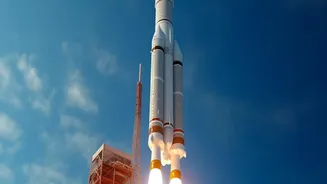
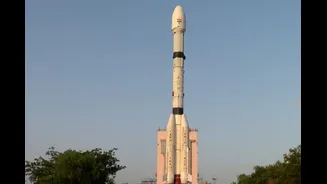
Not just any rocket can carry humans. The Gaganyaan mission will use a specially modified version of ISRO's most powerful rocket, the LVM3, which has been 'human-rated'. This means it includes extra safety and redundancy features not present in satellite launch vehicles. The uncrewed mission will be the ultimate test for this upgraded rocket, referred to as the HLVM3. Its performance, stability, and the vibrations it generates will be closely watched. Astronaut safety begins on the launchpad, and this flight must prove that the HLVM3 provides a ride that is not only powerful enough to reach orbit but also safe and stable enough for a human crew. All three stages of the rocket have been prepared and integrated for this crucial test.
Life Support and Environmental Control
Even without astronauts, the G1 mission will test the systems designed to keep them alive. The spacecraft will carry an unpressurised version of the Environmental Control and Life Support System (ECLSS). This system is responsible for maintaining the correct atmosphere, temperature, and pressure inside the crew module. To simulate the presence of a human crew, the mission will fly with a humanoid robot named Vyommitra. This 'female-looking space-faring humanoid robot' will mimic certain astronaut functions and provide valuable data on how the life support systems perform in the harsh environment of space, measuring factors like cabin acoustics and vibration levels.
The Critical Crew Escape System
What happens if the rocket fails during launch? The most critical safety feature tested ahead of the uncrewed flight is the Crew Escape System (CES). This is a rocket-powered tower mounted on top of the crew module, designed to pull the astronauts safely away from a malfunctioning launch vehicle in a split second. In a series of precursor missions known as Test Vehicle Abort Missions (TV-D1, TV-D2), ISRO has been validating the CES under different flight conditions, from the launch pad to high-altitude aborts. The G1 mission represents the full, integrated test of this system's jettison sequence as part of a normal ascent profile, ensuring it separates cleanly when no longer needed.
Re-entry and Recovery
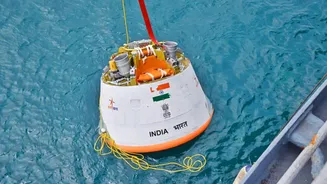
Getting to orbit is only half the journey. The G1 mission will rigorously test the capsule's ability to survive a blazing re-entry and land safely. After the service module separates, the crew module will hit the atmosphere at high speed, protected by a specially designed thermal protection system, or heat shield. A complex sequence of ten parachutes—including drogue chutes to provide initial stability and three large main parachutes—will then deploy to slow the capsule's descent. Finally, the capsule is designed to splash down in the Indian sea. Tests have been conducted to ensure the capsule can right itself if it lands upside down, and recovery teams from the Indian Navy have been training to retrieve the module quickly and safely.