




A Rusty Timeline in the Rocks
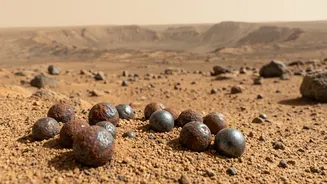
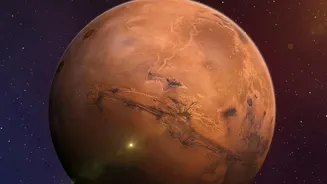
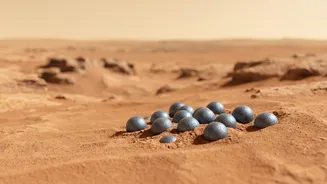
Scientists believe they have found a way to time the great drying of Mars, and the key is surprisingly common: rust. A new study focuses on hematite, a form of iron oxide that gives the Red Planet much of its color. This mineral forms when iron reacts
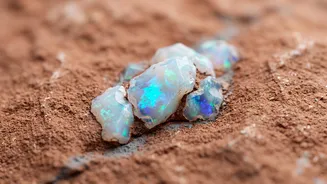
with water, serving as a clear sign of a wetter past. But the latest research reveals something more. The tiny crystals that make up hematite grow to different sizes depending on how warm the water was and, crucially, how long it lasted. This means hematite isn't just a sign that water once existed; it's a potential stopwatch, preserving a record of the duration of wet conditions in the planet's ancient history. By analyzing the crystal size, scientists can effectively read a timeline left behind in the rock, telling them whether water was a fleeting presence or a long-lasting feature in a particular area.
Curiosity's Climb Through History
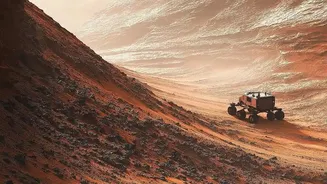
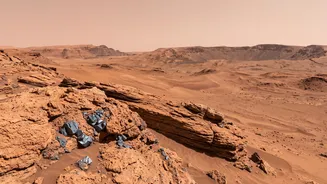
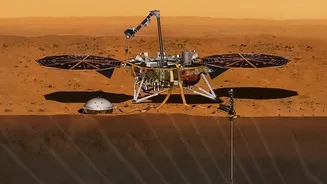
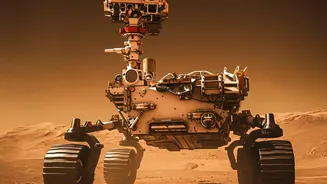
The discovery was made possible by NASA's long-serving Curiosity rover, which has been methodically climbing the 5-kilometer-tall Mount Sharp in Gale Crater since 2014. This mountain is a geological layer cake, with the oldest rock layers at the bottom and younger ones on top. This provides scientists with a physical record of Mars' environmental evolution. As Curiosity drills samples at different elevations, it is effectively traveling through Martian history. The rover's onboard Chemistry and Mineralogy instrument, known as CheMin, analyzes these powdered rock samples by firing X-rays at them. This technique allows scientists on Earth to measure the precise size of the hematite crystals within each sample, building a granular history of the water's retreat, layer by ancient layer. The team behind the study analyzed 20 different samples taken from various depths, creating one of the most detailed climate records yet.
A Gradual Goodbye to Water
The initial findings from this mineral clock are already refining our understanding of Mars's transformation. Instead of drying out all at once in a single, catastrophic event, the evidence suggests the process was far more gradual. The planet appears to have experienced a slow transition, with pockets of warmth and moisture potentially lingering underground long after the surface had turned cold and arid. This paints a picture of a planet with a complex and drawn-out climate shift, where habitable conditions may have persisted in localized refuges. Previous findings by Curiosity, such as ancient ripple patterns left by waves in a long-gone lake, had already confirmed the presence of water, but this new method provides a way to quantify its persistence. It transforms the question from if there was water to for how long.
The Search for Ancient Neighbors
Ultimately, the ability to create a detailed timeline for water on Mars is critical for one of NASA's primary goals: the search for life. For life as we know it to emerge, it needs a stable environment with liquid water for an extended period. This new hematite clock gives scientists a powerful tool to identify locations that may have remained wet for hundreds of thousands or even millions of years. These areas would be the most promising targets in the search for biosignatures, which are the fossilized chemical or structural traces of past life. While this discovery does not prove life ever existed on Mars, it provides a roadmap for finding where it might have had the best chance. By understanding how long the water was around, we can better focus our search for any ancient neighbors.