



What Happened on Flight 15?
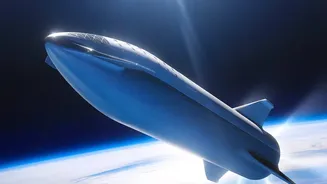
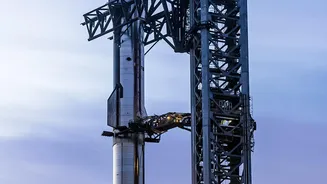
On November 14, 2026, after spending nearly 23 hours in orbit, the Starship upper stage, known as Ship 42, successfully re-entered Earth's atmosphere and navigated its way back to the Starbase launch site in Texas. In the mission's final moments, it was
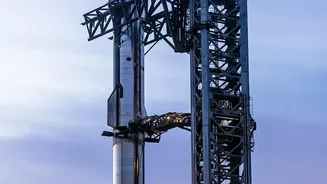
caught by the launch tower's massive mechanical arms, nicknamed 'Mechazilla' or the 'chopsticks'. This was the first time an orbital upper stage had ever been recovered this way. The mission wasn't a complete success, however. The plan for Flight 15 was to catch both the Starship and its Super Heavy booster, but the booster experienced an issue on its return. A low-fuel alarm triggered an automated abort, causing it to divert for a splashdown in the Gulf of Mexico where it was destroyed.
The Fiery Ballet of a Tower Catch
Catching a skyscraper-sized rocket falling from the sky is a feat of immense engineering precision. After deorbiting, the Starship vehicle plummets 'belly-first' to use atmospheric drag for initial braking, surviving searing reentry temperatures. As it nears the tower, it executes a complex 'flip-and-burn' maneuver, firing three of its Raptor engines to swing into a vertical position. It then uses its engines to hover, carefully positioning itself between the two waiting arms of the launch tower. The arms then close and grip the ship on reinforced 'catch fittings' located just below the forward flaps. Only after the tower registers a secure hold does the ship's final engine shut down, leaving it suspended securely.
Why This Catch Is a Game-Changer
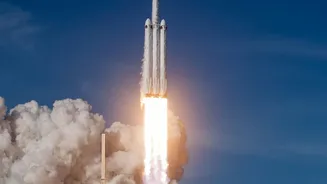
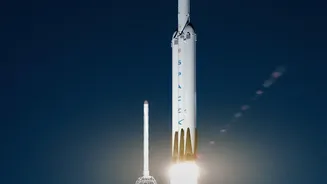
The successful catch of the Starship upper stage is being called 'the holy grail of spaceflight' because it is the key to making a launch system fully and rapidly reusable. While SpaceX has been landing its Falcon 9 boosters for years, the upper stages of those rockets are expended on each mission. Reusing both the booster and the ship drastically cuts the cost of getting to orbit. By catching the vehicles directly on the launch tower, SpaceX eliminates the need for heavy landing legs on the rocket itself, saving weight that can be used for payload. It also removes the complex, time-consuming process of retrieving rockets from the ocean, enabling a much faster turnaround for the next launch. This high launch cadence is essential for SpaceX's ambitious goals, including building its Starlink internet constellation and, eventually, a city on Mars.
From Partial Success to Full Reusability
While SpaceX has previously caught Super Heavy boosters on three separate occasions, Flight 15 was the first attempt at catching the Starship upper stage, which is considered a more difficult challenge because it returns from a much higher altitude and speed. The failure to recover the booster on this flight highlights the remaining challenges. The company is investigating why the new 'Block 3' booster, powered by updated Raptor 3 engines, underperformed and triggered the landing abort. Achieving the 'double catch' of both stages on a single mission remains the ultimate objective. Proving that both the booster and the ship can be caught, inspected, and reflown quickly is the next major hurdle. Mastering this will be the true test of whether Starship can deliver on its promise to revolutionize access to space.