



A Lake Above the Clouds
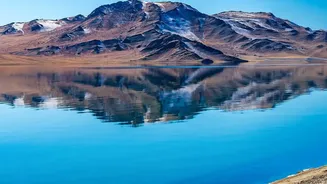
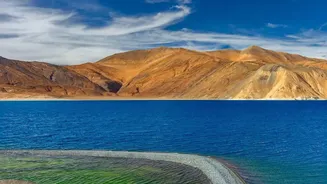
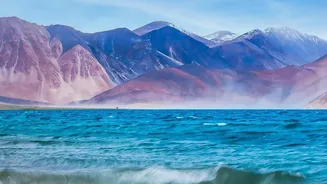
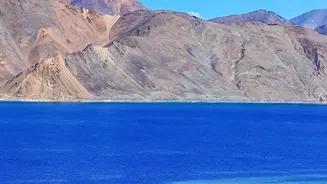
Tso Moriri, or 'Mountain Lake', sits at a staggering altitude of over 14,800 feet (about 4,522 metres). It is the largest high-altitude lake entirely within India and is a designated Ramsar site, signifying its importance as a protected wetland. This
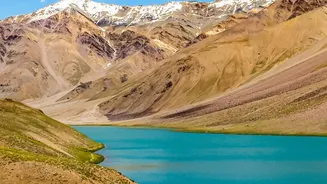
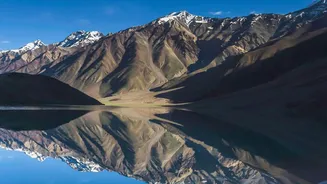
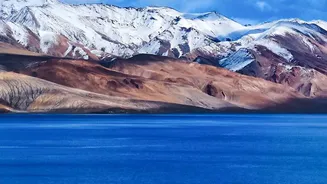
protection means no construction or camping is allowed on its immediate banks, preserving its pristine environment. The lake's crystal-clear water, fed by springs and snowmelt, reflects the surrounding barren mountains and the vast sky, changing its shades of blue throughout the day. Its remote location and protected status make it a haven for tranquillity and natural beauty.
Planning Your Journey
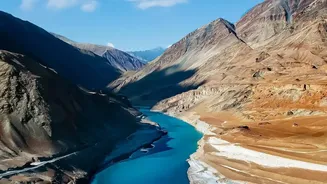
The most common starting point for a trip to Tso Moriri is Leh, located approximately 220-250 kilometres away. The drive itself is an adventure, taking about six to eight hours through some of Ladakh’s most dramatic landscapes. The preferred route from Leh passes through Upshi and Chumathang, which is known for its hot springs. While the main roads are generally accessible, especially during the tourist season, be prepared for some rough patches. It is crucial to start your journey early in the day to reach your destination before nightfall. Taxis and rental bikes are readily available in Leh for the trip.
Permits and Acclimatisation
Visiting Tso Moriri requires an Inner Line Permit (ILP) for Indian citizens, as it is located in a sensitive border region. This permit can be obtained online through the official Leh district administration website or offline at the Deputy Commissioner's (DC) office in Leh. You will need to carry a valid government-issued photo ID and several photocopies of your permit to submit at various checkpoints along the route. More importantly, proper acclimatisation is non-negotiable. Due to the extreme altitude, it's strongly recommended to spend at least two to three days in Leh (which is at a lower altitude) before travelling to Tso Moriri to prevent Acute Mountain Sickness (AMS).
The Best Time to Visit
The ideal window to experience Tso Moriri is during the summer months, from mid-May to September. During this period, the weather is pleasant, with daytime temperatures ranging from 20°C to 25°C, and the lake is a stunning spectacle of blue hues. This is also when most accommodations are open and the roads are clear. Monsoon season (July to August) has minimal rainfall in this high-altitude desert, making it another good time to visit. Winters, from October to April, are extremely harsh, with temperatures plummeting well below freezing, causing the lake to freeze over completely and most facilities to shut down.
Where to Stay and What to Expect
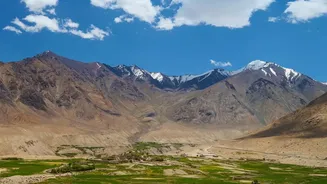
Accommodation is primarily available in and around Korzok, the only village on the lake's shore and one of the highest permanent settlements in India. Options are limited to guesthouses, homestays, and fixed tented camps; there are no luxury hotels. Popular choices include family-run homestays that offer an authentic cultural experience and pre-booked tented camps that provide basic comforts. Electricity is typically available for only a few hours in the evening via generators, and mobile connectivity is almost non-existent, so be prepared to disconnect. It's wise to book your stay well in advance, especially during the peak season.
Wildlife, Culture, and Stargazing
The Tso Moriri area is part of the Changthang Wildlife Sanctuary, offering remarkable opportunities for wildlife spotting. The lake is a crucial breeding ground for a variety of birds, including the rare black-necked crane and bar-headed geese. The surrounding terrain is home to Himalayan marmots, blue sheep (bharal), and the Tibetan wild ass (kiang). You can also visit the 400-year-old Korzok Monastery, which overlooks the lake and offers a glimpse into the lives of the local Changpa nomads. With minimal light pollution, the night sky at Tso Moriri is a spectacular canvas for stargazing, where the Milky Way is often visible to the naked eye.