


A Flawless Lift-off From Sriharikota
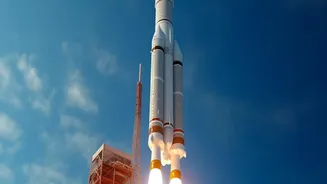
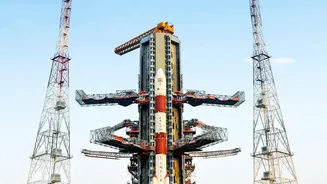
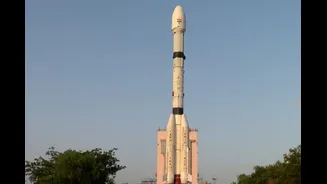
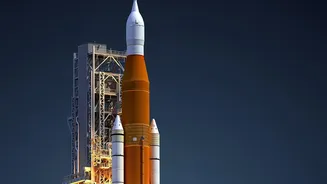
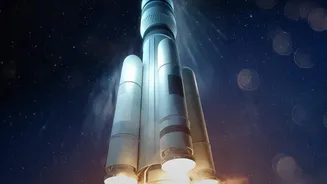
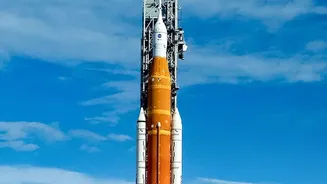
The mission began with a picture-perfect launch from the Satish Dhawan Space Centre. The massive, 51.7-metre-tall GSLV-F17 rocket ignited its engines, generating immense thrust to overcome Earth's gravity. This initial phase is crucial, as the rocket,
weighing over 420 tonnes, must ascend smoothly through the densest part of the atmosphere. The first stage, a solid propellant motor flanked by four liquid-fueled strap-on boosters, provided the initial powerful push, setting the stage for the journey ahead. A clean lift-off is the first and perhaps most visually dramatic confirmation that a mission is proceeding as planned.
Mastering the Stages of Ascent
A rocket launch is not a single event but a series of precisely timed separations. After the solid and liquid strap-on boosters did their job, they were jettisoned to reduce the overall weight of the vehicle. The second stage, powered by a high-thrust Vikas engine, then ignited to continue propelling the rocket upwards. A few minutes into the flight, another critical event occurred: the payload fairing, the protective nose cone covering the satellite, separated and fell away. This exposed the EOS-05 satellite to the vacuum of space for the first time, a necessary step for its eventual deployment.
The Power of the Indigenous Cryogenic Engine
The most technologically challenging part of the mission was the performance of the third and final stage: the indigenous cryogenic upper stage. This advanced engine uses liquid hydrogen and liquid oxygen stored at extremely low temperatures as propellants. Mastering cryogenic technology is a significant feat of engineering, as it provides a much higher thrust and efficiency compared to conventional fuels, allowing rockets to carry heavier payloads to higher orbits. The successful ignition and sustained burn of the GSLV-F17's cryogenic engine was a testament to India's self-reliance in this critical area of space technology.
Precision Injection into Orbit
After the cryogenic engine completed its burn, its final task was to inject the EOS-05 satellite into a precise sub-geosynchronous transfer orbit. This is a highly elliptical path around the Earth, with its lowest point (perigee) at around 170 km and its highest point (apogee) at thousands of kilometers. Achieving the correct orbit requires incredible accuracy; even small deviations in speed or angle can compromise the satellite's entire mission. The GSLV-F17 performed this task flawlessly, placing the roughly 2,367 kg satellite exactly where it needed to be, ready to begin the next phase of its journey.
EOS-05 Phones Home
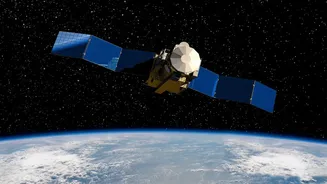
The launch vehicle's job may be over, but the satellite's work is just beginning. The next crucial milestone was the successful deployment of the satellite's solar panels, which provide the power needed for its systems to operate. Shortly after, ISRO's ground stations received the first signals from EOS-05, confirming that the satellite was healthy, stable, and communicating as expected. This "first call home" is a moment of relief and celebration for the mission control team, signifying that the payload has survived the violent journey into space and is ready for its operational life.
The Journey to Final Orbit and Beyond
From its initial transfer orbit, the EOS-05 will use its own onboard propulsion system to perform a series of engine burns over the coming days. These maneuvers will gradually raise its orbit, making it more circular until it reaches its final position in a geosynchronous orbit approximately 36,000 km above the Earth. Once there, the satellite will act as a powerful 'eye in the sky', providing continuous data for weather monitoring, disaster management, agricultural planning, and monitoring of natural resources, benefiting the entire nation.