

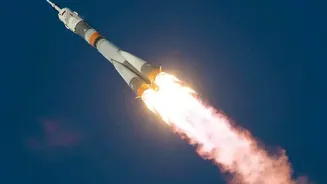
The Challenge of Defying Gravity
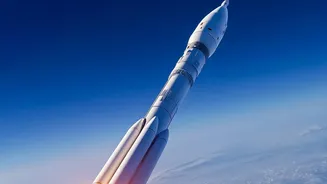
Getting into space is fundamentally a battle against Earth's immense gravity. To escape it, a vehicle needs to achieve incredible speeds—over 28,000 kilometres per hour just to reach low Earth orbit. The primary tool for this job is the rocket, a marvel
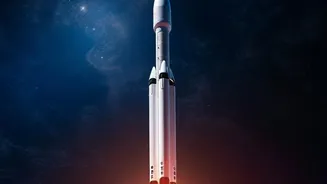
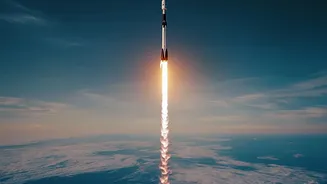
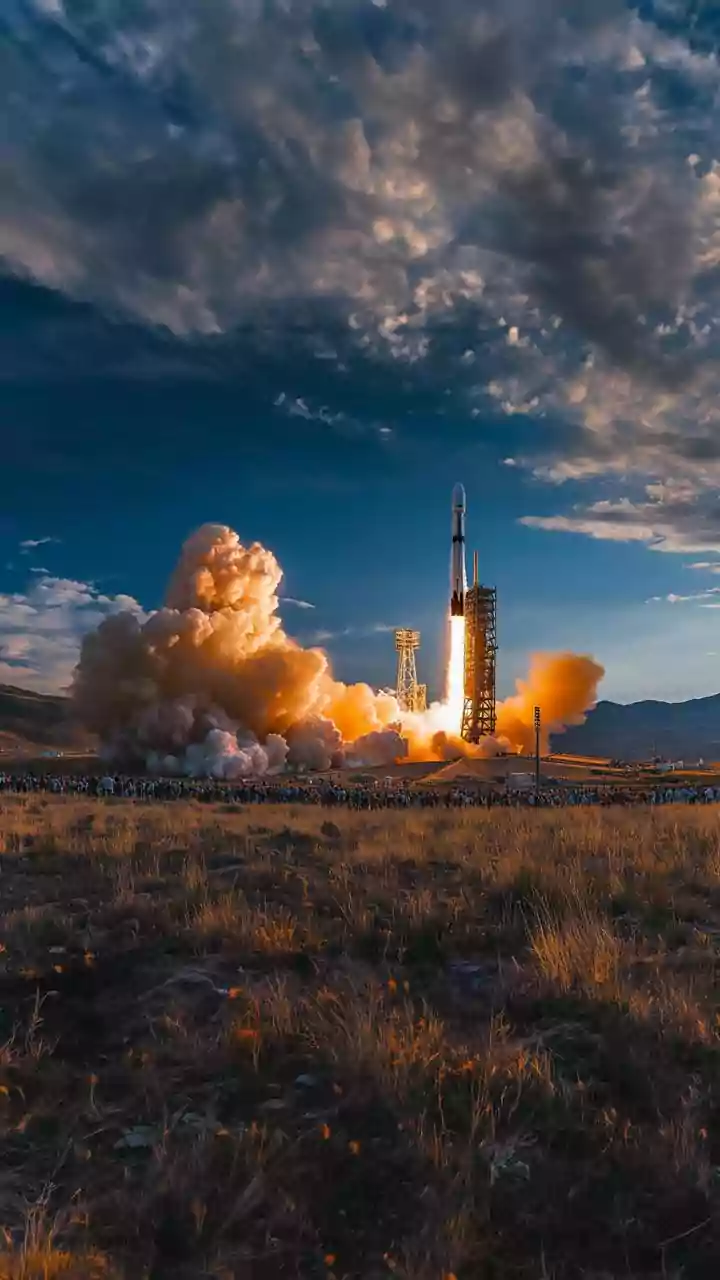
of engineering that operates on a simple principle first described by Isaac Newton: for every action, there is an equal and opposite reaction. By expelling hot gases downward at tremendous velocity, the rocket generates 'thrust,' an upward force powerful enough to overcome its own massive weight and push it toward the sky. The initial ascent is usually vertical to punch through the densest part of the atmosphere as quickly as possible, minimizing fuel consumption.
The Logic of Staging
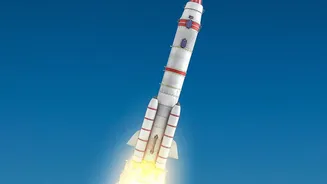
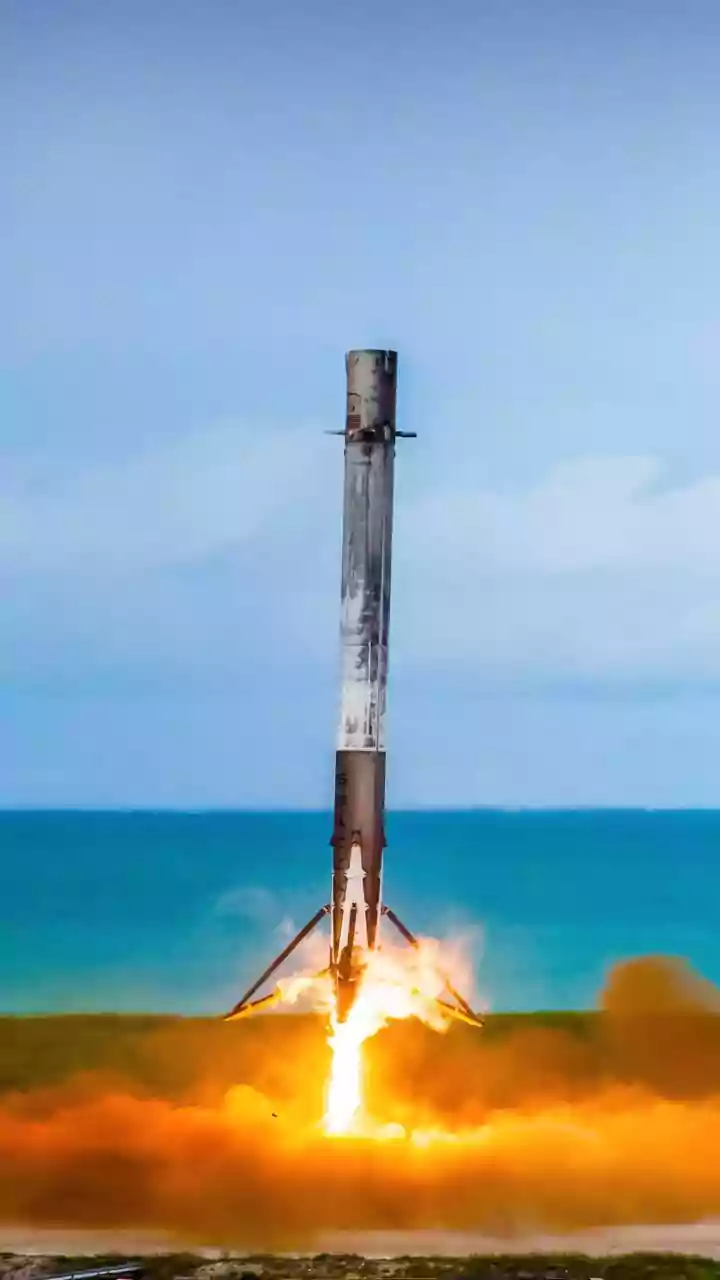
A key reason modern spaceflight is possible is a concept called 'staging'. Most of a rocket's initial weight is not its structure or its payload, but its fuel. Carrying empty fuel tanks all the way to orbit would be incredibly inefficient. Staging is the process of shedding this dead weight. A multi-stage rocket is essentially several smaller rockets stacked on top of each other. The first, largest stage provides the initial thrust for launch. Once its fuel is depleted, the entire section detaches and falls away, making the remaining rocket much lighter. Then, the second stage engine ignites, pushing the now-lighter vehicle even faster. This process can be repeated with third or fourth stages until the payload reaches its target velocity and altitude.
Achieving a Perfect Orbit
Getting into space is only half the battle; staying there requires precision. Once above the thickest part of the atmosphere, the rocket begins to tilt horizontally. To enter a stable orbit, the spacecraft must achieve a specific horizontal velocity where its forward momentum is perfectly balanced by Earth’s gravitational pull. It's like throwing a ball so fast that as it falls, the Earth curves away beneath it at the same rate. This delicate balance is managed by an inertial guidance system, a sophisticated onboard computer with gyroscopes and accelerometers that makes constant, tiny adjustments to the rocket's trajectory without needing instructions from the ground.
Deploying Satellites and Astronauts
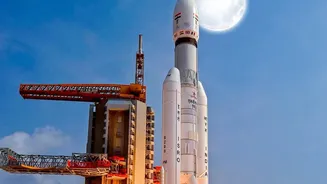
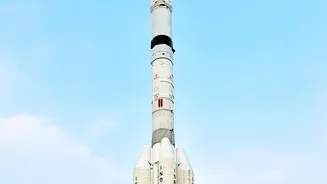
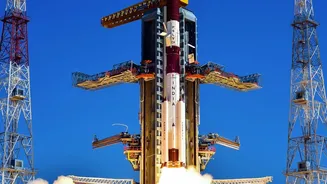
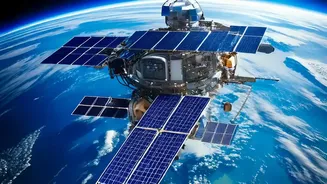
Once the correct orbit is reached, the final step is deployment. For a satellite, a protective covering called a fairing is jettisoned, and then deployment mechanisms gently push the satellite away from the rocket body. The satellite then uses its own small thrusters to make final adjustments to its position. For crewed missions, the spacecraft carrying the astronauts follows a similar path, detaching from the final rocket stage before using its own propulsion system to rendezvous with a space station or continue its journey. India's own space agency, ISRO, has mastered this technology with its reliable PSLV and GSLV launch vehicles, which place crucial satellites into orbit. These efforts are foundational for the upcoming Gaganyaan mission, which aims to send Indian astronauts into orbit.
Why This Technology Matters in India
The 'Rocket Revolution' isn't just about exploring the cosmos; it has a profound impact on our daily lives. The satellites ISRO launches provide essential services across India, from communication and television broadcasting to accurate weather forecasting and disaster management. Navigation systems like NavIC depend on this orbital technology, guiding transportation and logistics nationwide. Each successful launch not only enhances these capabilities but also inspires a new generation of students to pursue careers in science, technology, engineering, and mathematics (STEM), fuelling future innovation. The falling costs and increased access highlighted by World Space Week 2026 mean that the benefits of space are becoming more accessible than ever before.