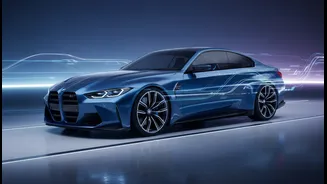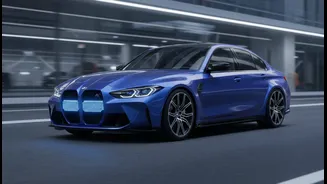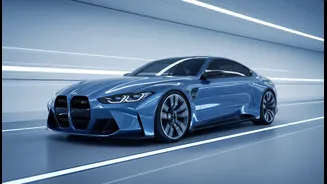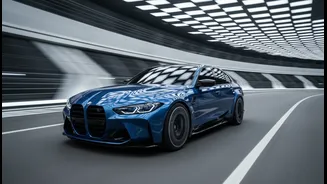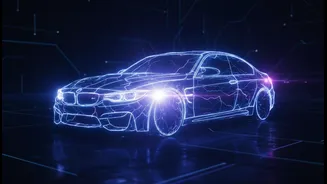





What is Neue Klasse?
Neue Klasse, or “New Class,” is BMW’s name for its next-generation, dedicated electric vehicle (EV) architecture. Think of it not just as a new car model, but as a complete technological reboot. This platform was designed from a clean sheet of paper exclusively
for electric vehicles. It’s a multi-billion dollar bet that represents a fundamental shift in how BMW builds cars, moving away from flexible platforms that can accommodate both combustion engines and batteries. The Neue Klasse architecture will underpin a whole new family of BMWs, from sedans to SUVs, starting with the iX3 and followed by the new i3 sedan. At its core, it features advanced battery technology, a powerful 800-volt electrical system for rapid charging, and a new software-first approach to vehicle dynamics.
The Problem with 'Conversion' EVs
To understand why Neue Klasse is so important, you first need to understand its alternative: the conversion EV. Many of the first-generation electric cars from legacy automakers were built on platforms originally designed for petrol or diesel engines. Engineers would essentially remove the engine and fuel tank and fit in batteries and electric motors. This approach has significant compromises. The architecture is not optimized for a large, flat battery pack, often leading to less interior space (like a transmission tunnel hump in a car with no transmission), a higher center of gravity, and inefficient packaging. The car’s weight distribution, crash structures, and cooling systems are all holdovers from its combustion past, preventing the vehicle from realizing the full potential of electric power. While functional, these conversions are inherently a compromise.
A Purpose-Built Advantage
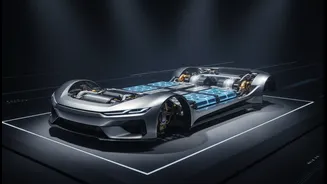
A purpose-built or dedicated EV platform like Neue Klasse throws away those compromises. By designing the car around the battery pack, engineers can create a “skateboard” layout where the battery forms a structural part of the floor. This lowers the center of gravity dramatically, which improves stability and handling. It also frees up a massive amount of interior space and allows for a completely flat floor. Without the need to accommodate a bulky engine up front, the car’s design can be more aerodynamic. Furthermore, the entire electrical system, from wiring to cooling, is optimized for EV performance, enabling better efficiency, faster charging, and more consistent power delivery. This clean-sheet approach allows BMW to build a car that is not just an electrified sedan, but a superior EV from the ground up.
The Heart of the New M3
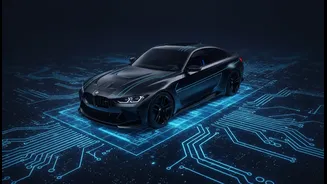
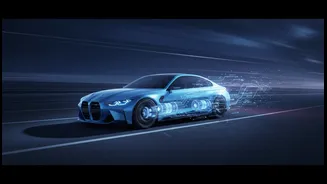
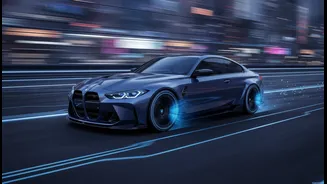
For the electric M3, the Neue Klasse platform will be paired with a unique quad-motor setup, with one motor for each wheel. This allows for unprecedented control over torque delivery, enabling a level of precision and agility that mechanical differentials can’t match. The system is managed by a new, centralized computer that BMW has dubbed the “Heart of Joy.” This powerful unit integrates all drivetrain and chassis controls, processing information up to ten times faster than previous systems to deliver a more natural and responsive driving feel. Frank van Meel, the head of BMW M, has emphasized that the team’s development started with vehicle dynamics as the main target, not just straight-line speed. The goal is to ensure the electric M3 is faster around a track while preserving the emotional connection drivers expect from an M car.
Two Paths for a Legend
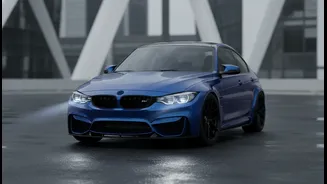
Interestingly, BMW is not putting all its eggs in one basket. The company has confirmed that alongside the new quad-motor electric M3, it will also develop a next-generation M3 powered by a purely internal combustion engine. This dual-platform strategy acknowledges that different markets and customers have different needs. The petrol-powered M3 will use an updated S58 inline-six engine compliant with new emissions standards, and BMW even hopes to continue offering a manual transmission. This allows the brand to cater to its traditional enthusiast base while simultaneously pushing the boundaries of electric performance. The electric M3, codenamed ZA0, is expected to arrive in 2027 and will serve as the technological flagship, demonstrating that the soul of an M car can thrive in the electric age.