

A Landmark Trial in Demanding Terrain
South Western Railway has commenced significant field trials for a Vande Bharat Express rake on the Sakleshpur-Subrahmanya Road Ghat section. This stretch is a critical part of the proposed Bengaluru-Mangaluru route, known for its technical complexity.
The trials, which began in mid-August 2026, involve personnel from the Research Designs and Standards Organisation (RDSO) who are on board to assess a range of technical and operational parameters. The specially prepared 20-car trainset was manufactured by the Integral Coach Factory (ICF) in Chennai and moved to Sakleshpur for these dynamic field tests after initial static trials in Mysuru. This isn't the first time the Vande Bharat has been tested in the ghats; earlier trials were successfully conducted on the Bhor and Thal ghat sections for the Mumbai-Solapur and Mumbai-Shirdi routes.
The Ghat Section Challenge
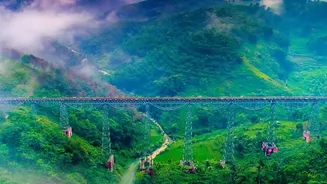
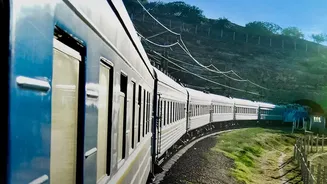
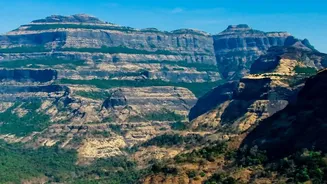
The Western Ghats pose a formidable challenge for railway operations. The Sakleshpur-Subrahmanya section, for instance, is a 55-km stretch featuring 57 tunnels, over 200 bridges, and more than 100 sharp curves. Similarly, the Bhor (Karjat-Lonavala) and Thal (Kasara-Igatpuri) ghats have steep gradients of 1:37, meaning the track rises one metre for every 37 metres in length. For decades, this has necessitated the use of 'banking locomotives' or 'bankers'—additional engines attached to the rear of a train to provide extra pushing power on uphill climbs and to assist with braking on descents. This process of attaching and detaching bankers consumes valuable time, extending journey durations. The unique geography makes it difficult to maintain speed and ensure safe braking, creating a significant operational bottleneck.
How Vande Bharat Changes the Game
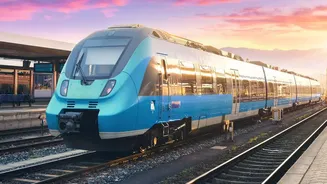
The Vande Bharat Express is engineered differently from conventional locomotive-hauled trains. It operates as a self-propelled trainset with a distributed power system, where eight of its 16 coaches are motorised. This provides immense horsepower—around 12,000 HP compared to a standard loco's 6,000 HP—allowing it to ascend steep gradients without the need for banker engines. Furthermore, the rakes being tested are fitted with specialised features like parking brakes and, in the case of the most recent trials, an Automatic Emergency Braking (AEB) system. These systems are designed to prevent the train from rolling back on inclines and automatically apply brakes if speed limits are exceeded, ensuring controllability and safety in the challenging ghat environment.
What Successful Trials Mean for Passengers
The successful completion of these trials is the first step toward launching regular Vande Bharat services on these routes. For passengers, this translates into significant time savings. By eliminating the need for bankers, the technical halts for attaching and detaching them are removed, which can shorten the journey between hubs like Mumbai and Pune, or Bengaluru and Mangaluru. The proposed Bengaluru-Mangaluru service, for example, is expected to provide much faster rail connectivity between the state capital and the coastal city. The tests conducted by the RDSO are crucial for confirming that the train can operate safely at sectional speeds, which during earlier trials was found to be a controllable 60 kmph. These modern trains also promise a more comfortable and convenient travel experience for passengers.
The Road Ahead to Regular Operations
While the trials are a major milestone, regular passenger services are not imminent. The data collected by the RDSO on braking, acceleration, stability, and overall performance needs to be thoroughly analysed. Railway authorities will only grant the final safety clearances after they are fully satisfied with the train's performance and suitability for these specific ghat sections. The current trials on the Sakleshpur-Subrahmanya section are scheduled to continue for several days to gather comprehensive data under various conditions. The successful conclusion of these evaluations will pave the way for the possible introduction of new Vande Bharat services, revolutionizing train travel through some of India’s most picturesque and difficult landscapes.