




With the votes counted in the US midterm elections, the political landscape in Washington has shifted. For global investors and Indian businesses, this isn't just foreign news—it's a critical update that will influence everything from trade to tech.
A New Balance of Power in Washington
The
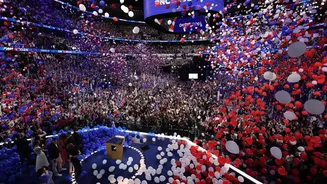
2026 midterm elections have resulted in a significant change in the US Congress. The Democratic Party has reportedly secured control of both the House of Representatives and the Senate, marking a setback for the incumbent Republican administration. This shift from a unified Republican government to a divided one, with the legislature controlled by the opposition, fundamentally alters the political dynamics. It introduces a new layer of checks and balances on the president's agenda, potentially leading to legislative gridlock but also increased scrutiny over executive actions, especially concerning foreign and economic policy. For global observers, this means the White House will need to negotiate and compromise to advance its domestic priorities, a factor that has wide-ranging implications.
Why Congressional Control Matters for a Trade Deal
Control of Congress is crucial because it shapes the president's ability to enact policy. While the executive branch, led by the President, has significant authority in foreign policy and trade negotiations, Congress holds the power of the purse and legislative approval. With Democrats in control, any new trade legislation or significant policy shifts will face intense scrutiny. This development creates a complex dynamic for the ongoing India-US trade deal negotiations. Some analysts believe a domestically weakened president might be more eager to secure a foreign policy victory, potentially accelerating talks to demonstrate American influence. However, this urgency could come with tougher demands for India to open its markets, particularly in sensitive sectors like agriculture. Conversely, other experts argue the new congressional oversight will ease pressure on India, providing more room to negotiate a balanced agreement.
Bipartisan Consensus on Economic Nationalism
Despite the transfer of power in Congress, investors should not expect a complete reversal of America's recent trade posture. There is a growing bipartisan consensus in Washington favouring economic nationalism, strengthening domestic supply chains, and protecting local industries. Both Democratic and Republican lawmakers have shown support for protective tariffs to safeguard American workers. This means that while the methods might change, the underlying pressure on trading partners is likely to persist. The US administration can still use executive powers, such as Section 232 and Section 301 investigations, to apply unilateral trade measures without direct congressional approval, keeping a degree of uncertainty in play for Indian exporters.
Impact on Investment Flows and the Rupee
The election results have already sent ripples through global financial markets. A divided government is often perceived as a check on major new spending or tax cuts, which can lead to lower budget deficits and, in turn, lower US Treasury yields. A drop in US yields and a softer dollar makes emerging market assets, including Indian government bonds and equities, more attractive to foreign institutional investors (FIIs). Furthermore, a Democratic-controlled Congress might push for a diplomatic resolution with Iran, which could lead to lower global crude oil prices. For India, a net importer of oil, this is a significant positive, as it helps tame inflation, reduces the import bill, and strengthens the rupee.
What Investors Are Watching Now
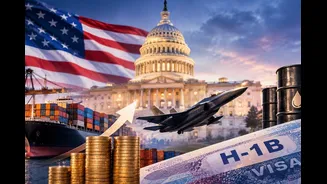
In the aftermath of the midterms, global investors are closely monitoring several key areas. The first is the tone and pace of the India-US trade deal negotiations. Whether pressure on New Delhi intensifies or eases will be a key indicator. The second is US policy on key sectors like technology and pharmaceuticals, including any changes to H-1B visa regulations, which are vital for India's IT industry. While a full reversal of recent restrictions is unlikely, increased congressional scrutiny could bring some relief. Finally, market watchers are tracking the trajectory of US interest rates and the dollar, as these factors directly influence capital flows into India and the overall stability of the Indian stock market.