





A Session Dominated by Din
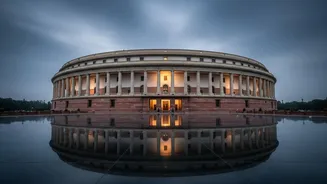
The Monsoon Session, which concluded on August 13, 2026, was one of the least productive in recent history. The Lok Sabha functioned for just 15% of its scheduled time, while the Rajya Sabha fared slightly better at 33%. The primary drivers of the disruption
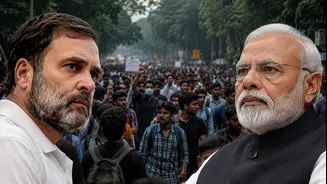
were Opposition protests demanding a statement from the Home Minister on police action against student demonstrators and allegations related to temple donations. This led to daily adjournments, with both sides blaming the other for the breakdown in proceedings. The result was a session where the sound of protest frequently drowned out the possibility of debate.
Legislation Without Deliberation
Despite the chaos, legislative business continued, but in a manner that has drawn criticism. A total of 12 bills were passed by both Houses. However, the vast majority were pushed through without any meaningful discussion. According to an analysis by PRS Legislative Research, nine bills passed the Lok Sabha with no debate at all, beyond the introductory remarks by the minister. The Supreme Court (Number of Judges) Amendment Bill was passed in just four minutes, while the Registration of Births and Deaths (Amendment) Bill took a mere two minutes. The only significant exception was the Public Examinations (Prevention of Unfair Means) Amendment Bill, which was debated for several hours. This practice of passing laws without scrutiny undermines their quality and bypasses the essential role of Parliament in examining legislation that affects every citizen.
The Vanishing Question Hour
One of the most significant casualties of the constant disruptions is the Question Hour. This is the first hour of every sitting day, a critical window where Members of Parliament can directly question government ministers about their policies and actions. It is a primary tool for holding the executive accountable. During this session, this tool was rendered almost useless. Out of 380 questions listed for oral answers in the Lok Sabha, only two were actually addressed. The Rajya Sabha managed to answer only 16. When Question Hour is lost, the government's accountability to the people's representatives is severely weakened, allowing potential issues of governance, expenditure, and policy implementation to go unexamined.
The High Cost of Disruption
The loss is not just democratic, but also financial. Based on estimates of the cost of running Parliament, the lost time during the Monsoon Session translates to a potential expenditure of over ₹175 crore on proceedings that did not occur as planned. While this is a notional cost, it represents a significant waste of public money. More importantly, it highlights the opportunity cost. Every minute lost to shouting is a minute not spent debating a new law, questioning a minister on healthcare spending, or raising an urgent matter of public concern during Zero Hour—another procedural tool that allows MPs to raise important issues without prior notice.
A Troubling Trend for Democracy
While using disruptions as a form of protest is a tactic employed by opposition parties across different eras of government, its increasing frequency and the resulting decline in legislative scrutiny are a cause for concern. The trend of referring fewer bills to parliamentary committees for detailed examination has been noted for years, and passing laws without any debate in the House is a further step down that path. When Parliament becomes more of a stage for political theatre than a forum for deliberation, its fundamental purpose is eroded. The blame game between the government and the Opposition continues, but the ultimate loser is the public, which relies on a functioning legislature to ensure good governance and a responsive democracy.