


A Global Nod for a Royal City
In a significant recognition of its enduring appeal, Jaipur has been featured on National Geographic's recently released 'Best of the World 2027' list. The annual list, which highlights 25 of the most exciting travel destinations globally, specifically
points to the city's upcoming 300th anniversary as a key reason for its inclusion. This honour isn't just a travel tip; it's an acknowledgment of Jaipur's unique blend of living history, vibrant culture, and architectural splendour. The selection committee highlighted not only the milestone birthday but also major cultural events like the Jaipur Literature Festival, which will mark its 20th edition in January 2027 and is expected to draw hundreds of thousands of attendees.
A City Born of Vision
To understand Jaipur's significance is to look back to its founding on November 18, 1727. Maharaja Sawai Jai Singh II, a ruler with a deep interest in astronomy and mathematics, envisioned a new capital that was a departure from the rugged, hilly terrain of his previous seat at Amber. He commissioned the architect Vidyadhar Bhattacharya to design a city on the plains based on the ancient Indian principles of Vastu Shastra. The result was India's first planned city, a marvel of urban design with a grid-like structure, wide avenues intersecting at right angles, and nine distinct sectors. This visionary layout was not just for aesthetics; it was designed for commerce, security, and civic life, a model so advanced it earned the walled city a UNESCO World Heritage Site designation in 2019.
The Enduring Glow of the Pink City
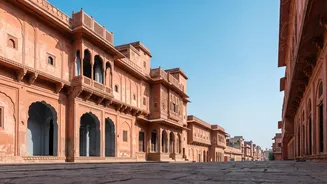
While founded in 1727, Jaipur didn't get its famous rosy hue until much later. In 1876, the entire city was painted a terracotta pink—a colour symbolising hospitality—to welcome Albert Edward, the Prince of Wales. The name 'Pink City' stuck, and a subsequent law ensured the buildings within the old city would retain their iconic colour. This uniform facade is just one part of its charm. Jaipur is a treasure trove of architectural masterpieces, from the intricate honeycomb facade of Hawa Mahal, designed to allow royal women to observe street life unseen, to the sprawling City Palace complex and the astronomical wonders of Jantar Mantar, itself a separate UNESCO site. These structures showcase a stunning fusion of Rajput, Mughal, and even Western architectural ideas.
Three Centuries in the Making
The upcoming 300th anniversary in 2027 is more than just a date on the calendar; it's shaping up to be a year-long celebration of the city's legacy. While the Rajasthan government's official festivities are slated to begin after the November 2027 milestone, numerous cultural organisations are already planning a run-up of events. An international music collaboration, BRICS Melody, is set to kick off the celebratory year in late 2026, highlighting the city's role as a global cultural partner. As the city enters its fourth century, these celebrations will focus not only on its past but also on the preservation of its heritage, particularly the challenges of maintaining the historic walled city amid modern urban pressures.
Jaipur's Next Chapter
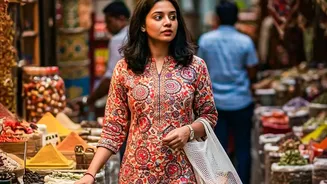
The National Geographic honour serves as a global invitation to rediscover a city that masterfully balances its royal past with a dynamic present. Beyond the palaces and forts, Jaipur is a thriving hub for artisans, famous for block printing, blue pottery, and gemstone cutting. Its bustling markets, like Johari Bazaar and Chandpole Bazaar, are a testament to living traditions passed down through generations. As tourists and history buffs turn their eyes toward Jaipur for its tricentennial, they will find a city that is not a static museum piece, but a vibrant metropolis. It is a place where ancient architectural principles provide the backdrop for one of the world's largest literary festivals and where centuries-old crafts are finding new global markets.