

The Challenge: A Race Against Time and Distance
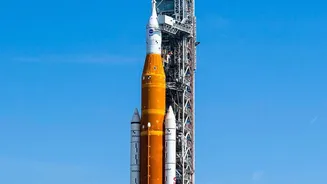
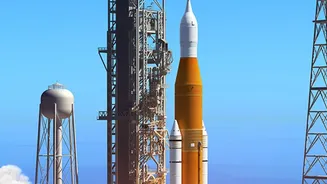
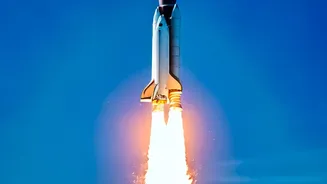
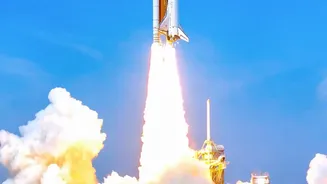
Conventional chemical rockets, the kind that took us to the Moon, are powerful but inefficient for long journeys. A trip to Mars using this technology would take many months, exposing astronauts to prolonged and dangerous deep-space radiation. The sheer
amount of fuel required also limits how much science equipment and supplies can be carried. To make humanity a truly spacefaring species, with potential outposts on the Moon and Mars, we need a faster and more powerful way to travel. Nuclear propulsion offers a solution by being significantly more efficient, potentially cutting the travel time to Mars by up to 25% and allowing for much heavier payloads.
The Power of the Atom in Space
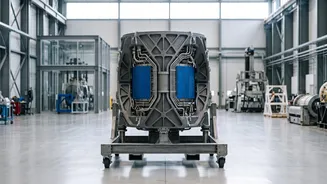
The idea of using nuclear power in space is not new. For decades, radioisotope thermoelectric generators (RTGs) have reliably powered deep-space probes like Voyager, which are still operating nearly 50 years after launch. These systems convert the heat from the natural decay of radioactive material into electricity. However, for propulsion, NASA and the DOE are focused on a more powerful technology: nuclear fission. This involves splitting atoms in a compact reactor to generate immense heat. This heat can be used in two main ways: Nuclear Thermal Propulsion (NTP) and Nuclear Electric Propulsion (NEP).
How Nuclear Propulsion Works
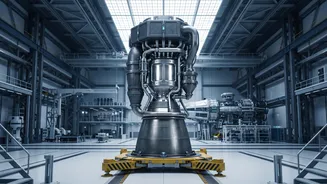
In a Nuclear Thermal Propulsion (NTP) system, a liquid propellant like hydrogen is pumped through a hot reactor core. The intense heat from fission causes the hydrogen to rapidly expand into a gas, which is then channeled out of a nozzle to create powerful thrust. An NTP engine is about twice as efficient as the best chemical rockets. Nuclear Electric Propulsion (NEP) works differently. It uses the reactor to generate electricity, which then powers an advanced thruster that ionizes and accelerates a gas like xenon to propel the spacecraft. While NEP provides much lower thrust than NTP, it is incredibly efficient over long periods, making it ideal for hauling heavy cargo on deep-space missions.
A Strategic Partnership for the Future
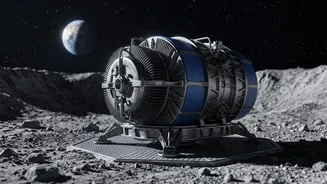
Recognizing the immense potential, NASA and the Department of Energy recently signed a Memorandum of Understanding to accelerate the development of these technologies. This formal agreement combines NASA's expertise in spaceflight and mission design with the DOE's decades of experience in nuclear reactor science and safety. The collaboration covers the full lifecycle of development, from research and fuel production to rigorous testing and mission integration. The partnership isn't just about propulsion; it also includes the Fission Surface Power project, which aims to develop a small nuclear reactor to provide reliable, long-term power for a future Moon base, independent of sunlight.
The Road to Mars and Beyond
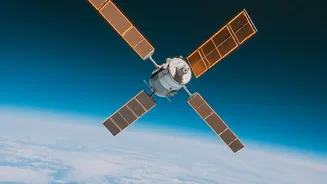
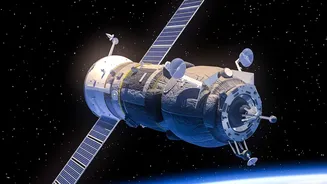
The ultimate goal is to make human exploration of Mars a reality. One of the first major projects under this new agreement is the Space Reactor-1 Freedom (SR-1), a spacecraft designed to demonstrate nuclear electric propulsion in deep space with a planned launch in 2028. Another key program is developing the Lunar Reactor-1 (LR-1) to power future lunar bases, which could be operational by the early 2030s. These missions will serve as crucial stepping stones, proving the technology's safety and reliability before it's used to send astronauts on the months-long journey to the Red Planet. While significant engineering challenges remain, this focused collaboration marks a pivotal step forward.