









From Motors to Munching
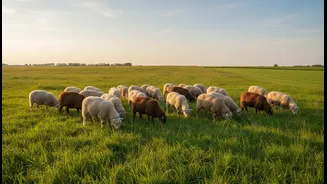
Across the globe, public parks, university campuses, and even airports are swapping noisy, polluting machinery for a quieter, four-legged alternative. This practice, known as prescribed or targeted grazing, involves using animals like goats and sheep
to manage vegetation. Instead of simply cutting grass, these 'goatscapers' offer a holistic approach to land clearing. They are particularly effective against invasive plants and in areas where machines struggle, like steep hillsides or dense brush. This isn't just a return to old-fashioned methods; it's a sophisticated strategy that leverages natural processes to solve modern environmental challenges, moving from a mindset of mechanical control to one of ecological collaboration.
A Living Laboratory
The true magic of this approach lies in the complex ecological benefits that unfold, turning a simple patch of land into an outdoor classroom. Unlike a mower blade, which just shortens a plant, a goat’s digestive process is a game-changer. Many seeds of invasive weeds are sterilized in their four-chambered stomachs, breaking the cycle of regrowth that plagues mechanically cleared areas. Their hooves gently aerate the ground, and their droppings act as a natural, slow-release fertilizer, enriching the soil with nutrients. This process dramatically improves soil health and its ability to hold water. By selectively targeting and removing dominant invasive species, the animals create space for native grasses and wildflowers to flourish, boosting local biodiversity and supporting pollinators and other wildlife. Watching this interplay of animals, plants, and soil is to witness an ecosystem regenerating itself in real-time.
The Quiet Achievers
The advantages of grazing go far beyond biology. For communities, one of the most immediate benefits is the peace and quiet. The disruptive roar of lawnmowers and trimmers is replaced by the gentle bleating of a herd. This method also eliminates the need for fossil fuels and chemical herbicides, reducing air pollution and preventing harmful runoff into waterways. This approach has proven especially valuable in fire-prone regions, where herds of goats are deployed to clear out dry underbrush that could otherwise fuel devastating wildfires. Furthermore, it can be a cost-effective solution, particularly for large or difficult-to-access properties, reducing long-term expenses related to fuel, equipment maintenance, and labour. It’s a solution that is not only gentler on the environment but also on the ears and the budget.
Not a Perfect Pasture
Despite its many benefits, prescribed grazing is not a simple, one-size-fits-all solution. It requires careful planning and management to be effective. The animals need to be contained with temporary fencing, which requires setup and monitoring to keep them in the target area and safe from predators. It’s also a slower process than mechanical mowing; a herd might take several days to clear an area a machine could finish in hours. Research also shows that grazing is most effective as part of an integrated management plan. It's excellent for the initial 'knockback' of invasive species, but it may need to be combined with other methods for long-term control. In urban settings, regulatory hurdles, potential traffic issues, and public perception can present challenges that need to be addressed before a herd can be brought in.