



Our Solar System is an Outlier
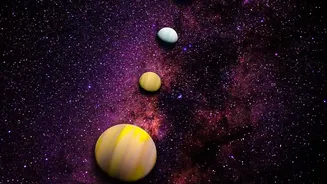
When astronomers began discovering planets around other stars, they expected to find systems like our own. Instead, they found something surprising. The most common type of planet in the galaxy appears to be the “super-Earth”—worlds larger than Earth but
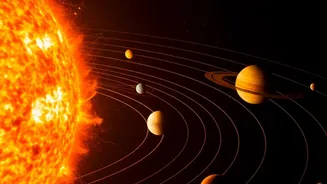
smaller than Neptune. Yet, in our own solar system, there is a conspicuous gap between the rocky inner planets and the outer gas giants. There are no super-Earths to be found. This has led planetary scientists to ask a crucial question: did we never have one, or did something happen to it? The evidence is beginning to point toward the latter, suggesting a dramatic and chaotic history for our home system.
The Great Migration of Giants
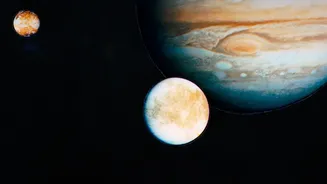
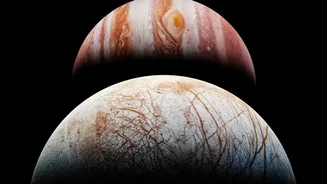
To understand where a planet might have gone, we have to rewind to the solar system's birth. The leading theory for our system's unusual architecture is called the “Grand Tack” hypothesis. It proposes that in the first few million years of the solar system, a young Jupiter didn't stay put. Instead, it migrated inward, coming as close to the Sun as the orbit of Mars is today. This planetary-scale wrecking ball would have wreaked gravitational havoc, scattering smaller planetesimals and disrupting the formation of any planets in the inner solar system. The pull of a newly forming Saturn eventually caught Jupiter, reversing its course and pulling it back out to its current position, but the damage was already done.
A Fatal Nudge Toward the Sun
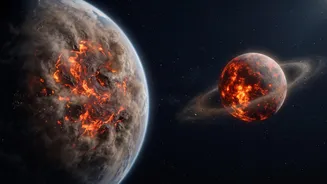
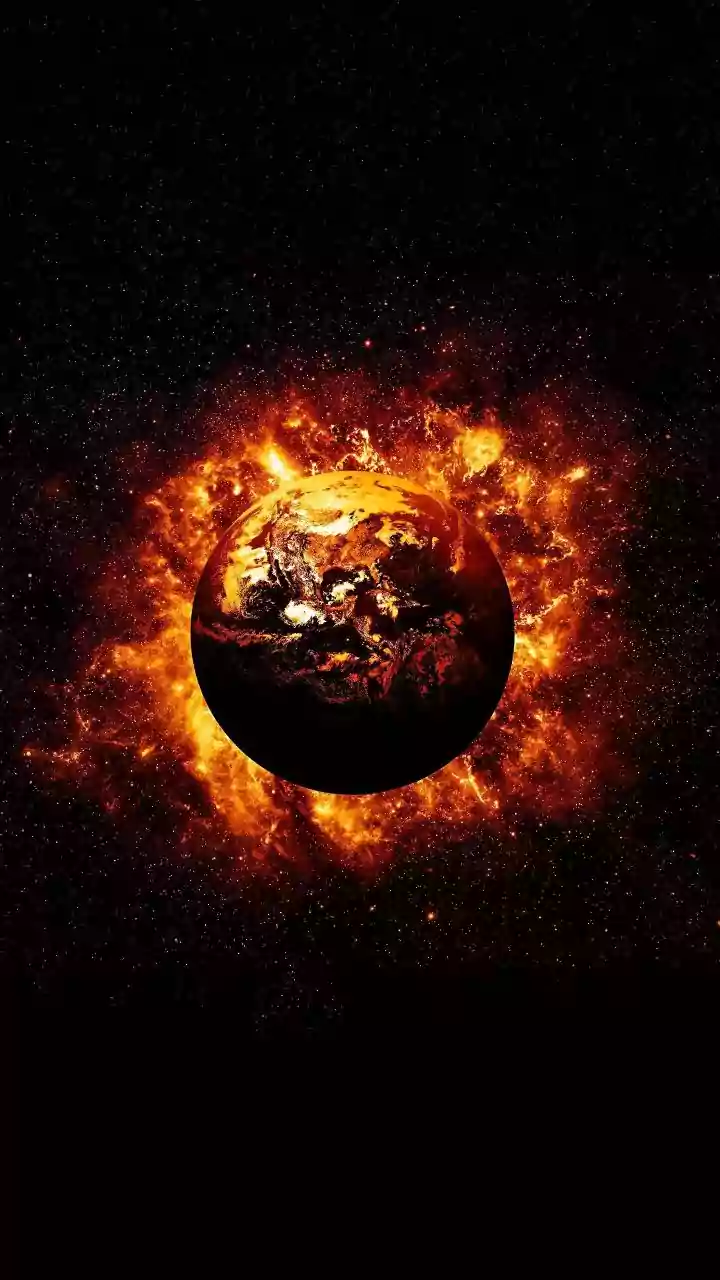
Computer simulations show that Jupiter's wild journey could have had catastrophic consequences for any planets forming in the inner solar system. If a super-Earth was beginning to form—gathering mass in the region where we now find Earth and Venus—the immense gravitational push and pull from a migrating Jupiter could have easily knocked it off course. Scientists like Konstantin Batygin at Caltech have run models showing that such a gravitational disturbance could destabilize a planet's orbit, causing it to fall into a decaying spiral. Over thousands or millions of years, this doomed world would have been drawn closer and closer to the young Sun, until it was ultimately consumed.
Searching for Chemical Fingerprints
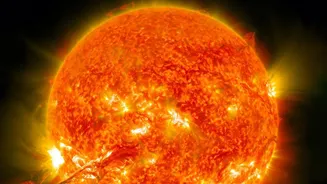
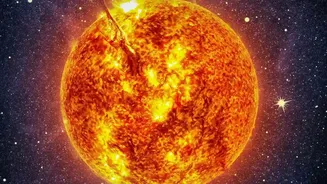
If a planet did fall into the Sun, it wouldn't just vanish without a trace. A recent study by astronomer Mutlu Yildiz suggests the Sun itself might hold chemical clues. The theory is that if the Sun swallowed a rocky super-Earth, the planet's heavier elements would have mixed with the Sun's outer layers. Yildiz's models show that a devoured planet could explain the strange and unexpectedly low amount of lithium observed on the Sun's surface today. A planet plunging into the star would have dragged material around, causing the lithium to be pulled deeper into the Sun's core where it would be destroyed by higher temperatures. While not definitive proof, this alignment between theory and observation provides compelling circumstantial evidence for a lost planet.
Solving the Puzzle of Our Origins
The idea of a lost planet is more than just a dramatic story; it helps explain many of our solar system's oddities. Jupiter's migration and the potential destruction of an early super-Earth could be why Mars is so small, as its building materials would have been scattered. It also explains the precise layout of the inner planets and the gap where a super-Earth should be. These theories highlight that planetary systems are not born neat and tidy. Their early years are defined by violent collisions, migrations, and gravitational battles where not all worlds survive. Our existence on Earth might only be possible because another, larger planet was sacrificed in the solar system's chaotic youth.