





Awaken to the Sound of Mahalaya
For every Bengali, the festivities begin with the pre-dawn broadcast of 'Mahisasuramardini'. Waking up to the sonorous voice of Birendra Krishna Bhadra is a non-negotiable tradition that marks the arrival of the Goddess. This collection of Sanskrit chants
and devotional songs tells the story of Goddess Durga's creation and her victory over the demon Mahishasura. Thanks to the internet, you can easily stream this iconic 90-minute programme. Listening to it at dawn is the perfect way to set a festive mood and officially begin your Pujo celebrations, no matter where you are.
Create a Sacred 'Pujo Corner'
You don't need a grand pandal to feel the divine presence. Dedicate a small, clean corner of your home to the Goddess. Place an idol or a beautiful picture of Maa Durga and decorate it with flowers, garlands, and small diyas or electric lights. This simple act of creating a sacred space, an altar for your personal worship, helps to focus your devotion and brings the spiritual essence of the festival into your living space. Lighting incense can also evoke the familiar fragrance of a puja pandal.
Master a Classic Bhog Recipe
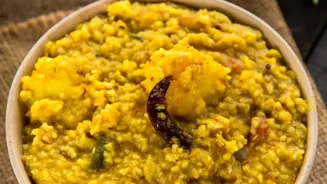
Pujo and 'pet pujo' (worshipping the stomach) are inseparable. One of the most cherished parts of the festival is the community feast, or bhog. The star of this meal is always the bhoger khichuri, a fragrant blend of roasted moong dal, gobindobhog rice, and gentle spices. Unlike everyday khichdi, this version is made without onion or garlic and has a unique aroma from the roasted dal and a finishing touch of ghee. Preparing this dish at home, perhaps with a side of labra (mixed vegetables) or beguni (eggplant fritters), can instantly transport your senses back to a bustling pandal lunch.
Dress the Part in Your Pujo Best
A big part of the Pujo excitement is wearing new clothes ('pujo'r notun jama'). Bring out your traditional best—a crisp kurta-pajama, a classic dhoti, or a beautiful saree. The quintessential red-and-white saree is a favourite for Dashami, but any festive attire works. Dressing up, even if you're just staying home or meeting a few friends, is a powerful way to feel connected to the celebration. It's not just about looking good; it's about feeling the part and honouring the festive spirit.
Host a Virtual 'Adda' Session
Durga Puja is as much about community and connection as it is about worship. 'Adda'—long, freewheeling conversations with friends and family—is the lifeblood of the festival. Schedule video calls with your loved ones back home. Plan a virtual adda with friends who are also living away from home. Share your Pujo experiences, what you cooked, what you're wearing, and simply enjoy the togetherness. It helps bridge the physical distance and combat the fear of missing out.
Go Pandal Hopping, Near or Far
Even if you're not in Kolkata, there is likely a local Bengali association or temple organising a Durga Puja nearby. A quick search online can lead you to a community celebration. If there are no physical pandals accessible, embrace the digital age with virtual pandal hopping. Many famous pujas now livestream their rituals and offer 360-degree virtual tours of their pandals, allowing you to experience the artistry from anywhere in the world.
Curate the Perfect Pujo Playlist
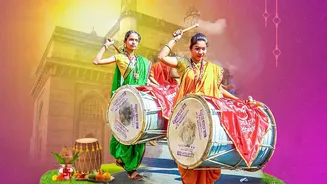
Music is the soul of Durga Puja. Beyond Mahalaya, the air is filled with the rhythmic beats of the dhaak and timeless Bengali festive songs ('pujor gaan'). Create a playlist that captures this soundscape. Include traditional dhaak drumming, classic songs by artists like Hemanta Mukherjee and Sandhya Mukhopadhyay, and modern festive releases. Playing this music in the background while you cook, work, or relax will fill your home with an unmistakably festive atmosphere.
Embrace Bijoya Dashami Rituals
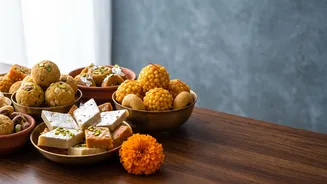
The festival concludes with Bijoya Dashami, a day of bittersweet farewells and joyous greetings. It marks Durga's victory and her return to her celestial home. A key ritual for married women is Sindoor Khela, where they apply vermilion to the goddess and then to each other, celebrating womanhood and praying for marital bliss. Afterwards, the tradition is to visit elders to seek their blessings and exchange sweets with friends and family, wishing everyone 'Shubho Bijoya'. You can make traditional sweets like narkel naru (coconut laddoos) to share with neighbours or friends.
Promise Her Return: 'Asche Bochhor Abar Hobe'
The farewell to the Goddess, known as 'visarjan' or immersion, is emotional. It signifies her departure but also holds the promise of her return. The quintessential Bengali sentiment that fills this moment is 'Asche bochhor abar hobe'—'It will happen again next year'. Ending your at-home celebration with this hopeful thought is a beautiful way to conclude the festivities. It’s a reminder that the spirit of Pujo is cyclical, and the joy will always find its way back.