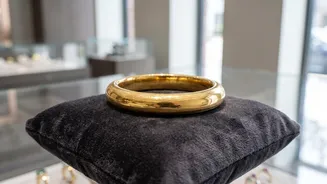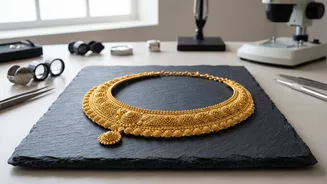





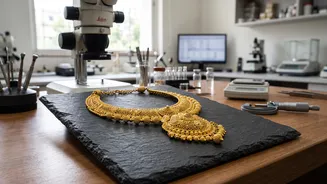

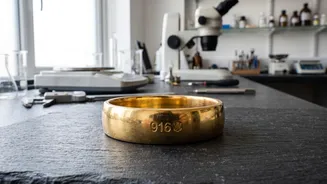
Understanding the Hallmark and HUID
For years, the Bureau of Indian Standards (BIS) hallmark has been a mark of trust for gold buyers. Since June 2021, this system has been strengthened with the mandatory introduction of the Hallmark Unique Identification (HUID) number in a phased manner
across hundreds of districts. HUID is a six-character alphanumeric code, unique to every single piece of jewellery. Think of it as a fingerprint for your ornament. Before this system, counterfeiters could sometimes mimic the old hallmark stamps, selling lower-purity gold at higher prices. The HUID system was designed to end this by creating a digital, traceable record for each item, linking it directly to the jeweller and the BIS-recognised Assaying and Hallmarking Centre (AHC) that certified its purity. Every new hallmarked piece of gold jewellery today should carry three marks: the BIS triangular logo, the purity grade (e.g., '22K916' for 91.6% purity), and the six-digit HUID.
New Questions Cloud Purity Standards
Despite the robust HUID system, recent reports have raised fresh concerns about the reliability of gold testing. A draft report from the Comptroller and Auditor General (CAG) reportedly found significant shortfalls in mandatory surveillance audits of Assaying and Hallmarking Centres—the very labs that test and certify gold. The report allegedly noted that 43.7% of prescribed inspections were not completed between 2020 and 2025, raising questions about oversight. Separately, an investigation by Dainik Bhaskar exposed a new method of adulteration where gold mixed with rhenium powder passed conventional purity tests and even received a 22-carat hallmark. While the jewellery contained gold equivalent to only 20-carat purity, it was successfully certified as 22-carat. These issues don't mean the entire hallmarking system is broken, but they highlight that the tools for consumer verification are more important than ever.
Your Tool for Verification: The BIS Care App
The Bureau of Indian Standards has placed a powerful verification tool directly into the hands of consumers: the BIS Care app. This free mobile application, available for both Android and iOS, allows anyone to check the authenticity of a HUID-marked product instantly. It serves as your personal line of defence, enabling you to cross-check the details of your jewellery against the official BIS database. Using the app, you can confirm the purity of the item, the type of article (e.g., ring, chain), the jeweller who had it hallmarked, and the AHC that tested it. The app also includes features to lodge complaints if you find a discrepancy, making it a comprehensive consumer protection utility.
A Step-by-Step Guide to Using the App
Verifying your gold is a simple process that takes less than a minute. Here’s how: 1. Download the App: Search for 'BIS Care' on the Google Play Store or Apple App Store and install the official app. 2. Register: You will need to complete a quick, one-time registration using your name and mobile number, which is verified via OTP. 3. Select 'Verify HUID': On the app's home screen, you will find a prominent option labeled 'Verify HUID'. 4. Enter the Code: Carefully type the six-character alphanumeric HUID engraved on your jewellery. The jeweller should provide a magnifying glass to help you read it. 5. Check the Details: The app will display the jewellery's recorded details. Compare this information—especially the purity and article type—with what is on your bill and the piece itself. Any mismatch is a red flag. If the HUID returns a 'not found' message, double-check for typos before raising an alarm.
What the HUID Confirms (and What It Doesn't)
When you verify a HUID, you are confirming the purity at which the item was certified, along with its traceability to a specific jeweller and testing centre. Some recent records may even include a photograph and the weight of the article for further verification. However, a HUID does not confirm the final price of the jewellery, which includes making charges, wastage, and taxes. It also doesn't certify the quality of any embedded stones like diamonds or gems. Always ensure your bill clearly lists the HUID, net weight of gold, purity, and a breakdown of all charges. Use the HUID as a crucial starting point for your due diligence, not the final word on the overall value of your purchase.