






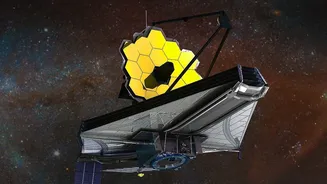
A New Eye on Distant Worlds
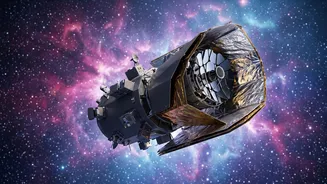
NASA has given the green light for the Probe far-Infrared Mission for Astrophysics, or PRIMA, to enter the next phase of its development. This powerful new space observatory is designed to explore the universe in far-infrared light, a range of the spectrum
that is invisible to the human eye and even to iconic instruments like the James Webb Space Telescope (JWST). While JWST excels at near- and mid-infrared, PRIMA will fill a crucial observational gap, allowing scientists to see the colder, dustier parts of the cosmos. Its primary goals are ambitious: to understand how planetary systems form, trace the evolution of galaxies and their central black holes, and map the buildup of cosmic dust and heavy elements over billions of years. One of its key tasks will be to study the role water plays in the formation of planets around other stars, a question that cannot be answered without the specific far-infrared sensitivity that PRIMA will provide. Equipped with a 1.8-meter (5.9-foot) telescope and highly sensitive detectors cooled to just a few degrees above absolute zero, PRIMA promises to be orders of magnitude more powerful than previous far-infrared missions like Spitzer and Herschel.
NASA's 'Middle-Class' Mission Strategy
The selection of PRIMA is more than just another mission approval; it marks the official debut of NASA's Probe Explorer program. This new class of mission was specifically recommended by the National Academies' 2020 Decadal Survey to fill a strategic and financial gap in NASA's portfolio. For years, the agency has focused on two main types of missions: smaller, rapid-turnaround Explorer missions costing a few hundred million dollars, and massive, multi-billion-dollar 'flagship' observatories like JWST and the Roman Space Telescope. The Probe Explorer program creates a new middle tier, with missions substantial enough to tackle major scientific questions but with a firm cost cap that prevents budgets from spiraling. This approach allows NASA to pursue high-priority science without committing the vast resources and decade-plus timelines required for a flagship. It provides more frequent opportunities for groundbreaking discoveries and brings a new level of predictability to the aerospace industry and university research labs that develop mission hardware.
The $1.2 Billion Litmus Test
The defining feature of the Probe Explorer program—and the critical factor in PRIMA's selection—is its budget. Each mission in this class has a project cost cap of approximately $1.2 billion, not including the launch. In an era of tight federal budgets and competing priorities, demonstrating that ambitious science can be accomplished within a fixed, predictable cost is paramount. PRIMA was selected after a detailed evaluation of its concept study, which assessed not only its scientific merit but also the feasibility of its development plan and schedule. This cost discipline is a direct response to the history of cost overruns on some larger projects and represents a strategic shift toward more sustainable and balanced planning within NASA's Science Mission Directorate. By capping the cost, NASA can pursue a more diverse portfolio of projects, ensuring that progress continues across multiple fronts in astrophysics rather than concentrating all its financial and human resources on a single, massive endeavor. PRIMA's journey to the launchpad will therefore be a test case, proving that billion-dollar science can be delivered on a budget.
The Road to Launch
With its selection confirmed, PRIMA now enters what NASA calls Phase B. This stage involves advancing the preliminary design and developing the key technologies needed for the observatory's complex instruments. Engineers at NASA's Jet Propulsion Laboratory, which will manage the mission, will work with partners at Caltech and other institutions to finalize the architecture. The telescope's two main instruments, an imager and a spectrometer, will undergo rigorous testing to ensure they can perform in the harsh environment of space. Following this phase, the mission will face a confirmation review to assess its technical readiness and cost performance before it can begin final implementation. If all goes according to plan, PRIMA is targeted for launch no earlier than 2033 for a planned five-year mission to unlock the secrets of the cold universe. This long-term planning ensures that every component is perfected, as the mission aims to become a vital, long-lasting tool in NASA's astronomical arsenal.