








A New Chapter at the Red Fort
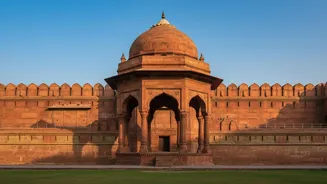
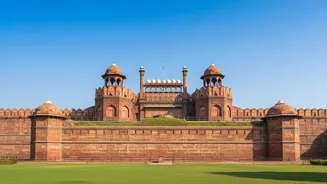
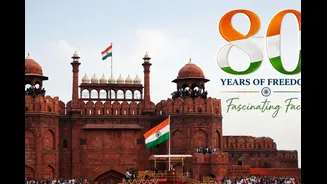
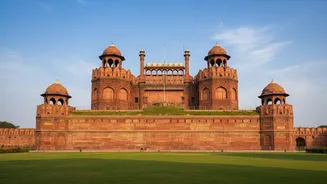
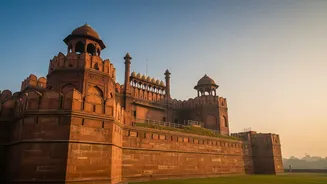
The Ministry of Defence has announced a significant addition to the Independence Day ceremony on August 15, 2026. For the first time, the national song, 'Vande Mataram', will be performed from the Red Fort's ramparts upon the Prime Minister's arrival.
This will precede the traditional flag hoisting and the rendition of the national anthem, 'Jana Gana Mana'. The occasion also coincides with the 150th anniversary of the song, adding another layer of significance to the event. Officials have framed this as a tribute to the song's enduring legacy and its pivotal role in the freedom struggle. The celebrations will also focus on 'Yuva Shakti' (youth power), highlighting the role of young Indians in the nation's journey towards a 'Viksit Bharat' (Developed India) by 2047.
The Song of a Revolution
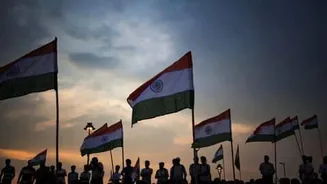
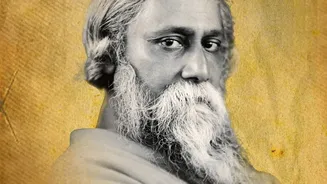
To understand the weight of this moment, one must look back at the song's origins. 'Vande Mataram' began as a poem in Bankim Chandra Chattopadhyay's 1882 novel, 'Anandamath'. Set against the backdrop of the Sannyasi Rebellion, the novel and its hymn-like poem captured a vision of the motherland as a divine entity. The phrase soon leaped from the page into the heart of the burgeoning freedom movement. It became a powerful, unifying slogan chanted by protestors and freedom fighters, most notably during the Swadeshi movement following the partition of Bengal in 1905. Its recital was even banned by the British colonial government, which only amplified its status as a symbol of defiance and patriotism. It was first sung in a political context by Rabindranath Tagore at the Indian National Congress session in 1896.
A Legacy of Debate and Compromise
Despite its revered status, the journey of 'Vande Mataram' has not been without controversy. The later stanzas of the full poem contain explicit references to Hindu deities, specifically Durga, which raised concerns among leaders about its suitability as a national anthem for a pluralistic state. As early as 1937, the Indian National Congress, after consultations with figures like Jawaharlal Nehru and Rabindranath Tagore, decided that only the first two non-denominational stanzas should be sung at official gatherings. This compromise was a nod to both the song's undeniable role in inspiring the freedom struggle and the need to maintain national unity. When the Constituent Assembly met in 1950, it was decided that 'Jana Gana Mana' would be the national anthem, while 'Vande Mataram' was given equal status as the national song, honouring its historical importance.
What This 'First' Signifies
Placing 'Vande Mataram' at the forefront of the Red Fort ceremony is more than just a procedural change. It is a deeply symbolic act. For many, it represents a long-overdue honour for a song that encapsulates the spirit of the freedom struggle. The move also comes after Parliament recently passed an amendment to the Prevention of Insults to National Honour Act, extending legal protections to 'Vande Mataram' similar to those of the national anthem. This legislative step and the ceremonial debut at the Red Fort together signal a move to reinforce the song's stature in the national consciousness. While some may view it through a political lens, the government has presented it as a cultural milestone, celebrating a foundational text of Indian nationalism on its 150th anniversary.