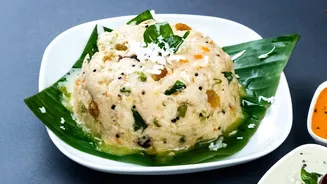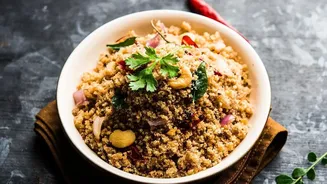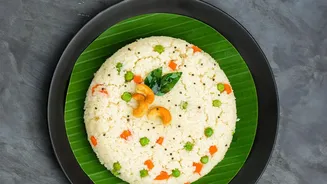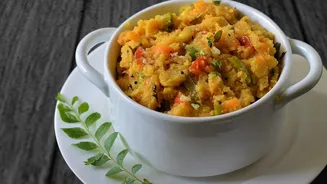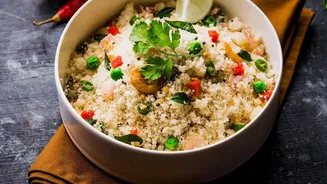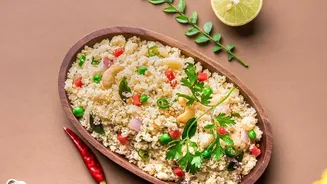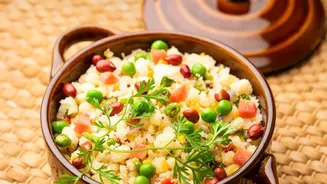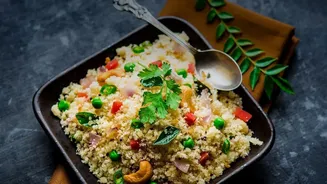


The Benchmark: Classic Rava Upma
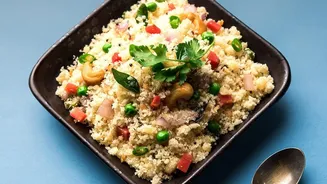
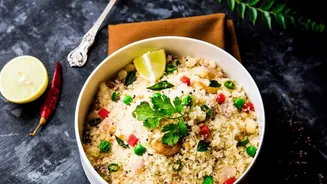
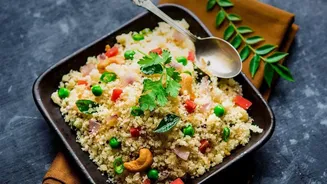
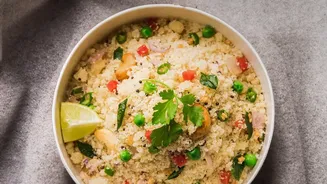
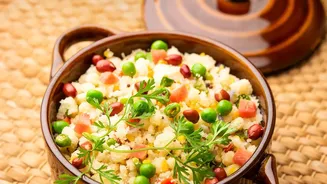
This is the version most of India knows and loves. Made from roasted rava (semolina or cream of wheat), its texture is its defining feature: soft, fluffy, and light. The key to achieving this is the right ratio of water to rava and continuous stirring
to prevent lumps. Often studded with sautéed onions, green chillies, ginger, and sometimes vegetables like peas and carrots, this upma is a simple, comforting meal. The final texture should be moist but not sticky, with each grain separate yet soft. It serves as the perfect canvas, a familiar starting point before we venture into its more complex regional cousins.
Karnataka's Spicy Khara Bath
Step into any 'Darshini' or tiffin center in Karnataka, and you'll find Khara Bath, a close relative of upma but with a bolder personality. Its texture is typically softer and more porridge-like than a standard rava upma. What truly sets it apart is the flavour, derived from a special spice blend, often vangi bath powder or a similar masala. This gives it a reddish-yellow hue and a complex, spicy, and slightly tangy taste. Loaded with tomatoes, onions, and vegetables, Khara Bath is a full-bodied experience, often served alongside its sweet counterpart, Kesari Bath, in a combination famously known as 'Chow Chow Bath'.
Tamil Nadu's Coarse Arisi Upma
Travel to Tamil Nadu, and you'll discover an upma with a completely different textural profile: Arisi Upma. Made not from semolina but from coarse, broken raw rice (arisi) and a bit of toor dal, this preparation is firm, granular, and satisfyingly chewy. The rice and dal are ground into a rava-like consistency, seasoned with pepper and cumin, and then cooked. The result is a non-sticky, hearty dish where you can feel the individual grains. It’s a comforting, rustic dish traditionally made in a bronze pot, which creates a prized crispy layer at the bottom called 'kaandhal'.
Maharashtra's Tangy Sanja
In Maharashtra, rava upma takes on a distinct form known as Sanja. While it shares its base ingredient, semolina, with the classic upma, its preparation method gives it a unique flavour and texture. Often, Sanja is cooked using buttermilk instead of just water, which imparts a subtle tanginess. It is spiced with turmeric, giving it a characteristic golden-yellow colour. Peanuts are a common addition, providing a delightful crunch against the soft, savoury porridge. The final texture is often described as melt-in-the-mouth and smooth, offering a slightly different comfort from the standard fluffy upma.
The Alternative Grain: Aval Upma
Moving away from semolina and rice, Aval or Poha (flattened rice) Upma offers yet another textural dimension. Popular across many regions, the texture of this upma is soft, light, and delicate. Because poha simply needs to be washed and soaked briefly, it doesn’t require the same slow cooking as rava. The flakes absorb the flavours of the tempering—mustard seeds, curry leaves, onions, and often a pinch of turmeric—becoming tender without turning mushy. It’s a quicker, lighter alternative, and while it shares a name and purpose with its semolina-based cousins, the mouthfeel is entirely its own, making it a beloved breakfast for those who prefer a less dense meal.