



Understanding the Neue Klasse Revolution
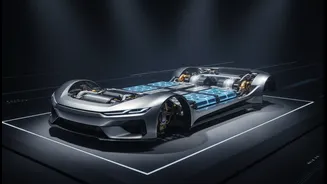
Before diving into the M3, it’s crucial to understand "Neue Klasse," or "New Class." This isn't just a new car; it's a complete, ground-up reinvention of how BMW designs, engineers, and builds its vehicles for the electric era. The Neue Klasse platform
is a dedicated EV architecture featuring an advanced 800-volt system for ultra-fast charging, new cylindrical battery cells for greater energy density, and a powerful new software brain to control everything. This unified architecture will underpin a whole family of future BMWs, from sedans to SUVs, aiming to improve efficiency, range, and performance across the board. It represents a massive strategic investment to future-proof the brand in a competitive market.
The Electric M3 Takes Pole Position
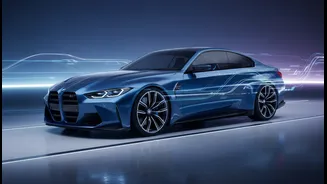
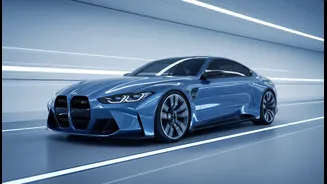
Confirming the company's strategic pivot, the first M performance sedan built on the Neue Klasse platform will be fully electric. Current timelines suggest the electric M3, internally codenamed ZA0, is set to arrive in 2027. Its gasoline-powered sibling, expected to be codenamed G84, will follow later, with some reports pointing to a 2028 release. This decision to lead with the EV variant is a powerful statement from BMW's M division, indicating that its highest performance aspirations are now tied to electrification. The brand is betting that it can translate the M3's legendary driving dynamics into a new, battery-powered format.
A Quad-Motor Electric Powerhouse
The specifications being discussed for the electric M3 are staggering. It will feature a quad-motor setup, with one electric motor dedicated to each wheel. This allows for an unprecedented level of control over torque distribution, managed by a central supercomputer that BMW has dubbed the "Heart of Joy." This system can adjust power to each wheel independently in milliseconds, promising a new dimension of grip, agility, and stability. While official power figures are not yet confirmed, rumors suggest an output that could exceed 1,000 horsepower, making it the most powerful M3 in history by a huge margin. Despite the immense power, BMW M CEO Frank van Meel has stressed that the main goal is vehicle dynamics and track capability, not just straight-line speed.
The Future of the Inline-Six
For the purists, the sound of a straight-six engine is the soul of the M3. The good news is that BMW isn't abandoning its heritage just yet. A next-generation, gasoline-powered M3 is still part of the plan. It is expected to use an evolution of the current S58 twin-turbo 3.0-liter inline-six engine, updated to meet stricter emissions standards like Euro 7. Interestingly, Frank van Meel has stated that the next combustion M3 will not be a plug-in hybrid, unlike the larger M5. The company is opting to keep the two powertrains completely separate, offering a pure electric experience on one side and a pure combustion experience on the other. However, reports suggest the next gas M3 may be offered only with an automatic transmission and all-wheel drive.
Two Futures for One Legend
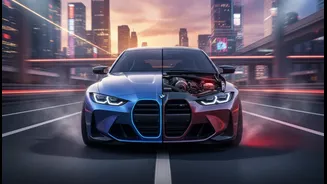
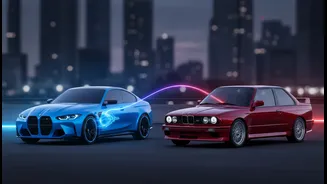
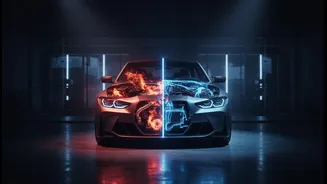
By offering two distinct M3s, BMW is hedging its bets in a transitional era. Rather than forcing all its customers into an electric future, it's providing a choice between two extreme philosophies: a cutting-edge, software-defined EV and a highly refined internal combustion machine. BMW M's boss has even confirmed the electric model will simply be called "M3," not "iM3," cementing its status as a true successor to the legendary nameplate. This dual-path strategy allows the M brand to push the boundaries of electric performance while still catering to its traditional, and very loyal, customer base. The market's response to these two different expressions of the ultimate driving machine will likely shape the future of BMW M for decades to come.