





A Major Step Towards Connectivity
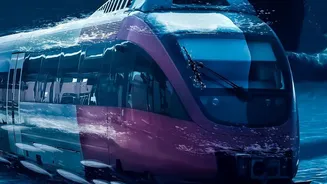
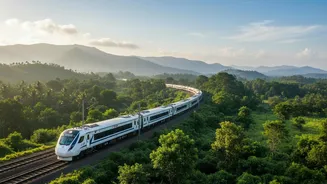
The commencement of safety trials by the South Western Railway's Mysuru Division marks a significant leap forward for the proposed Vande Bharat service connecting Karnataka's capital with its major coastal city. A custom-built 20-car Vande Bharat rake,
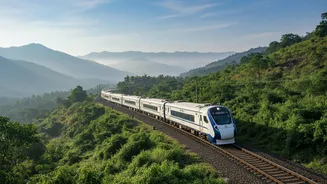
manufactured by the Integral Coach Factory in Chennai, is currently undergoing rigorous field tests. These trials, which began on August 12 and are scheduled to continue until August 20, are being conducted on the formidable Sakleshpur-Subrahmanya Road ghat section. Onboard are personnel from the Research Designs and Standards Organisation (RDSO), who are meticulously evaluating the train's performance, stability, and braking systems. Successful completion of these assessments is the final major hurdle before the Railway Board can give the green light for commercial operations.
The Ghat Section Challenge
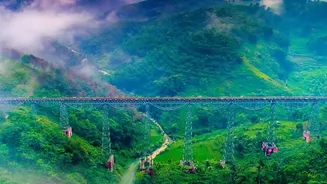
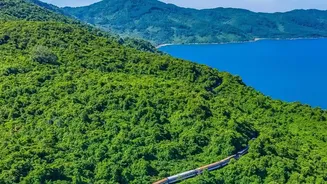
The primary reason for these extensive tests is the unique and demanding terrain of the Western Ghats. The 55-kilometre stretch between Sakleshpur and Subrahmanya Road is notoriously difficult, featuring a steep gradient of 1 in 50, which means the track rises one metre for every 50 metres in distance. This section includes 57 tunnels, 226 bridges, and over 100 sharp curves, making it one of the most technically demanding railway lines in the country. Conventional trains require the assistance of 'banker' locomotives to be attached to the rear to push them up the steep inclines and control their speed on descent. However, this method is not feasible for the integrated rake design of a Vande Bharat train. To overcome this, the new rake has been specially fitted with an Automatic Emergency Braking (AEB) system, which will automatically cap the train's speed at 30 kmph in the ghat section to ensure safety.
Slashing Travel Times and Boosting the Economy
The introduction of the Vande Bharat Express promises to revolutionize travel between the two cities. Currently, the journey by road or existing train services can take anywhere from eight to ten hours. The proposed semi-high-speed service is expected to cut this travel time down to approximately five to six hours, offering a faster, more reliable, and comfortable alternative. This significant time saving is poised to provide a substantial boost to both business and tourism. The enhanced connectivity will strengthen economic ties between the IT and startup hub of Bengaluru and the commercial and port hub of Mangaluru. Furthermore, it will make the scenic coastal and Malenadu regions more accessible for tourists, potentially leading to significant growth in the local hospitality and travel sectors.
What Happens Next?
Once the ongoing trials conclude on August 20, the RDSO will compile a detailed report on the train's performance and safety parameters. This report will be submitted to the Commissioner of Railway Safety (CRS) and the Railway Board for final review and approval. While officials had earlier hinted at a June 2026 launch, it was delayed due to the unavailability of a rake equipped with the mandatory emergency braking system for the ghats. With the specialized rake now in operation for testing, the project is firmly back on track. If the safety report is positive, the Railway Board will make the final decision on sanctioning the service, announcing the official launch date, route, and schedule. Passengers and businesses across Karnataka are watching closely, hopeful that this final test will bring the Vande Bharat dream to life.