





Why Go Big with Fabric?
A large piece of fabric—be it a tapestry, a vintage rug, or a beautiful quilt—offers a unique combination of scale and softness that traditional art often lacks. Unlike a hard-surfaced painting that reflects light, a textile absorbs it, creating a sense
of warmth and coziness. This softness can instantly make a room feel more inviting. Furthermore, a single large piece provides an immediate focal point, anchoring the space and making the design feel intentional. It can solve the “empty wall” problem far more effectively than a collection of smaller items, which can sometimes look cluttered or lost on a large surface. Using textiles also introduces texture and pattern in a significant way, adding a layer of visual interest that paint or wallpaper alone cannot achieve.
Proportion Is the Most Important Decision
The success of this look hinges almost entirely on getting the scale right. A common mistake is choosing a textile that is too small, making it look like a postage stamp on a giant envelope. A good rule of thumb is that the artwork should occupy about two-thirds of the width of the furniture it hangs above, such as a sofa or headboard. For a blank wall with no furniture, aim for the textile to cover between 60% and 75% of the available wall space. Before committing, measure your wall and the furniture below it. Then, use painter's tape to outline the dimensions of your potential textile on the wall. This simple trick allows you to visualize the scale and ensure it feels balanced before you buy. When in doubt, it's often better to size up; a slightly-too-large piece looks bold and deliberate, while a too-small piece can feel like a mistake.
Choosing Your Perfect Textile
The term 'textile' is broad, which is great for creativity. You can use traditional woven tapestries with intricate designs, which bring a sense of history and culture into a room. Lightweight vintage rugs, especially those with beautiful patterns, can be repurposed as stunning wall art. Modern quilts or custom fabric panels offer another avenue, allowing you to play with contemporary geometric designs or bold colours. Even a few yards of high-quality decorative fabric that you love can be turned into a simple, impactful hanging. Consider the existing style of your room. A minimalist space might call for a textile with a simple design and neutral colours, while a bohemian or eclectic room can handle a riot of pattern and colour.
Practical Tips for Hanging
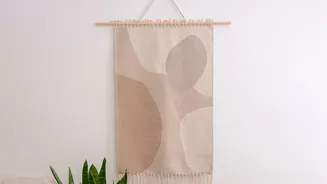
Hanging a large, and sometimes heavy, piece of fabric requires a little planning. The simplest method is to use a curtain rod or a wooden dowel. Many tapestries come with a built-in rod pocket for this purpose. This method allows the fabric to hang naturally. For a more polished look, you can have the textile professionally framed, although this can be a more expensive option. Another approach is to mount the fabric onto a simple wooden frame, stretching it taut like a canvas. This is a great DIY project that gives a clean, gallery-style finish. For a more industrial or casual look, large bulldog clips can be spaced along the top of the fabric and hung from nails or hooks. Whatever method you choose, ensure you use appropriate wall anchors to support the weight of the textile safely.