


What Exactly Was Launched?
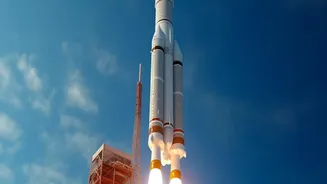
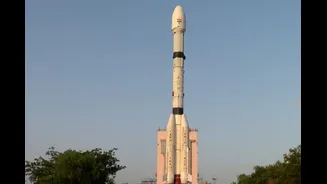
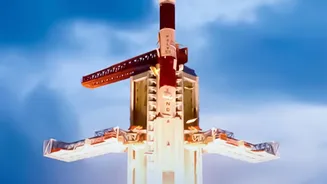
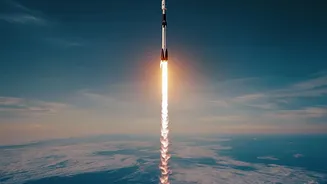
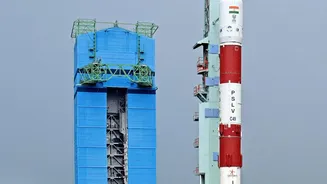
On a clear September morning, the Indian Space Research Organisation (ISRO) successfully conducted the second high-altitude abort test for its Gaganyaan programme. The mission, designated Test Vehicle Abort Mission-2 (TV-D2), saw a single-stage liquid-fuelled
rocket carry a fully functional, unpressurised version of the Gaganyaan crew module to an altitude of approximately 17 kilometres. At this point, the onboard computers simulated a catastrophic failure, triggering the Crew Escape System (CES). This system, essentially a powerful escape hatch powered by its own set of quick-firing solid motors, immediately pulled the crew module away from the rocket, demonstrating its ability to save astronauts during a real-life emergency. The module then safely descended under parachutes for a splashdown in the Bay of Bengal, where it was recovered by the Indian Navy.
The Lifeboat for Indian Astronauts
For the Gaganyaan mission, astronaut safety is the absolute highest priority. The Crew Escape System is the mission's ultimate insurance policy. Previous tests, like the Pad Abort Test in 2018 and TV-D1 in 2023, validated the system at the launch pad and during transonic flight phases, respectively. This latest test was designed to push the system's performance envelope further, ensuring it functions flawlessly under even more demanding high-altitude conditions. Proving this escape mechanism is not just a technicality; it is a non-negotiable milestone on the path to human-rating the entire launch system. Every successful test builds confidence and brings ISRO one step closer to the final green light for sending 'Gaganyatris' into space, joining an elite club of nations with independent human spaceflight capabilities.
A Packed 2026 Schedule
This successful test is a headline achievement in what is shaping up to be a very busy 2026 for ISRO. The year's agenda is packed with multiple critical missions that highlight India's multi-faceted space strategy. The Gaganyaan programme itself has at least two more major uncrewed flights scheduled, including a full orbital test flight to validate all systems, from the human-rated LVM3 rocket to the crew module's re-entry and recovery procedures. Beyond Gaganyaan, ISRO's commercial arm, NewSpace India Limited (NSIL), is also stepping up its activities. A key commercial mission, GSAT-N3, is slated for launch in the first quarter of 2026 to meet governmental communication needs. Furthermore, with plans for dozens of launches over the next few years, including for international customers, 2026 is a pivotal year for cementing India's reputation as a reliable and cost-effective launch provider.
Beyond Gaganyaan: The Broader Horizon
While the Gaganyaan mission rightfully captures the public imagination, ISRO's 2026 programme is also laying the groundwork for future interplanetary exploration. Work continues on Shukrayaan, India's first mission to Venus, now targeting a 2028 launch. This mission aims to study the Venusian atmosphere and surface, contributing valuable data to the global understanding of why Earth's 'twin' evolved so differently. Simultaneously, plans are advancing for Mangalyaan-2, an ambitious follow-up to India's historic Mars Orbiter Mission. Unlike its predecessor, this mission aims to land a rover and potentially a helicopter on the Martian surface, marking a significant leap in India's technological capabilities for planetary exploration. These long-term projects benefit from the incremental advancements and rigorous testing demonstrated in missions like the recent crew escape test.