






The Old Speed Limit for Solar
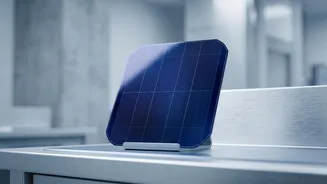
For decades, the vast majority of solar panels have been made from silicon. While reliable and increasingly affordable, silicon has a fundamental physical limitation known as the Shockley-Queisser limit. First calculated in 1961, this limit caps the theoretical
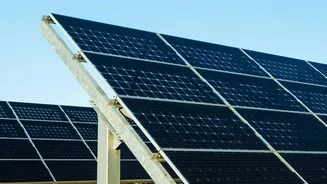
maximum efficiency of a single-junction silicon solar cell at around 33%. In reality, the best commercial panels you can buy today hover in the low-to-mid 20% efficiency range, as practical issues like reflection and heat loss take their toll. For a long time, the industry has been inching closer to this ceiling, but to make a truly massive leap, a new approach was needed. The basic problem is that sunlight is made of a spectrum of colours, or photons with different energy levels. A single material like silicon is optimised for only a narrow slice of that spectrum. It can't effectively capture energy from photons that are too powerful or too weak, meaning much of the sun's energy is lost as waste heat or simply passes right through.
Enter the Tandem Solar Cell
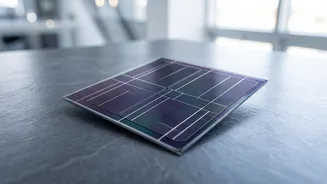
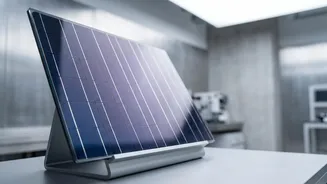
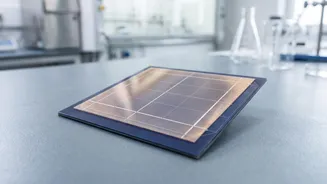
This is where tandem solar cells come in. Instead of one material, they use two or more layers stacked on top of each other. The most promising combination currently involves placing a thin, transparent layer of a material called perovskite on top of a traditional silicon cell. Think of it like a smart filter. The top perovskite layer is excellent at capturing high-energy light (like blue and green light), converting it to electricity, and letting the rest of the sunlight pass through. The bottom silicon layer is then perfectly positioned to capture the remaining lower-energy light (like red and infrared light) that it is already good at converting. By dividing the labour, the two materials working in tandem can harvest a much broader portion of the solar spectrum than either could alone. This stacking strategy effectively bypasses the old single-material limit, opening the door to much higher potential efficiencies, with a theoretical maximum for this combination believed to be as high as 43%.
Why the 30% Milestone is a Big Deal
While scientists have been working on tandem cells for years, crossing the 30% efficiency threshold in certified lab tests is a huge psychological and technical victory. Recent breakthroughs, with some labs like LONGi reporting certified efficiencies as high as 35.5% in mid-2026, prove the technology's promise is real. This isn't just an incremental improvement; it's a step-change. Higher efficiency means generating more power from the same amount of space. This makes solar energy far more practical for applications where space is limited, like residential rooftops or electric vehicles. For large-scale solar farms, it means you can generate the same amount of electricity with fewer panels, less land, and lower installation and maintenance costs over the long term. This directly addresses one of the major challenges for densely populated countries.
The Road from Lab to Rooftop
Despite the exciting records, you won't be able to buy a 35% efficient tandem panel for your home just yet. There are significant hurdles to overcome before these lab-scale cells become a commercial product. The biggest challenges are durability and manufacturing at scale. Perovskite materials, while great at converting light, can degrade when exposed to humidity and high temperatures over long periods—conditions that solar panels face every day. Scientists are actively working on new encapsulation techniques and material formulations to improve stability. Furthermore, the record-setting cells are often tiny, sometimes only 1cm² in size. Scaling up the manufacturing process to produce large, reliable, and affordable panels is a major engineering challenge that will likely take several more years to perfect.
What This Means for India's Solar Dream
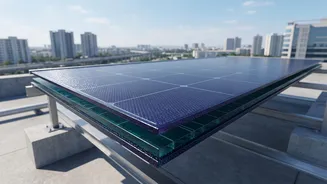
For India, which has ambitious goals of installing 500 GW of renewable capacity by 2030, this technology is particularly game-changing. One of the biggest constraints for utility-scale solar in India is land availability. Meeting the country's targets with conventional panels requires vast tracts of land, often leading to conflicts over agricultural or ecologically sensitive areas. Tandem cells, by generating significantly more power per square metre, could drastically reduce the land footprint required for new solar parks. This makes achieving our renewable energy targets more feasible and sustainable. As India aims to become a global leader in solar, embracing and eventually manufacturing next-generation technologies like perovskite-silicon tandems could secure our energy future, reduce reliance on fossil fuels, and make clean power more abundant and affordable for everyone.