


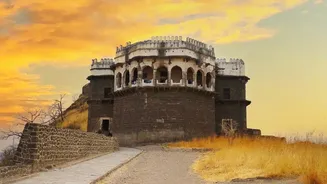
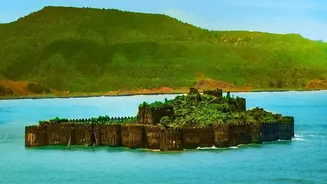
Mehrangarh Fort, Jodhpur
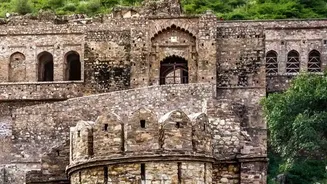
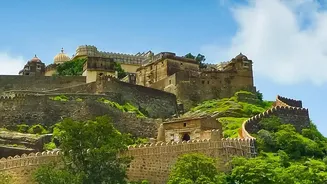
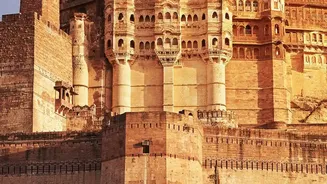
Rising 410 feet above the city of Jodhpur, Mehrangarh Fort is a formidable structure of Rajput power and endurance. Its sheer, imposing walls seem to grow organically from the rocky hill they stand on. The fort's monumental scale was designed to intimidate
and protect. Yet, inside this fortress, the mood shifts from brute force to refined beauty. The Phool Mahal, or Flower Palace, is a standout example. Originally a private pleasure chamber for maharajas, its ceiling is lavishly decorated with gold filigree work. Intricate latticed stone screens, known as jalis, create a play of light and shadow, providing both ventilation and privacy with lace-like delicacy carved from solid stone. This contrast between the fort's massive exterior and the delicate artistry within is breathtaking.
Amber Fort, Jaipur
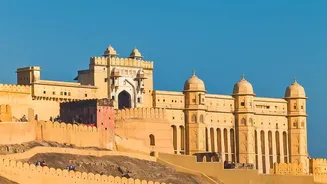
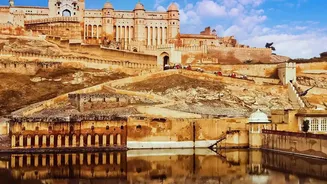
Perched on a forested hill, Amber Fort is a stunning blend of Rajput and Mughal architectural styles. Its vast complex of ramparts, gates, and cobbled paths is a statement of power. Visitors are often awestruck by its sheer size and strategic placement overlooking Maota Lake. But the fort's true magic lies in its private palaces. The most famous is the Sheesh Mahal, or Mirror Palace. Here, the walls and ceiling are encrusted with thousands of tiny mirror pieces and coloured glass. A single candle flame can illuminate the entire hall, creating a starry, ethereal glow. Another gem is the Ganesh Pol, a majestic gate adorned with intricate frescoes and vibrant mosaics that served as the private entrance to the maharajas' palaces.
Gwalior Fort, Gwalior
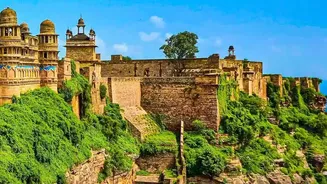
Often called the "Gibraltar of India," Gwalior Fort has a history stretching back over a thousand years. Its massive outer walls, bastions, and palaces dominate the city's skyline. This sprawling hilltop fort has been the stage for countless historical events. Within its formidable defences lies the Man Mandir Palace, built by Maharaja Man Singh Tomar in the 15th century. This palace is a jewel of early Hindu architecture, celebrated for its exterior decorated with brilliant blue ceramic tiles. The facade features rows of yellow ducks and plantain trees in mosaic, adding a touch of whimsy to the imposing structure. Inside, intricately carved sandstone screens and pillars demonstrate the era's sophisticated craftsmanship.
Red Fort, Delhi
As a symbol of Mughal power, Delhi's Red Fort is a UNESCO World Heritage Site enclosed by towering red sandstone walls stretching for over two kilometres. Commissioned by Emperor Shah Jahan, it was the ceremonial and political centre of the Mughal government. Deep within this monumental fortress is the Diwan-i-Khas, or Hall of Private Audience. This pavilion is an exercise in sublime artistry. Built of pure white marble, its pillars and arches are exquisitely inlaid with floral patterns of semi-precious stones, a technique known as pietra dura. A famous Persian couplet inscribed on its walls proclaims, "If there be a paradise on Earth, it is this." The delicate inlay work stands in stark contrast to the fort's immense red walls.
Agra Fort, Agra
A sister monument to the Taj Mahal, the Agra Fort is a 94-acre walled city that served as the main residence of the Mughal emperors until 1638. Its immense double ramparts, built of red sandstone, are over 70 feet high. Inside this vast enclosure, the architecture transitions to showcase more delicate sensibilities. The Khas Mahal, Shah Jahan's private palace, is made of white marble with stunning floral and geometric patterns that were once studded with gemstones. The nearby Jahangiri Mahal, built by Akbar, is a fusion of Islamic and local Rajasthani styles, featuring ornate stone carvings, latticework, and ornamental pillars.
Chittorgarh Fort, Chittor
Sprawling over a hilltop, Chittorgarh is the largest fort in India and a symbol of Rajput pride and resilience. This UNESCO World Heritage site is a massive complex of palaces, temples, and reservoirs. Its scale is truly monumental. Within this vast landscape stands the Vijay Stambha, or Tower of Victory. Built in 1448 by Rana Kumbha, this nine-storey tower is not just a symbol of victory but also a masterpiece of decorative art. Standing 122 feet tall, its red sandstone and marble exterior is covered with intricate sculptures of Hindu deities, scenes from epics, and depictions of daily life, making it a veritable textbook of Hindu iconography.
Jaisalmer Fort, Jaisalmer
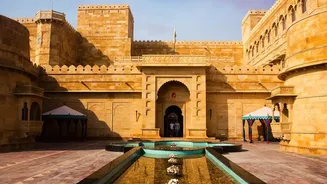
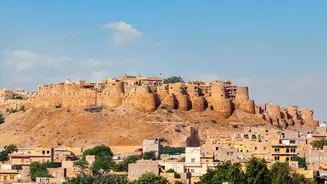
Rising from the Thar Desert like a sandcastle, Jaisalmer Fort is a living fortress, with a significant portion of the city's population still residing within its walls. Known as Sonar Qila or the Golden Fort, its massive yellow sandstone walls appear to glow at sunset. While its scale is impressive, the true marvel is the unbelievably intricate detail found in the havelis (mansions) built by wealthy merchants. Structures like the Patwon Ki Haveli feature facades so densely carved with jharokhas (balconies), window screens, and floral motifs that they resemble delicate lacework. These carvings, executed by hand, transform solid stone into a display of ethereal, almost fragile, beauty.