




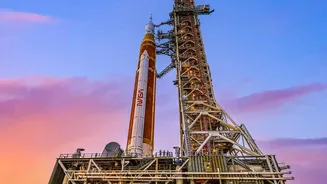
The Global Hub for Space Operations
SMOPS-2026, the International Conference on Spacecraft Mission Operations, recently brought together the brightest minds in the space sector in Bangalore, India. Co-hosted by organizations including the Indian Space Research Organisation (ISRO), the conference
is a crucial forum where engineers, scientists, and policymakers from agencies like NASA and ESA discuss the future of managing space missions. This year, a central theme was the accelerating use of Artificial Intelligence and the complex challenges it introduces, from managing large satellite constellations to enabling deep-space exploration.
Why AI Is Essential for Space
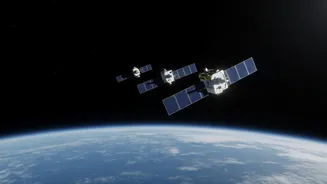
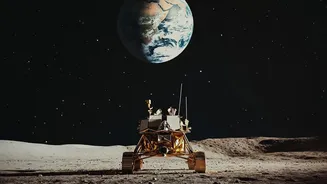
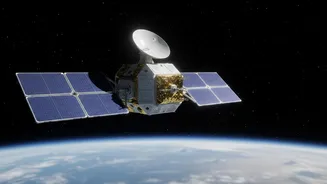
The push for AI in space isn't just about technological novelty; it's a practical necessity. For missions to Mars or beyond, the communication delay can be up to 22 minutes each way, making real-time human control impossible. AI is crucial for spacecraft and rovers to navigate, land, and operate autonomously in these remote environments. Closer to home, AI is the only viable way to manage massive satellite constellations for communications and Earth observation, where thousands of satellites need to coordinate collision avoidance maneuvers faster than any human team could. Agencies like NASA and ESA are developing autonomous systems that allow spacecraft to decide their next actions, analyze data onboard, and even perform self-maintenance, dramatically increasing mission efficiency and capability.
The Human-in-the-Loop Dilemma
The biggest question on the table is not if we should use AI, but how humans should oversee it. This debate centers on two main concepts: "human-in-the-loop" and "human-on-the-loop." A human-in-the-loop system requires direct human approval for major AI decisions, which works well when communication is fast. However, for deep space missions, a "human-on-the-loop" approach is necessary. In this model, the AI operates autonomously within predefined boundaries, while human operators supervise and intervene only when anomalies arise. The challenge is defining those boundaries. How much autonomy is too much when a single error could jeopardize a multi-billion dollar mission? Experts argue that humans must remain responsible for the broader mission context, providing judgment and oversight that machines lack.
Trust, Transparency, and When AI Fails
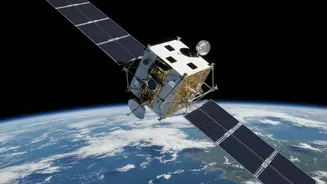
For human oversight to be effective, mission controllers need to trust the AI's decisions. This has fueled a drive for "explainable AI" (XAI), which allows systems to report why they made a particular choice. Traceability is crucial for auditing and improving AI models, especially after a fault. But what happens when an AI makes a bad call? The risk is immense, from mission failure to collisions in orbit. Protocols for these scenarios involve building in robust fail-safes, such as having the system automatically revert to a safe mode or securely handing control back to a human operator. As a recent US Air Force demonstration of a neural network controlling a satellite showed, the technology is advancing rapidly, making these safeguards more critical than ever.
Building the Future, One Robot at a Time
The conversation extends beyond piloting single probes to constructing entire off-world infrastructures. NASA's ARMADAS project, for instance, is developing small "builder robots" that can autonomously assemble habitats or large antennae on the Moon from modular blocks. This kind of automation is seen as fundamental for a sustained human presence beyond Earth. Similarly, projects are underway to develop autonomous systems for everything from satellite servicing and repair to managing the growing problem of space debris. Each of these applications relies on a delicate partnership between human ingenuity and machine intelligence, where the rules of engagement are still being written.