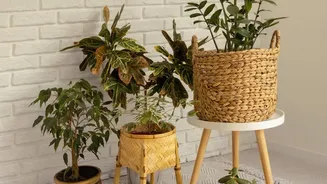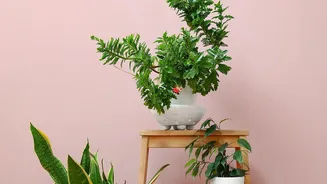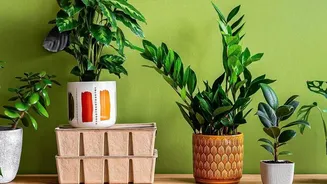



The idea that a few potted plants can scrub your home’s air clean is a popular one, often backed by a famous 1989 NASA study. But how much of that promise holds up in a real-world living room versus a sealed lab? Let's clear the air.
The Myth's Origin: A NASA Study
The belief in houseplants
as natural air purifiers stems largely from a NASA study over 30 years ago. Researchers were looking for ways to clean the air in sealed environments like space stations. They placed common houseplants in small, sealed chambers and introduced volatile organic compounds (VOCs) like benzene and formaldehyde. The results were promising: some plants were remarkably effective at removing these pollutants from the enclosed air. This single study sparked a decades-long trend, turning plants like the Snake Plant and Peace Lily into must-haves for health-conscious homeowners.
The Scientific Limits in a Real Home
The problem is, your home isn't a sealed chamber. More recent analysis of this topic has revealed a crucial flaw in applying NASA's findings to our daily lives: ventilation. In a typical house, air is constantly exchanged through windows, doors, and vents. This natural air exchange removes pollutants much faster than plants can. A 2019 review concluded that to match the air-cleaning effect of a building's standard ventilation, you would need an impractical number of plants—somewhere between 10 and 1,000 plants per square metre of floor space. So, while plants do absorb some toxins, their effect in a normal, ventilated room is too slow to make a significant difference.
The Resilient Snake Plant
The Snake Plant, or Sansevieria, is famously mentioned in the NASA study. While its air-purifying powers may be overstated, it has other unique qualities. Unlike most plants, it converts carbon dioxide into oxygen at night, making it a popular choice for bedrooms. Its true value, however, lies in its resilience. It's incredibly low-maintenance, tolerates low light, and survives irregular watering, making it a perfect starting point for new plant parents. Its sharp, architectural leaves also add a modern touch to any decor.
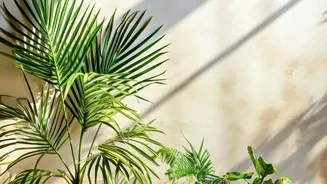
The Feathery Areca Palm
Often found in bright corners of Indian homes, the Areca Palm is celebrated for its lush, tropical feel. It was another plant noted by NASA for its ability to filter formaldehyde and xylene. Its more practical benefit is as a natural humidifier. Through transpiration, a healthy Areca Palm can release a significant amount of moisture into the air, which can be a real comfort in dry, airconditioned rooms. It's also nontoxic to pets, making it a safe and beautiful choice for households with furry friends.
The Ubiquitous Money Plant
Walk into almost any home in India, and you'll likely spot a Money Plant (Golden Pothos). While it was part of the NASA study, its popularity is deeply rooted in Vastu and Feng Shui, where it's believed to attract prosperity. Scientifically, its biggest selling point is its hardiness. This fastgrowing vine thrives in a variety of conditions, from low light to bright indirect light, and can be grown in both soil and water. Its trailing vines are perfect for shelves and hanging baskets, adding easy greenery to any space.
The Elegant Peace Lily
With its glossy dark leaves and elegant white blooms, the Peace Lily is a decorative favourite. In the NASA tests, it was a top performer, showing an ability to absorb a range of VOCs, including ammonia. In a home setting, its true talent is its ability to communicate. It visibly droops when it needs water, taking the guesswork out of watering and making it an excellent plant for beginners. It also prefers lowtointermediate light, making it ideal for interior rooms.
The Hardy Rubber Plant
The Rubber Plant (Ficus elastica) offers a bold, dramatic look with its large, dark, glossy leaves. While noted for its ability to remove formaldehyde in lab settings, its realworld benefit comes from its sheer presence and ease of care. It's a tough plant that can tolerate some neglect and a range of light conditions, though it prefers bright indirect sun. As it grows into a small tree, it becomes a stunning focal point in a living room or large hallway, making a powerful style statement.
The Prolific Spider Plant
The Spider Plant is known for its distinctive arching leaves and the 'spiderettes' or baby plants that hang from the mother plant. Also part of the NASA study, it was noted for removing formaldehyde and xylene. For the average home, its best features are that it's extremely easy to grow and propagate. Those baby plantlets can be easily repotted to create new plants for free. It is also nontoxic to pets and looks fantastic in hanging baskets where its offshoots can cascade down.