



Material Matters for Health and Climate
The material of your container directly impacts how often you'll need to water and how protected your plant's roots are. Terracotta or clay pots are porous, allowing air and water to move through the sides. This helps the soil breathe and prevents it
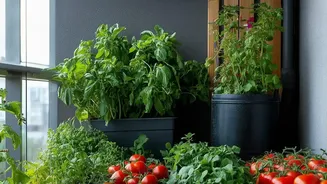
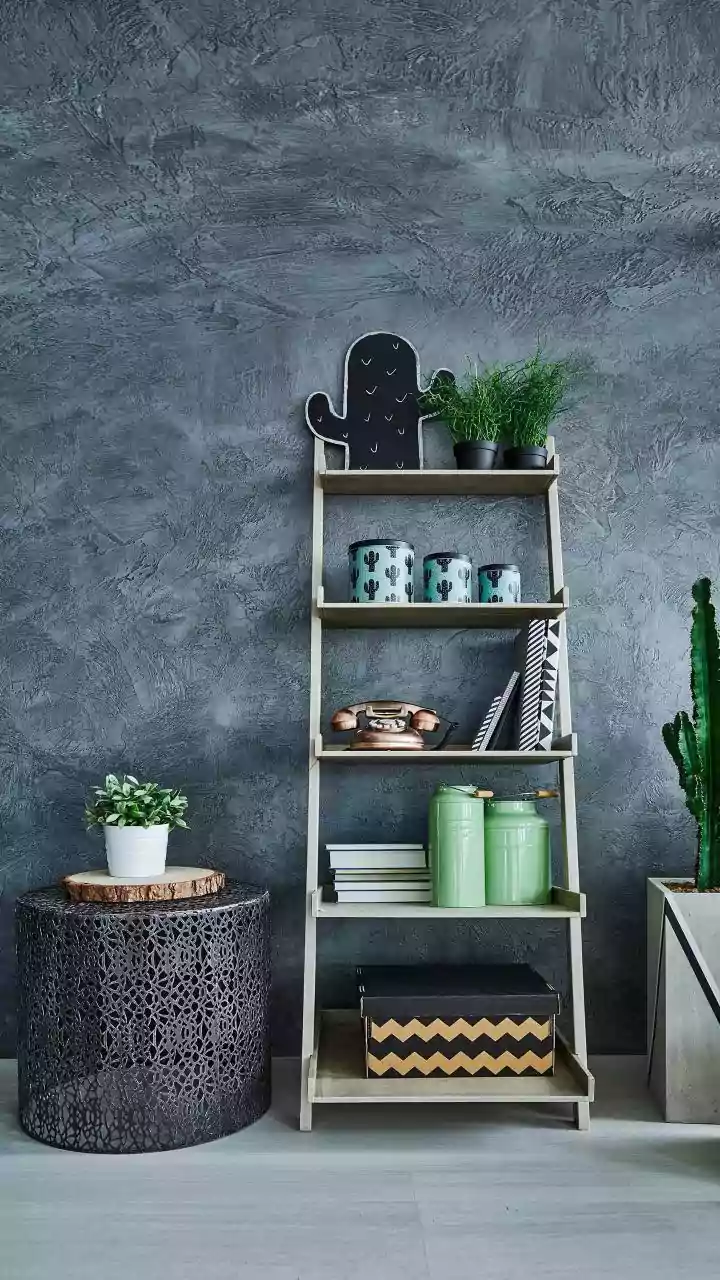
from getting too saturated, which is great for plants like succulents that prefer drier conditions. However, this also means they dry out quickly in hot weather, requiring more frequent watering. Plastic planters are lightweight, affordable, and excellent at retaining moisture, making them suitable for plants that like to stay consistently damp. For hot climates, light-coloured plastic or resin can be a good choice. Fiberglass and concrete planters offer great insulation, protecting roots from extreme temperature swings. Metal planters are durable and stylish but can get very hot in direct sun, potentially damaging roots unless they're placed in a shaded spot.
Getting the Size Right for Root Growth
Choosing the correct pot size is critical; it should be matched to the plant's root ball, not its leaves. A pot that is too large holds excess soil, which stays wet for too long and can lead to root rot. Conversely, a pot that is too small restricts root growth and dries out too quickly. A good rule of thumb when repotting is to choose a new container that is only one or two inches wider in diameter than the previous one. For plants that are already in larger pots (10 inches or more), you can go up by two to four inches. If you see roots growing out of the drainage holes or circling the surface, it's a clear sign your plant needs a bigger home. Some plants, like spider plants and many succulents, actually prefer to be slightly root-bound, so there's no need to rush a repotting if the plant seems healthy.
Drainage is Non-Negotiable
Proper drainage is the single most important factor for the health of a potted plant. Without drainage holes, excess water accumulates at the bottom of the pot, suffocating the roots by cutting off their oxygen supply and creating a perfect environment for root rot and fungal diseases. Every container you use must have at least one hole at the bottom to allow water to escape freely. If you fall in love with a decorative pot that lacks holes, the best solution is to use it as a 'cachepot'. Simply place your plant in a slightly smaller, functional pot with drainage holes, and then nest it inside the decorative one. This gives you the style you want without compromising your plant's health. Be sure to empty any water that collects in the outer pot after watering.
Maximising Your Balcony Space
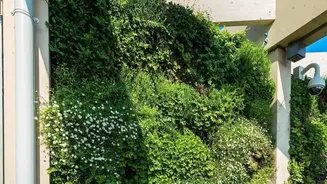
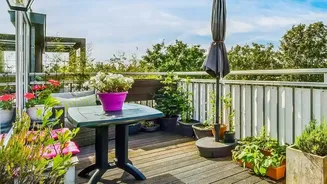
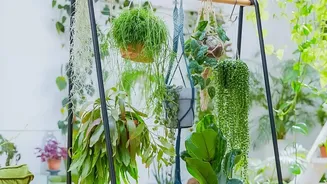
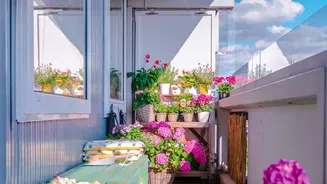
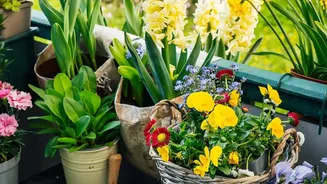
Limited floor space doesn't mean you have to limit your garden. The key is to think vertically and use overlooked areas. Railing planters are an excellent way to add greenery without taking up any floor space. Similarly, hanging baskets can bring life and colour to the upper reaches of your balcony. Vertical gardens or tiered plant stands allow you to stack multiple plants in a small footprint. When choosing planters, consider their weight, especially for hanging or railing options. Lightweight materials like fiberglass or plastic resin are ideal. Using square planters can be a smart way to make use of corners, which often go underutilised. By grouping pots of varying heights, you can create a sense of depth and make your small space feel more dynamic and lush.