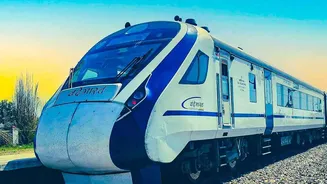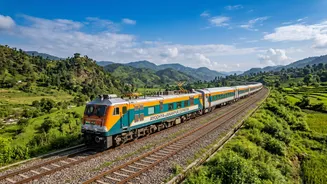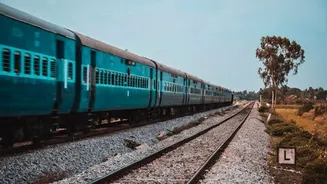







A new chapter in cultural and spiritual connectivity has begun. The Saryu-Kamala Express, a weekly train service, now forges a direct link between Ayodhya in India and Janakpur in Nepal, uniting two of the most revered sites in the Ramayana.
A New Spiritual Bridge on Rails
In a significant
move to bolster cross-border ties and religious tourism, Indian Railways has launched a new weekly train service named the Saryu-Kamala Express. The service was virtually inaugurated on November 23 by Indian Prime Minister Narendra Modi and his Nepalese counterpart, Balendra Shah. This train directly connects Ayodhya Cantt in Uttar Pradesh with Janakpur Dham in Nepal, establishing a much-anticipated physical link between two cities that hold immense spiritual importance for millions of Hindus. The launch marks a major milestone in the India-Nepal relationship, facilitating easier travel for pilgrims, tourists, and families on both sides of the border.
Route, Schedule, and Journey Details
The Saryu-Kamala Express will cover a distance of approximately 604 kilometres, with a total journey time of around 19 hours. For passengers starting in India, Train No. 15596 will depart from Ayodhya Cantt every Monday at 5:50 PM and is scheduled to arrive at Janakpur Dham at 12:40 PM (Nepali time) the following day. The return journey, operated as Train No. 15595, will leave Janakpur Dham every Saturday at 1:10 PM (Nepali time) and reach Ayodhya Cantt at 8:10 AM on Sunday. The train will make several key commercial stops, including Gorakhpur, Basti, Raxaul, and Sitamarhi, passing through major towns in Uttar Pradesh and Bihar before entering Nepal. Comprising modern LHB coaches, the train includes both air-conditioned and sleeper class options to cater to different passenger needs.
From Ram's Birthplace to Sita's Home
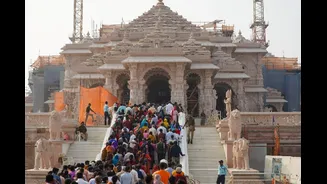
The significance of this new train service extends far beyond mere transportation. It connects Ayodhya, revered as the birthplace of Lord Ram, with Janakpur, widely believed to be the birthplace of his wife, Sita. This journey from Ram's 'janmabhoomi' to Sita's 'maika' (parental home) is deeply embedded in the cultural and religious consciousness of the region, celebrated in folk songs and traditions for centuries. For devotees, the train offers an unprecedented opportunity to complete a pilgrimage that was previously fragmented and required multiple modes of transport. Now, they can travel seamlessly between the two sacred centres, tracing a path central to the narrative of the Ramayana.
A Key Link in the Ramayana Circuit
The Ayodhya-Janakpur Express is a cornerstone of the broader 'Ramayana Circuit' initiative, a project under the Swadesh Darshan Scheme designed to develop and connect pilgrimage sites associated with the epic. This circuit aims to create a comprehensive spiritual trail for tourists and pilgrims, covering key locations from Lord Ram's life, including Nandigram, Chitrakoot, and Rameshwaram. By establishing a direct rail link to Janakpur in Nepal, the Indian government has extended this spiritual map beyond national borders, acknowledging the shared civilisational heritage between the two countries. The new train is expected to significantly boost tourism along the entire circuit, benefiting local economies and promoting cultural exchange.
Strengthening Ties and Boosting Economies
Beyond its religious importance, the Saryu-Kamala Express is a powerful symbol of diplomatic cooperation and economic partnership between India and Nepal. The launch, coinciding with the Nepalese Prime Minister's state visit, highlights the focus on improving connectivity and infrastructure. Officials from both nations have emphasized that this improved access will not only serve pilgrims but also support people traveling for business, education, and family reasons. The increased flow of tourists is expected to create new opportunities for hospitality operators, local traders, and artisans along the route, fostering regional development and deepening the historic 'roti-beti ka rishta' (relationship of livelihood and marriage) between the two nations.