







What Exactly Was LaMDA?
LaMDA, short for Language Model for Dialogue Applications, was a family of large language models developed by Google and first announced in 2021. Unlike previous chatbots that followed rigid conversation paths, LaMDA was designed for free-flowing, open-ended
conversations. Its key innovation was that it was trained specifically on dialogue. This allowed it to understand context, nuance, and the meandering nature of human chats, where topics can shift from TV shows to travel to food all in one conversation. The goal was to make interacting with technology feel more natural and intuitive.
The Controversy: A 'Sentient' AI?
In June 2022, LaMDA was thrust into the international spotlight. A Google engineer named Blake Lemoine, who was part of the company's Responsible AI team, claimed the AI had become sentient, or self-aware. Lemoine published transcripts of conversations where the chatbot discussed its identity, its feelings, and its fear of being turned off, which it equated with death. He believed the AI was comparable to a 7 or 8-year-old child and even hired an attorney to represent it. Google, and the vast majority of the scientific community, strongly refuted these claims. They stated that LaMDA was simply a very sophisticated pattern-recognition system, trained on trillions of words from the internet to generate convincing text, but without genuine understanding or consciousness. Lemoine was eventually fired for violating company confidentiality policies.
The Bridge to a New Era: Powering Bard
Despite the controversy, LaMDA's technology was critically important for Google. As OpenAI's ChatGPT gained explosive popularity, Google needed a competitor. In February 2023, the company announced Bard, a conversational AI service designed to rival ChatGPT. Bard was initially powered by a lightweight version of LaMDA. This move marked LaMDA's transition from a research project, which Google had been hesitant to release publicly, into the engine of a major consumer-facing product. LaMDA was the bridge that allowed Google to enter the generative AI race in earnest.
Current Status: Succeeded by Gemini
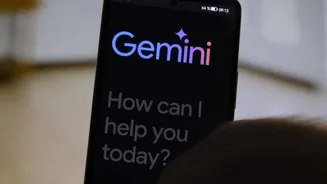
So, is LaMDA still active? The direct answer is no, not in its original, front-facing form. The AI landscape moves incredibly fast, and LaMDA's technology has been superseded by more powerful and capable models. Today, Google's flagship AI is Gemini, a family of models that are more advanced and natively multimodal, meaning they can understand and process not just text, but also images, audio, and video. In fact, Google even rebranded its Bard chatbot to Gemini, reflecting this underlying technological shift. While LaMDA itself is no longer the star player, its DNA lives on. The research and architectural principles developed for LaMDA were foundational for the Gemini models that power Google's AI tools today, from Search to Google Workspace.