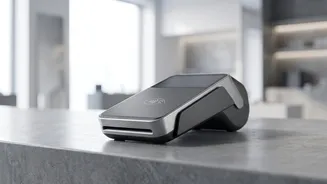








The UPI Revolution and the Zero-Fee Era
For years, the Unified Payments Interface (UPI) has been a game-changer for digital transactions in India. Its simplicity—scanning a QR code to pay instantly from a bank account—led to massive adoption, from big malls to the smallest street vendors. A
key driver of this success was the government's zero-MDR (Merchant Discount Rate) policy, which meant that neither customers nor merchants paid a fee for UPI transactions. This strategy was designed to aggressively push digital payment adoption across the country, and it worked spectacularly. By making transactions free, UPI became the most popular payment method, processing billions of transactions monthly.
What Exactly is MDR?
MDR, or Merchant Discount Rate, is a fee that merchants pay to banks and payment service providers for processing digital transactions. Whenever you use a credit or debit card, the merchant receives slightly less than what you paid. That small percentage is the MDR, and it covers the costs of the payment infrastructure, including banks, card networks (like Visa or Mastercard), and the company providing the card machine. This fee is standard for card payments, but until recently, it was completely waived for UPI and RuPay debit card transactions to encourage their use.
The Big Change: A Selective MDR on UPI
The zero-MDR policy, while great for adoption, created a challenge. The banks and payment companies running the UPI infrastructure were incurring huge operational costs without any revenue to show for it. To create a more sustainable model, the government and the National Payments Corporation of India (NPCI) introduced a change, effective October 15, 2026. A 0.4% MDR will now apply to person-to-merchant (P2M) UPI transactions above ₹2,000. However, this is not a blanket rule. Person-to-person transfers remain completely free. Crucially, transactions up to ₹2,000 are also exempt, which covers about 96% of all merchant payments. Furthermore, small merchants receiving up to ₹1 lakh per month via UPI are also protected from these charges.
The Clear Directive: Do Not Charge Customers
This is the core of the issue. The new 0.4% MDR is a cost to be borne by the merchant's payment ecosystem, not the consumer. The government and the Finance Ministry have been unequivocal on this point. Finance Minister Nirmala Sitharaman has repeatedly stated that customers will not pay any charge for using UPI. Banks have been explicitly advised to ensure that merchants do not pass this cost on by adding a separate UPI fee to a customer's bill. The rationale is that the MDR is a business cost for the merchant, similar to their electricity bill or rent, and should not be directly transferred to the consumer at the point of sale. Government officials have even stated they will monitor the situation daily to ensure compliance.
Why the Firm Stance?
The government's primary goal remains to foster a digital economy. Forcing customers to pay a fee for using UPI would be a major step backward, potentially discouraging its use and pushing people back towards cash. The new, limited MDR is seen as a compromise. It provides a revenue stream to help banks and fintech companies maintain and innovate the UPI infrastructure, ensuring its long-term security and reliability. By making only a small fraction of high-value merchant transactions chargeable, the government hopes to balance the sustainability of the system with the convenience and affordability that made UPI a national success. The message is clear: the cost of sustaining the system should come from larger commercial activities, not from the everyday transactions of ordinary citizens.