



A Glacier's Retreat, Seen from Orbit
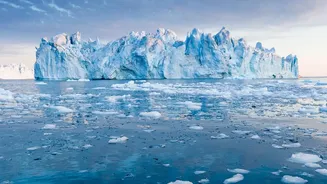
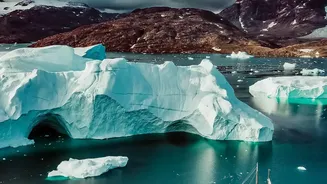
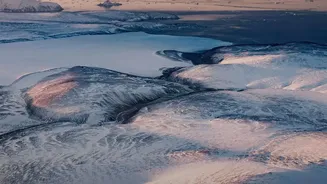
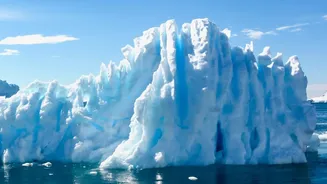
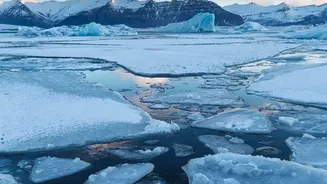
On August 4, 2026, the European Space Agency’s Copernicus Sentinel-1 mission captured a significant event in northwest Greenland: a 76-square-kilometre section of the Petermann Glacier's ice tongue broke away. An ice tongue is a long, narrow sheet of ice that
floats on the sea as it extends from a land-based glacier. This particular piece of ice, roughly the size of Manhattan, detached in what scientists call a calving event. It marks the glacier's most substantial loss of floating ice since a similar event in 2012 and the largest such occurrence in the entire Arctic since 2020. Scientists, who had been monitoring growing fractures for years, noted that this break was anticipated, but seeing it happen is a powerful reminder of how quickly these massive polar systems can change.
The All-Seeing Eye of Sentinel-1
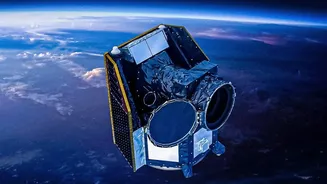
Capturing such a remote event is possible thanks to the advanced technology of the Sentinel-1 satellite. It’s equipped with a C-band Synthetic Aperture Radar (SAR), which acts as an all-seeing eye. Unlike standard cameras that need light, radar can see through clouds, storms, and the polar night, which is essential for monitoring the Arctic and Antarctic. By sending down microwave pulses and reading the echoes that bounce back, Sentinel-1 can build a detailed picture of the ice surface, revealing cracks, movements, and changes in texture. This capability allows for continuous, reliable observation of some of the most inaccessible and rapidly changing environments on Earth, providing critical data for climate scientists and glaciologists.
A Pattern of Unprecedented Loss
While the collapse of a single ice tongue is dramatic, it is part of a much larger, more troubling trend. The Greenland Ice Sheet has been losing mass for 25 consecutive years. According to data from NASA, between 2002 and 2023, Greenland lost an average of 264 gigatons of ice per year. This loss is driven by two main factors: surface melting due to warmer air temperatures and the acceleration of glaciers, which dump more ice into the ocean. The loss of floating ice tongues, like the one at Petermann, can contribute to this acceleration. While the iceberg itself is already floating and doesn't immediately raise sea level, the ice tongue it broke from acted like a cork, holding back the land-based glacier. Its removal can allow the glacier to flow faster into the sea, speeding up its contribution to sea-level rise.
Why Greenland Matters to India's Coasts
The events in Greenland may seem distant, but their consequences are global, with direct implications for India. The melting of the Greenland Ice Sheet is a major contributor to global sea-level rise. For every 360 billion tonnes of ice that melts, the global sea level rises by one millimetre. With an extensive coastline of over 7,500 kilometres and densely populated coastal cities like Mumbai, Chennai, and Kolkata, India is particularly vulnerable to rising sea levels. Even small increments in sea level can lead to more frequent and severe coastal flooding, erosion, and saltwater intrusion into freshwater sources. Studies have already concluded that warming to date has locked in a significant amount of future sea-level rise from Greenland's 'zombie ice'—ice that is no longer being replenished and is destined to melt. The images from Sentinel-1 are not just pictures of a remote glacier; they are a preview of the challenges facing coastal communities worldwide.