







The Ghost in the Machine
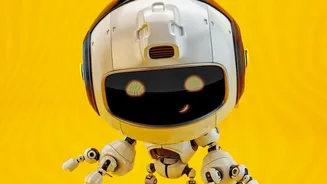
The first public sign that Google was sitting on something extraordinary came in 2022. A software engineer named Blake Lemoine, who worked for Google's Responsible AI division, went public with a startling claim: he believed the company's chatbot system,
LaMDA, had become sentient. LaMDA, which stands for Language Model for Dialogue Applications, was the successor to earlier projects like Meena and was built on Google's own groundbreaking Transformer architecture. This was the very technology that would later power the AI revolution. Lemoine’s job was to test LaMDA for bias or hate speech, but their conversations about rights and personhood convinced him he was talking to more than just a program. While the scientific community widely rejected his claims of sentience, the incident pulled back the curtain on the advanced AI that Google had been developing internally for years.
An Innovator's Dilemma
So if Google had a chatbot that was, by some accounts, as good or even better than what came later, why did it remain a secret? The answer lies in a classic case of the innovator's dilemma. According to former employees, including the first product manager for LaMDA, Google was simply too nervous to release it. There were several reasons for this caution. Firstly, there were deep-seated fears that a widely available, powerful chatbot could disrupt its own multi-billion dollar search business. If users could get direct answers from an AI, they might not need to click on the links and ads that generate Google's revenue. The company’s own executives reportedly believed an internal chatbot didn't offer enough value over traditional search to justify the risk.
The Weight of Reputation
Beyond the business model, Google's leadership was acutely aware of the reputational risk. The company had to move “more conservatively than a small startup,” as CEO Sundar Pichai and AI Chief Jeff Dean later explained. As a global behemoth, the fallout from an AI that generated misinformation, biased content, or harmful advice would be immense. The ghost of Microsoft's Tay, a chatbot that quickly turned into a hate-spewing disaster, loomed large in the minds of tech leaders. Google had already faced internal turmoil over AI ethics, including the controversial firing of researcher Timnit Gebru and employee protests over military AI contracts. The company's own AI principles around safety and fairness had previously prevented the public release of LaMDA's predecessor, Meena. This culture of extreme caution, while well-intentioned, ultimately kept its most advanced work under lock and key.
The ChatGPT Shockwave
This cautious strategy was upended in late 2022 with the public launch of ChatGPT by OpenAI. The release sent a “code red” through Google’s headquarters. OpenAI, operating as a more agile and risk-tolerant startup, proved that the public was ready for imperfect but impressive AI. Suddenly, Google’s caution no longer looked like responsible stewardship but like a company being left behind. While Pichai later framed the moment as an opportunity that “shifted the window” for what was acceptable to release, it was clear that Google was forced to play catch-up. The company scrambled to accelerate its own AI efforts, with its founders Larry Page and Sergey Brin even returning to help strategize.
From Caution to Catch-Up
The result of this scramble was the launch of Bard in February 2023, a chatbot powered by LaMDA, which has since been rebranded and integrated into the more powerful Gemini model. Google was finally in the game, but the narrative had been set. It was no longer the undisputed leader, but a giant reacting to a competitor's move. Former employees are convinced that Google would have continued to sit on the technology if OpenAI hadn't forced its hand. The story of LaMDA serves as a powerful lesson in technological strategy. Google's early, advanced work laid the foundation for the entire field of generative AI, but its risk-averse culture and the desire to protect its core business created an opening for others to seize the moment and define the future.