







The Challenge of Open-Top Speed
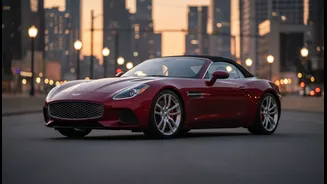
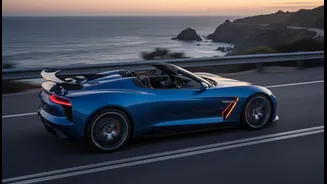
Designing a high-performance convertible presents a unique aerodynamic puzzle. Removing the roof fundamentally changes how air flows over the car's body. With the top down, the cabin becomes a pocket of turbulent, low-pressure air. This chaotic airflow
can create lift, reduce stability at high speeds, and render traditional rear wings less effective. Unlike a coupe, where air flows smoothly over a fixed roofline to press down on a rear wing, a convertible's airflow is disrupted the moment it passes the windshield. This makes managing forces like lift and drag far more complicated, requiring a smarter, more flexible solution than a simple, static wing.
What is Adaptive Aerodynamics?
Adaptive, or active, aerodynamics refers to components on a car that physically move to alter the airflow based on the vehicle's speed, braking, or selected driving mode. Instead of a single, fixed setup that has to compromise between low-speed drag and high-speed downforce, active systems provide the best of both worlds. Common examples include active grille shutters that close to reduce drag for better fuel efficiency, and active spoilers that automatically deploy at certain speeds. This technology, once reserved for hypercars and Formula 1, allows engineers to finely tune a car's aerodynamic profile in real-time, optimizing for either maximum grip in a corner or minimum drag on a straight.
The Pop-Up Spoiler: An Elegant Solution
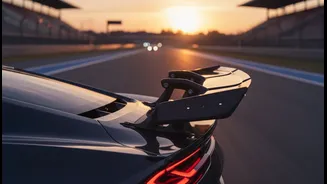
The most common form of adaptive aero on convertibles is the retractable rear spoiler. Porsche, for instance, has used this technology for decades to maintain the clean lines of its 911 models. At low speeds, the spoiler stays hidden, preserving the car's sleek silhouette. Once the car reaches a preset speed, typically around 80-120 km/h, the spoiler automatically extends. This action disrupts the airflow in a controlled way to reduce lift and increase downforce on the rear axle, enhancing stability when it's needed most. When the car slows down, the spoiler retracts, disappearing back into the bodywork. This allows the car to have the aerodynamic benefits of a spoiler without the permanent visual statement of a fixed wing.
A System of Invisible Forces
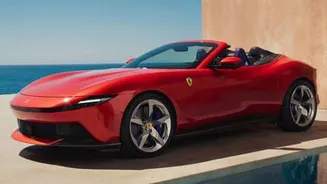
Modern systems go far beyond a simple pop-up spoiler. High-end convertibles from manufacturers like Ferrari and Porsche employ a holistic approach. The Ferrari Portofino M, for example, uses redesigned bumpers, new air vents near the wheel arches, and a sculpted underbody to manage airflow and reduce overall drag. These elements work in concert with other systems. On some Porsche 911 Turbo models, Porsche Active Aerodynamics (PAA) includes adjustable front spoiler elements and a multi-stage rear spoiler that changes its angle for different situations, such as a high-downforce 'Performance' mode or a low-drag 'Speed' setting. This integrated approach manages the car's entire aerodynamic balance, improving grip and stability without a single, large fixed wing dominating the design.
Performance Without the Posturing
The choice to use adaptive aerodynamics is as much about philosophy as it is about engineering. A large, fixed wing makes a very loud and clear statement about a car's performance intentions. For many convertible owners, who may prioritize elegant grand touring over aggressive track days, that aesthetic can be undesirable. Adaptive aero offers a more sophisticated, understated path to performance. It delivers the necessary downforce for high-speed confidence but keeps the car's lines clean and uncluttered for city driving or cruising. It represents a form of 'smart' performance, where the engineering works silently in the background, intervening only when required. This allows the driver to enjoy the full capabilities of their machine without the constant visual reminder of its extreme potential.