
A Disaster Unfolds Downstream
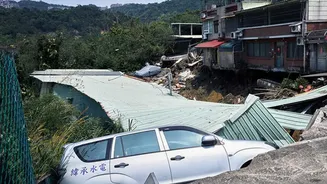
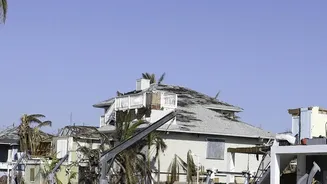
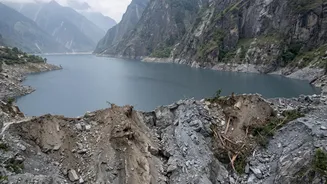
In late August 2026, a catastrophic torrent of water, mud, and debris tore through Nepal’s Rasuwa district, adjacent to the border with Tibet. What appeared to be a flash flood swept away everything in its path, from homes and farms to critical infrastructure
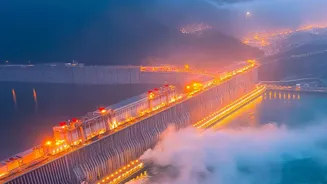
like roads, bridges, and hydropower plants. The human cost was immense, with initial reports indicating hundreds of people were dead or missing as the destructive wave surged through the Bhote Koshi and Trishuli river systems. Rescue operations were immediately hampered by the scale of the devastation, leaving communities reeling and authorities scrambling to grasp the full extent of the tragedy. But as the murky waters raged, scientists were already looking far upstream, using satellite and seismic data to find the source.
The First Domino: A Mountain Breaks
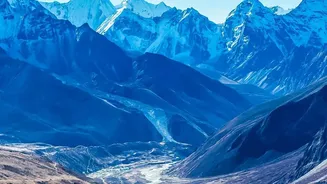
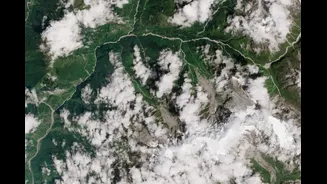
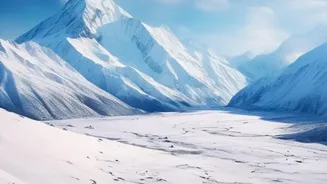
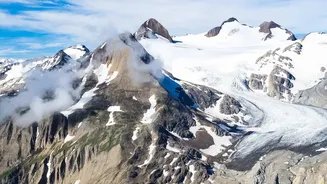
The forensic reconstruction of this disaster begins not with rain, but with a collapse. Early evidence points to a massive failure high on the flanks of Langtang Lirung, a towering peak near the Nepal-Tibet border. A huge section of a steep glacier, along with the rock it was anchored to, suddenly broke free. This initial event, occurring in the remote, high-altitude cryosphere, was the first link in a deadly chain. Scientists describe this as a colossal mass of ice and rock plummeting more than a kilometre into the valley below. It was a moment of immense geological violence that happened far from any human settlement, but which set in motion a powerful and fast-moving hazard.
From Collapse to Catastrophic Flow
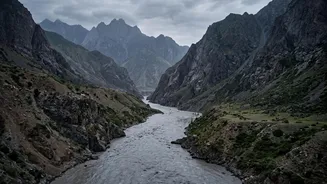
This was no ordinary landslide. The immense energy of the falling ice and rock instantly mobilized the landscape. As the mass descended, it gathered water, loose sediment, and other debris, transforming into a thick, turbulent slurry. This phenomenon, known as a debris flow, is far more destructive than a flood of just water. It travelled with incredible speed and force through the river system, crossing from Tibet into Nepal. Researchers stress that calling the event a “flood” is a dramatic oversimplification; it was the final, devastating stage of a multi-part process known as a hazard cascade. The disaster didn't begin in the river; it began when the mountain itself broke apart, feeding a devastating pulse of material into the water channels.
The Unstable Backdrop of Climate Change
While it takes time to attribute any single event to climate change, the broader context is undeniable. The Himalayas are warming significantly faster than the global average. This warming has profound consequences for mountain stability. Glaciers are not just static blocks of ice; they are dynamic systems that buttress slopes. As they retreat, they can expose unstable ground. Furthermore, warming temperatures are thawing permafrost—the frozen soil and rock that has acted like a glue holding high-altitude slopes together for thousands of years. As this binding agent melts, the risk of catastrophic collapses like the one that triggered this disaster increases. Scientists warn that the landscape itself is becoming less predictable and more prone to sudden, large-scale failures.
A Stark Warning for the Indian Himalayas
This event in Nepal is a critical warning for its neighbours, including India. The river systems involved, like the Trishuli, are trans-boundary and flow into India, where the Trishuli becomes the Gandaki River. The same geological and climatic conditions exist across the Indian Himalayan states of Uttarakhand, Himachal Pradesh, and Arunachal Pradesh. The concept of hazard cascades—where one disaster triggers another—is central to understanding risk in the region. Scientists speak of “sediment bombs,” where loose material left by a previous landslide or glacial retreat lies in wait, ready to be mobilized by the next extreme event. This highlights the urgent need for sophisticated, cross-border early warning systems that monitor not just rainfall and river levels, but also the stability of high-altitude slopes and glaciers. The risk is no longer static; it is constantly evolving with the changing landscape.