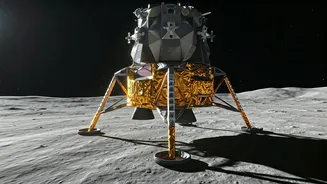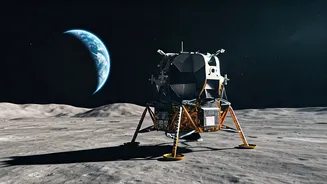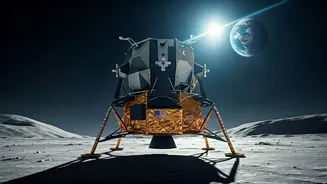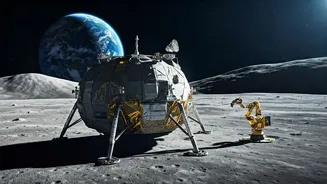





Meet the Robotic Trailblazers
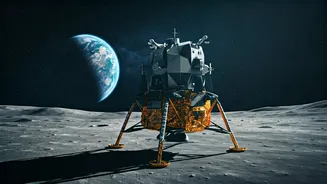
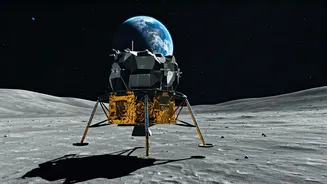
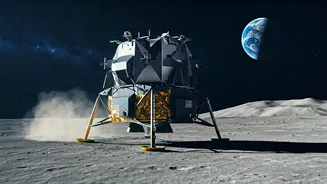
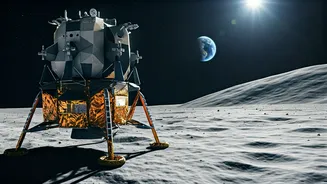
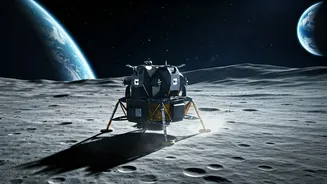
NASA is not building these landers itself. Instead, it’s funding a fleet of commercial robotic missions through its Commercial Lunar Payload Services (CLPS) initiative. This program essentially allows NASA to purchase a ride to the Moon from a pool of American
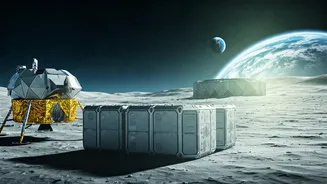
companies, fostering a new commercial space economy while getting its own science and technology payloads to the lunar surface. Recent announcements have laid out plans for multiple missions, including four new landings scheduled for late 2028 with companies like Astrobotic, Firefly Aerospace, and Intuitive Machines. These uncrewed scouts are a critical part of a phased approach to establishing a "Moon Base," a long-term outpost near the lunar South Pole.
What Will They Actually Study?
The primary goal is to understand the lunar environment in detail to ensure future astronaut missions are safe and sustainable. A key instrument package flying on multiple landers includes a Linear Energy Transfer Spectrometer (LETS), which will measure the radiation environment. This data is crucial for designing habitats and suits that can protect astronauts from harmful space radiation. Another instrument, the Stereo Camera for Lunar Plume Surface Studies (SCALPSS), will record how a lander’s engine exhaust kicks up lunar dust. Understanding these plume interactions is vital for preventing damage to nearby equipment as larger and heavier spacecraft begin to land. The landers will also carry Laser Retroreflector Arrays, which act as permanent location markers to create a navigation network on the Moon.
The Search for Lunar Resources
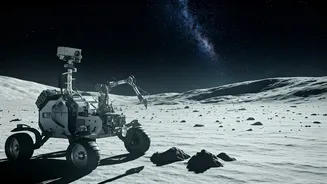
Beyond immediate safety concerns, these landers are also treasure hunting for resources, especially water ice. The lunar South Pole is of particular interest because its permanently shadowed craters are thought to hold significant deposits of water ice. Missions like the Volatiles Investigating Polar Exploration Rover (VIPER) are designed to map the location and concentration of this water. Finding accessible water is a game-changer for long-term settlement. It could be used for drinking water, growing plants, and, when broken down into hydrogen and oxygen, could even produce breathable air and rocket propellant. These robotic missions will test concepts for in-situ resource utilization (ISRU), essentially learning to live off the land.
A New Business Model for the Moon
The CLPS program represents a fundamental shift in how NASA operates. With a budget of $2.6 billion through 2028, the initiative outsources the end-to-end delivery service to private companies. This includes everything from payload integration and launch to the lunar landing itself. This model is intended to accelerate the pace of missions, reduce costs, and stimulate a competitive commercial market for lunar transportation. Companies like Astrobotic, Intuitive Machines, and Firefly Aerospace are not just contractors; they are partners developing their own unique lander technologies, such as the Blue Ghost and Nova-C landers. This public-private partnership is seen as the key to building a sustainable and scalable lunar economy.
Laying the Foundation for Artemis
Every piece of data these robotic landers collect feeds directly into the Artemis program, which aims to return humans to the Moon for long-duration stays. The knowledge gained from these precursor missions—from understanding the soil mechanics to identifying resource-rich areas—will directly inform how and where NASA builds its Moon Base. NASA officials have compared this strategy to the robotic Surveyor missions of the 1960s, which scouted the Moon before the Apollo astronauts ever left Earth. By testing technologies, mapping hazards, and confirming the presence of resources, these landers are not just conducting science experiments; they are building the proving ground for humanity's return to the Moon and eventual journey to Mars.