






The Standard Valuation Playbook
Typically, a company's value is a reflection of its present and foreseeable future. Analysts use established methods like Discounted Cash Flow (DCF), which projects future earnings and discounts them to a present-day value. They look at comparable companies,
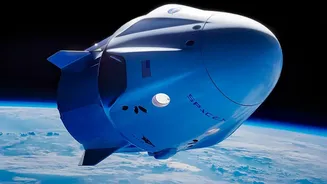
weighing metrics like price-to-earnings (P/E) or price-to-sales (P/S) ratios. For a company like SpaceX, this means valuing its tangible businesses: its dominant rocket launch services, which have a clear launch manifest, and its growing Starlink satellite internet division, which generates recurring revenue. Based on these conventional metrics, coupled with its growth in AI and cloud computing, SpaceX achieved a market capitalization of around $2.2 trillion following its 2026 public offering. This is a staggering number, but it is still grounded in the economics of today's market.
Musk’s Multiplanetary Metric
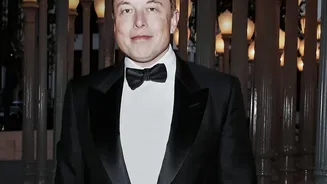
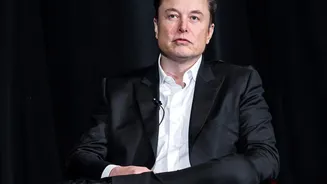
Elon Musk, however, has floated a far more radical valuation concept. In recent statements, he suggested he sees a 'path' for SpaceX to be worth 'orders of magnitude more than the current Earth economy'. This implies a valuation that could climb into the quadrillions of dollars, a figure that dwarfs the entire projected global GDP of $126 trillion in 2026. His argument is that SpaceX isn’t just a launch provider or an internet company; it’s building the foundational infrastructure for a multiplanetary civilization. In this view, the company’s true value isn't its current cash flow but its potential to unlock the economy of Mars, asteroid mining, and industries that don't even exist yet. He is asking investors to value the company not on its balance sheet, but on its probability of making humanity a multiplanetary species.
The Trillion-Dollar Discrepancy
The gap between these two models is astronomical. On one hand, you have a $2.2 trillion company, one of the most valuable in the world, priced based on its successful-but-earthbound businesses. On the other, you have a hypothetical valuation potentially 100 times larger than the entire global economy. Musk himself has tempered his claims, clarifying that seeing a 'path' doesn't guarantee the outcome, only that the probability is 'not zero'. Yet this framing fundamentally changes the investment thesis. It shifts the focus from quarterly earnings and revenue growth—which are strong but finite—to the total addressable market of new worlds. This is the chasm between valuing a railroad and valuing the entire new territory that the railroad makes accessible.
From Speculation to Strategy
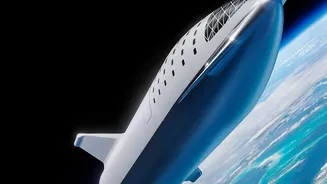
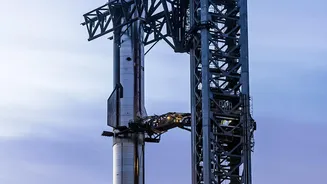
This valuation idea is more than just speculative talk; it directly influences SpaceX's corporate strategy. The immense capital expenditure on the Starship program, which has cost billions, makes little sense if the goal is just to launch more satellites. But if the goal is to create a fully reusable transport system that drastically reduces the cost of reaching Mars, it becomes the most critical investment the company can make. By framing the company's ultimate purpose as civilizational, Musk justifies long-term, high-risk projects that traditional financial models would dismiss as reckless. The strategy is to build the transportation monopoly for an off-world economy, betting that if you build the ships, the commerce will follow.
An Investor’s Dilemma
For investors, this presents a profound dilemma. Do you buy into a company based on its solid, industry-leading performance today, or do you invest in a narrative about a distant, uncertain future? Wall Street analysts are deeply divided. Some argue the stock is already overvalued based on conventional metrics, trading at multiples far above its peers. Others believe that even at its current price, the market hasn't fully grasped the potential of its combined aerospace, AI, and connectivity businesses. Analysts caution that projecting cash flows from ventures on other planets involves enormous risks and should be discounted heavily. An investment in SpaceX at this stage is less a bet on next year's profits and more a high-stakes gamble on the realization of a sci-fi future.