








Introducing the GR GT
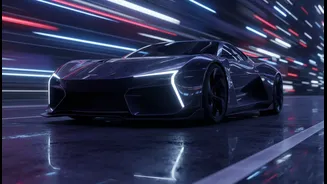
The car at the center of this strategy is the GR GT. Born from the Gazoo Racing (GR) performance division, this flagship model is a road-legal version of a GT3 race car. Unveiled in late 2025, the GR GT is a statement piece, featuring a 4.0-liter twin-turbo
V8 engine paired with a hybrid system. It's not just a concept; prototypes have been spotted testing at Germany’s famed Nürburgring race track. This car is the culmination of Toyota's 'motorsport-bred' philosophy, a project personally championed by Chairman Akio Toyoda, a passionate racer himself known by his racing alias 'Morizo'. The development signifies a commitment to high-performance internal combustion at a time when many rivals are shifting their performance halo cars to all-electric platforms.
The 'Multi-Pathway' Philosophy
Toyota’s supercar gamble isn’t a denial of the future; it's a bet on a different one. The company is pursuing a 'multi-pathway' approach to achieving carbon neutrality by 2050. While rivals go all-in on battery-electric vehicles (BEVs), Toyota argues that a one-size-fits-all solution is flawed. The company believes different regions have different needs, energy sources, and infrastructure readiness. Chairman Akio Toyoda has been a vocal proponent of this strategy, expressing his 'fear' of a world where BEVs are the only option, citing concerns about job losses in the engine-supply industry and the sheer cost of infrastructure overhaul. Toyota's strategy is to offer a full spectrum of technologies: hybrids, plug-in hybrids, BEVs, and crucially, alternative fuels.
Beyond Batteries: Hydrogen and E-Fuels
The supercar is more than just a car; it's a high-performance laboratory. Toyota is aggressively investing in technologies that could decarbonize the internal combustion engine itself. This includes two key areas: hydrogen combustion and synthetic fuels (e-fuels). The company is already racing cars with hydrogen-burning engines in endurance events, gathering crucial data under extreme conditions. Unlike hydrogen fuel-cell vehicles that use hydrogen to generate electricity, these engines burn hydrogen much like gasoline, producing near-zero CO2 emissions. Simultaneously, Toyota is exploring carbon-neutral synthetic fuels, which are created by combining captured CO2 with hydrogen produced from renewable energy. Just this week, Toyota and BMW launched a pilot program in Spain to test 100% renewable gasoline in regular production cars, arguing it could decarbonize the existing vehicle fleet without a complete overhaul.
Racing as Research and Development
For Toyota, the adage 'win on Sunday, sell on Monday' is more like 'race on Sunday, learn for Monday.' The Gazoo Racing division is not just a marketing arm; it's the heart of the company's R&D for creating 'ever-better cars'. By competing in demanding series like the World Endurance Championship and local V8 Supercars in Australia, Toyota pushes its technology to the limit. The development of the GR GT is a perfect example. It's a 'driver-first' car developed with input from professional racers to be a race winner, with the road car benefiting from that technology. This approach allows engineers to test new engines, materials, and aerodynamic concepts for future vehicles, ensuring that the soul of performance driving—the sound, the feel, the emotion that Toyoda himself champions—isn't lost in the transition to a carbon-neutral world.