



A Journey Back in Time
The romance of steam-powered travel is alive and well on the historic Nilgiri Mountain Railway (NMR). For travellers seeking more than just a ride, the journey between Mettupalayam and Coonoor offers a full-sensory immersion into the golden age of rail.
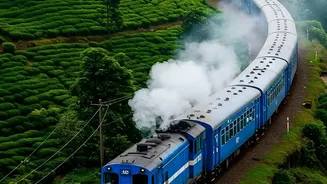
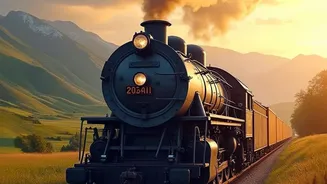
This section of the track is operated by classic 'X' Class steam locomotives, some of which are decades-old Swiss-built machines, while others have been newly manufactured at India's Golden Rock Railway Workshops. As the train, with its iconic blue and cream wooden carriages, begins its ascent, the slow pace allows passengers to absorb the breathtaking scenery of the Western Ghats. The journey is an adventure in itself, navigating 16 tunnels, over 250 bridges, and more than 200 curves, with the distinct sounds and smells of the steam engine providing a constant, nostalgic soundtrack.
An Engineering Marvel on the 'Toy Train'
Affectionately known as the 'Toy Train', the NMR is far more than a simple tourist attraction; it's a marvel of engineering and a UNESCO World Heritage site, recognised in 2005 as part of the Mountain Railways of India. Its most remarkable feature is the Abt rack and pinion system—the only one of its kind in India. This technology, where a cogwheel on the locomotive engages with a toothed rack rail between the tracks, is essential for tackling the steep gradients of the Nilgiri hills. The section from Kallar to Coonoor is the steepest in Asia, with a maximum gradient of 8.33%, a feat that was considered cutting-edge when the line was completed by the British in 1908 after decades of challenging construction.
From Colonial Retreat to Heritage Icon
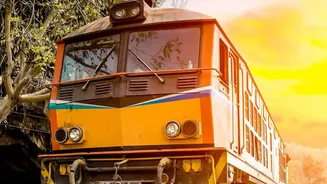
The origins of the NMR are rooted in the British Raj's desire for a convenient route to the cool climes of the Nilgiri hills, which served as a summer retreat from the heat of the Madras Presidency. First proposed in 1854, the formidable terrain meant that construction only began in earnest in 1891, with the line opening in stages until it finally reached Udhagamandalam (Ooty) in 1908. For many years, steam was the only power source. Over time, diesel locomotives were introduced, particularly on the less steep section between Coonoor and Ooty, for operational efficiency. However, a strong sense of public attachment and tourist demand for the authentic steam experience led to a renewed focus on preserving this heritage, ensuring the chug of the steam engine would not fade into history.
Preserving a Legacy, One Puff of Steam at a Time
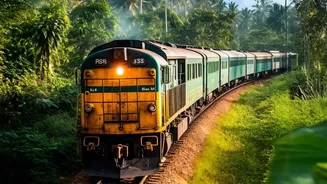
Today, the operation of steam locomotives on the Mettupalayam-Coonoor stretch is a deliberate act of preservation by Southern Railway. It honours the railway's history while creating an unforgettable travel experience. The journey from the plains at Mettupalayam (326 metres) to the hill station of Coonoor (1,858 metres) takes several hours, prioritising the experience over speed. While the Coonoor to Ooty section is primarily served by diesel engines, special chartered services sometimes run with steam locomotives along this route as well, offering a rare treat for enthusiasts. The continued use and even new production of these X-Class engines, now running on more efficient high-speed diesel, demonstrates a commitment to keeping this piece of living history fully operational for generations to come.