




Raj Bhavan: A Scottish Castle in Kumaon
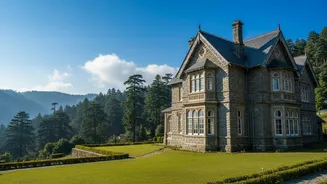
Modelled on Buckingham Palace with a distinct Scottish castle feel, the Raj Bhavan is a marvel of Victorian Gothic architecture. Its construction began in 1897 and took two years to complete. Once known as Government House, it served as the summer residence
for the British governors of the United Provinces. The sprawling estate, spread over 205 acres, features magnificent gardens and even a vintage golf course. Designed by architect F.W. Stevens, this grand structure with its 113 rooms stands as a powerful symbol of the administrative might of the Raj in these hills. Today, it is the official residence of the Governor of Uttarakhand.
St. John in the Wilderness Church: A Gothic Sanctuary
Established in 1844, this is one of the earliest and most serene structures in Nainital. Tucked away in a quiet patch of deodar forest in Mallital, its Neo-Gothic architecture is both imposing and peaceful. The church gets its evocative name from a Bishop of Calcutta who fell ill and had to stay in an unfinished hut in the forest while laying the church's foundation. Inside, a brass plaque serves as a sombre memorial, listing the names of the victims of the devastating 1880 landslide.
Gurney House: The Home of Jim Corbett
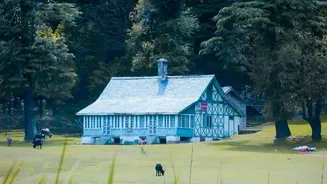
For anyone familiar with the legendary hunter-conservationist Jim Corbett, Gurney House is a site of pilgrimage. This charming cottage on Ayarpatta Hill was Corbett's home until he left for Kenya in 1947. Built in 1881, the house was constructed with materials from a dismantled house on a nearby hill, which gives it its name. The property, still a private residence, has meticulously preserved much of Corbett's furniture and belongings, offering a rare and intimate glimpse into the life of the famous author and naturalist.
Methodist Church: A Mallital Landmark
Standing prominently on the Mallital stretch, this beautiful church dates back to 1858, making it one of the first Methodist churches established in India. Its foundation was laid to serve the growing community of British officials, missionaries, and soldiers. Characterised by its simple yet elegant Gothic-style architecture with stained-glass windows, the church has been a centre of faith and peace for over 165 years. Its striking red structure is a familiar and beloved part of the Nainital landscape.
The Nainital Club: A Social Hub of the Raj
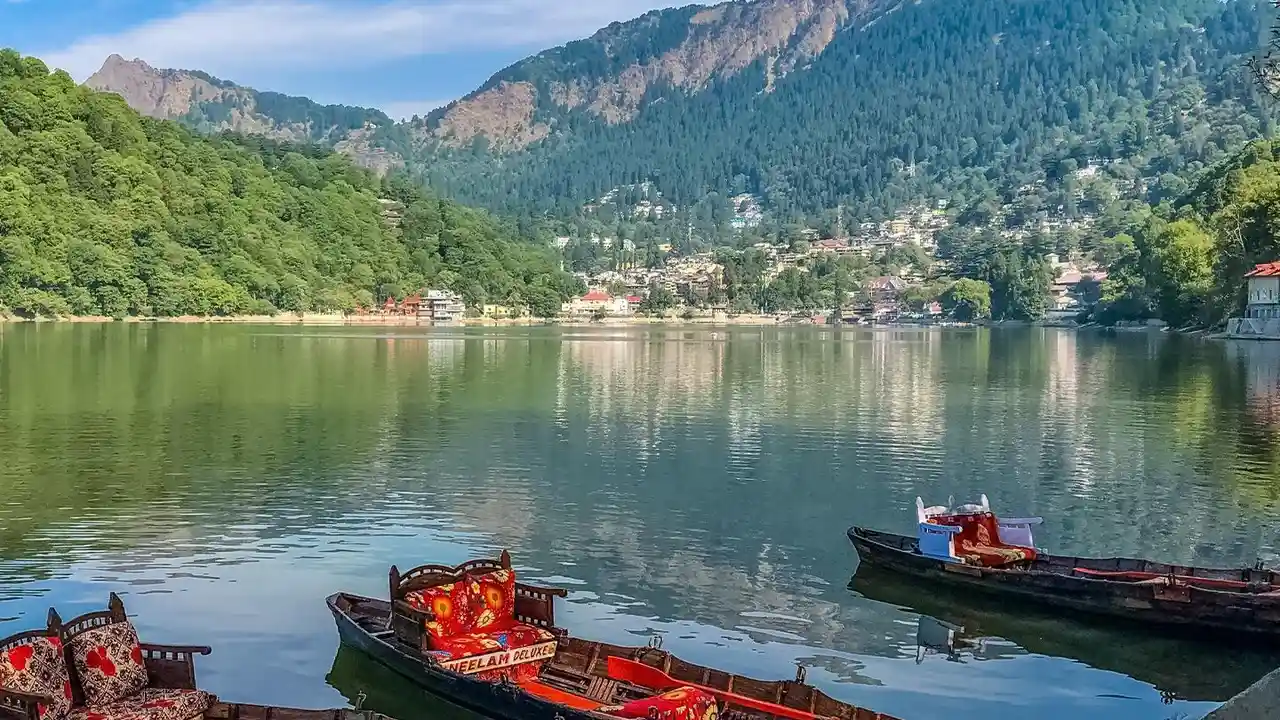
Overlooking the lake, The Nainital Club, which manages the iconic Boat House Club, was the epicentre of social life for the British elite. Considered one of the most exclusive clubs in pre-independence India, it was renowned for being the only club in the country to offer inland yachting. The Naini Tal Yacht Club was formally established in 1910, with boats specially designed for the lake's unique wind conditions. While entry was once restricted, today it stands as a heritage property where visitors can get a sense of the colonial leisure and lifestyle that defined the hill station.
Balrampur House: A Royal Summer Palace
Showcasing a fascinating blend of Indian royalty and European aesthetics, Balrampur House was the summer palace of the Maharajas of Balrampur. Originally built in the 1880s, the structure was completely redesigned in the 1930s by a European architect in the style of a French chateau. As the maharajas would shift their administration here to escape the summer heat of the plains, the palace played a key role in the town's social hierarchy. Now a heritage hotel, its sprawling gardens and vintage rooms allow guests to experience a slice of royal history.
Uttarakhand High Court: The Former Secretariat
This monumental building, completed in 1900, originally served as the Secretariat of the United Provinces, from where the British administered the region during their summer stay. Designed by Santoni MacDonald, its classic Gothic style was meant to project authority and permanence. The earthquake-resistant structure is a masterpiece of colonial administrative architecture. After India's independence, it continued to be a seat of governance and today houses the High Court of Uttarakhand, carrying its legacy of justice and administration into the modern era.