



The Vision for Coastal Connectivity
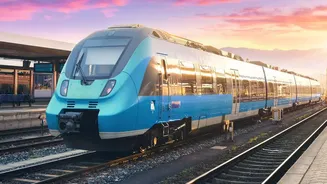
For years, travellers between the tech hub of Bengaluru and the coastal cities of Mangaluru, Udupi, and Karwar have longed for faster, more efficient connectivity. The proposal for a Vande Bharat Express on this route, potentially extending all the way
to Madgaon in Goa, represents a massive leap forward. This service promises to slash travel times, boost tourism, and provide a comfortable alternative to the often-congested road networks snaking through the ghats. The excitement is palpable, with railway authorities confirming that a service connecting Bengaluru to Mangaluru and further up the coast is being actively planned following the successful electrification of the critical Hassan-Mangaluru section.
An Engineering Marvel's Double-Edged Sword
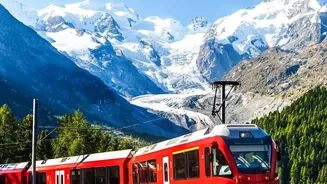
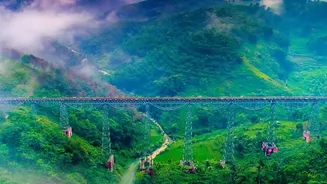
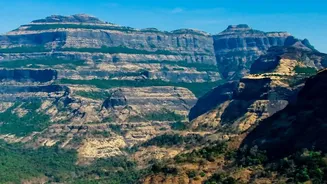
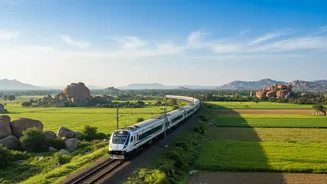
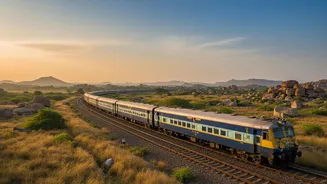
The proposed route runs through the breathtaking, yet formidable, Konkan and Western Ghats regions. The Sakleshpur-Subrahmanya Road ghat section, in particular, is an engineering marvel born out of necessity, but it was not designed for the semi-high-speed DNA of the Vande Bharat Express. This 55-kilometre stretch features an astonishing 57 tunnels, 107 sharp curves, and 226 bridges. For conventional trains, navigating this section is already a slow, cautious process. For the Vande Bharat, a train built for speed and quick acceleration, these very features present the toughest operational test it has faced anywhere in the country.
The Steep Gradient and Sharp Curve Challenge
The primary hurdle is the terrain's topography. The Sakleshpur-Subrahmanya section has a ruling gradient of 1-in-50, which means the track rises one metre for every 50 metres travelled. Vande Bharat trains are built as electric multiple units (EMUs), where power is distributed across several coaches, ideal for rapid acceleration on flat-to-moderate inclines. However, exceptionally steep sections like this pose a significant challenge to both propulsion and braking. The numerous sharp curves force drastic speed reductions, negating the primary advantage of a semi-high-speed train and raising questions about its operational viability. This is why existing Vande Bharat services on the Konkan route already operate at reduced speeds during monsoon for safety.
The 'Toughest Route Check' in Action
To address these unique challenges, Indian Railways is conducting intensive field trials. A specially modified Vande Bharat rake, equipped with an Automatic Emergency Braking (AEB) system, has been deployed for testing on the ghat section. This crucial trial run, which began around August 11, 2026, is being overseen by the Research Designs and Standards Organisation (RDSO). The AEB system is designed to automatically apply brakes if the train exceeds a safe speed, providing a critical safety layer on the steep descents. These trials will assess every parameter, from stability on curves and braking effectiveness to acceleration on gradients, to determine if the Vande Bharat can operate safely and reliably without the need for additional 'banker' locomotives that assist other trains on this stretch.
What Lies Ahead?
The successful completion of these trials is the final gateway to launching the service. A previous trial run scheduled for June was cancelled, reportedly due to the non-availability of a Vande Bharat rake fitted with the necessary AEB system, highlighting the specialised requirements of this route. Now, with the custom-built train on site, the Mysuru Division of South Western Railway is meticulously gathering the data needed for final safety clearance. While officials have not confirmed a final route or schedule, proposals suggest the train could run from Yesvantpur to Madgaon, potentially bypassing some city stations in Mangaluru to save time. For the thousands of commuters and tourists, all eyes are on the outcome of this gruelling test, which will decide when the Vande Bharat can finally begin its scenic journey through the Ghats.