






A New Class of Mission
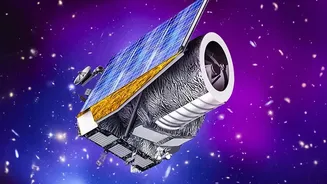
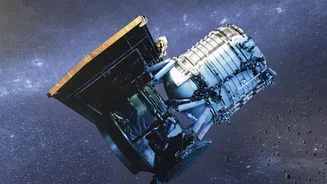
PRIMA, which stands for the PRobe far-Infrared Mission for Astrophysics, isn't just another telescope; it's the first of a new strategic category for NASA called Probe Explorers. Recommended by the scientific community, this class of mission is designed
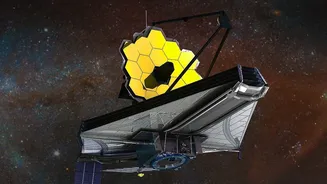
to fill a crucial gap between the enormous, decade-spanning flagship projects like the James Webb Space Telescope (JWST) and smaller, more rapid missions. With a project cost capped at around $1.2 billion, PRIMA represents a new sweet spot, enabling powerful, targeted science without the massive budget of a flagship. This new approach allows NASA to build a more consistent pipeline of high-caliber missions, ensuring a steady stream of discovery. The selection of PRIMA signals NASA's commitment to this mid-scale strategy for answering some of astronomy's biggest questions.
Seeing the Unseen Universe
So, what will PRIMA actually do? Its main goal is to survey the sky in far-infrared light. This is the key to its power. Think of the electromagnetic spectrum as a vast piano keyboard. Observatories like the Hubble see visible light, while the JWST is a master of near- and mid-infrared. At the other end, radio telescopes like ALMA listen to very long wavelengths. PRIMA is designed to operate squarely in the far-infrared gap between them. Much of the universe's activity is hidden from other telescopes because it emits energy primarily in these far-infrared wavelengths. This light is generated by cool dust and gas, the raw ingredients for stars and planets. By tuning into this frequency, PRIMA will be able to see processes that are currently invisible to us.
Answering Cosmic Questions
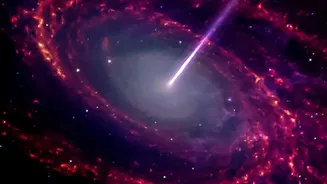
Observing in the far-infrared allows PRIMA to tackle some fundamental mysteries. One of its primary goals is to study the origins of planets and the water they might contain. The specific spectral lines of water vapor and other key molecules in planet-forming disks are only visible in the far-infrared, a range where JWST is not sensitive. PRIMA will also investigate how galaxies and their central supermassive black holes grow and evolve over cosmic time. It will trace the flow of gas and dust that fuels star birth and can be ejected by black holes, shaping entire galaxies. Scientists also hope to use PRIMA to understand how cosmic dust and heavy elements, the building blocks of life, have accumulated throughout the universe's history.
A Leap in Sensitivity
PRIMA isn't the first telescope to look at the far-infrared, but it represents a monumental leap in capability. Its 1.8-meter (5.9-foot) mirror will be actively cooled to just a few degrees above absolute zero. This extreme cold is crucial because any heat from the telescope itself would create a blinding glare in the very wavelengths it's trying to observe. This cooling, combined with new, highly sensitive detector technology, will make PRIMA orders of magnitude more sensitive than its predecessors like the Herschel Space Observatory. This sensitivity gain means it can detect objects thousands of times fainter or survey areas of the sky much faster, providing an unprecedentedly sharp view of the cold universe.
A Team Player in the Cosmos
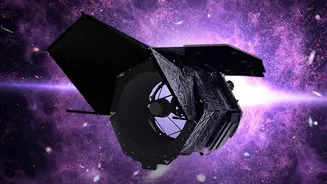
PRIMA will not work in isolation. Instead, it will be a crucial member of NASA's cosmic observatory team. Data from PRIMA will complement observations from JWST, the Nancy Grace Roman Space Telescope, and ground-based radio arrays. For example, JWST might spot a distant, interesting galaxy, and PRIMA could then follow up to measure the properties of its cool gas and dust, providing a more complete physical picture. By covering this missing wavelength gap, PRIMA helps create a more comprehensive view of the universe, allowing scientists to connect the dots from the hot, energetic events seen by X-ray telescopes to the cool, slow-building processes that form stars and planets. With a planned launch no earlier than 2033, PRIMA is set to become humanity's next great window into the cosmos.