







A Flawless Liftoff from Sriharikota
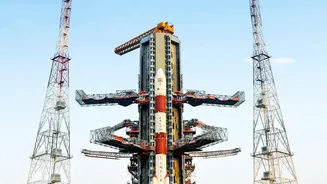
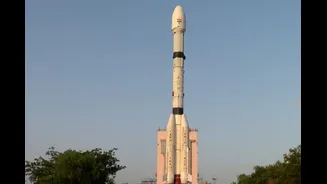
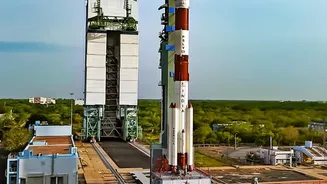
The Indian Space Research Organisation (ISRO) recorded another historic success with the flawless launch of the Geosynchronous Satellite Launch Vehicle (GSLV-F17). At 2:55 AM IST, the 51.7-metre-tall rocket thundered into the sky from the second launch pad
at the Satish Dhawan Space Centre in Sriharikota. The mission was executed perfectly, marking a much-needed confidence boost for ISRO and its GSLV program, sometimes called the 'naughty boy' for its challenging early history. The powerful vehicle performed exactly as planned, precisely carrying the crucial EOS-05 satellite on the first leg of its journey into space. This launch was the 19th flight for the GSLV and represented a significant moment after a period of relative quiet from the space agency.
The Journey to a High Orbit
Approximately 18 minutes after the launch, the GSLV-F17 successfully injected the EOS-05 satellite into a sub-Geosynchronous Transfer Orbit (Sub-GTO). This is a highly elliptical path around the Earth that serves as an intermediate stop. The rocket's powerful indigenous cryogenic upper stage provided the final push to place the 2,367 kg satellite into this precise orbit, a testament to ISRO's mastery over complex launch technologies. In fact, the rocket performed slightly better than expected, giving the satellite extra orbital energy which could potentially extend its operational life by saving its onboard fuel. From this transfer orbit, the satellite will use its own propulsion system over the next several days to perform a series of orbit-raising manoeuvres. These engine firings will gradually lift it to its final destination: a geosynchronous orbit (GEO) approximately 36,000 kilometres above the Earth.
An Eye in the Sky: Meet EOS-05
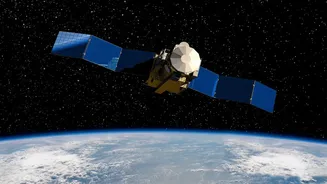
EOS-05 is not just another satellite; it is India’s first imaging satellite designed to operate from a geosynchronous orbit. Unlike satellites in Low Earth Orbit that pass over a location only periodically, a satellite in GEO matches the Earth's rotation. This allows EOS-05 to remain seemingly stationary over the Indian subcontinent, providing continuous, near-real-time surveillance. This state-of-the-art satellite, also known as GISAT-1A, is equipped with advanced imaging instruments, including multispectral and hyperspectral sensors. These tools will allow it to capture high-resolution images of large areas of India every 30 minutes, with the ability to focus on specific points of interest every five minutes.
Why This Mission Matters for India
The capabilities of the EOS-05 satellite have profound implications for India. Its primary purpose is to enhance the country's ability to monitor natural disasters, water resources, and agricultural health. The satellite's persistent gaze will enable the rapid tracking of developing cyclones, floods, and forest fires, significantly reducing response times for disaster management agencies. Furthermore, its advanced sensors can assess crop health, soil conditions, and water levels in reservoirs, providing invaluable data for India's agricultural sector. Beyond civilian uses, the satellite also bolsters India's strategic capabilities. It will function as a powerful 'eye in the sky' for monitoring border areas and maritime domains, enhancing national security and situational awareness.
Next Steps and Future Impact
With the successful launch and initial orbit placement confirmed, ISRO's focus now shifts to the satellite's health and its journey to its final operational orbit. The Master Control Facility will meticulously manage the orbit-raising manoeuvres over the coming days. Once EOS-05 reaches its 36,000 km high perch, engineers will conduct a series of in-orbit tests to ensure all its complex systems and imaging payloads are functioning correctly. After this checkout phase, the satellite will be declared fully operational and begin its mission of observing India. The success of the GSLV-F17/EOS-05 mission not only provides India with a unique and powerful new asset in space but also reaffirms ISRO's position as a world-class space agency capable of executing highly complex missions.