



A Successful Ground Firing
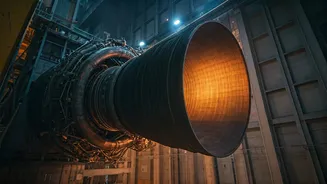
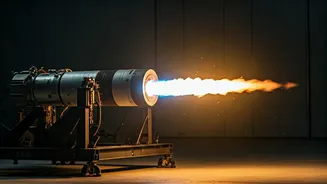
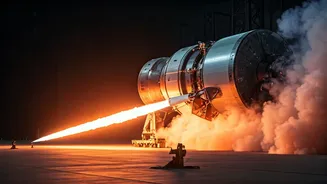
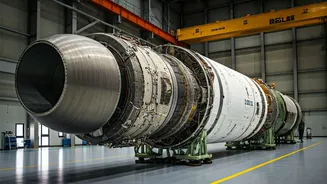
The Indian Space Research Organisation (ISRO) announced the successful completion of a major ground test on July 3, 2026, at the Satish Dhawan Space Centre in Sriharikota. The trial involved the static firing of a new solid motor, which performed exactly
as engineers had planned. This was not just another engine test; it was the first successful validation of the powerhouse behind a new vehicle known as SOLVE, a platform purpose-built to support India's monumental Gaganyaan mission. The successful test confirms that the motor's performance meets the demanding requirements for its unique role in the ambitious human spaceflight programme.
What is the SOLVE Vehicle?
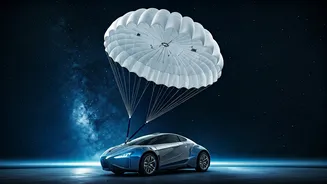
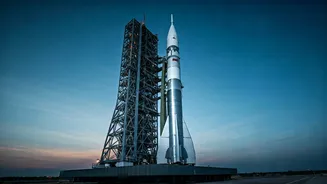
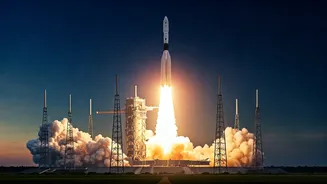
SOLVE stands for Sub-Orbital Launch Vehicle for Experiments. It is a new, compact rocket developed by ISRO as a dedicated test platform. Unlike the giant launch vehicles designed to go into orbit, SOLVE has a very specific and critical job: to test the parachute system for the Gaganyaan crew module. Astronaut safety is the absolute highest priority in any human spaceflight mission, and the parachute system is one of the most vital safety components, responsible for ensuring the crew returns to Earth securely. By creating a dedicated test vehicle like SOLVE, ISRO can repeatedly and rigorously test this landing system under various real-world conditions, providing invaluable data and confidence before astronauts are on board.
The Science of a Safe Splashdown
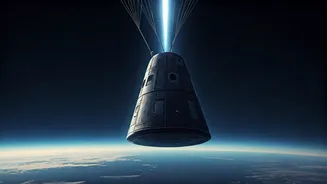
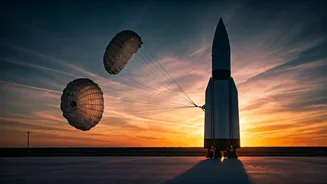
The SOLVE vehicle's mission profile is designed to simulate the final, crucial phase of the Gaganyaan flight. During these tests, the rocket will carry a replica of the crew module to an altitude of between 10 and 17 kilometres. Once at the target altitude, it will release the module, which will then begin its descent. At this point, a complex and carefully choreographed sequence will begin, deploying a system of 10 different parachutes to systematically slow the module down from high speed to a gentle splashdown velocity in the sea. This system must work perfectly every time, and the SOLVE platform allows engineers to validate every aspect of the parachute deployment and performance in flight.
Ingenuity: Building on Proven Technology
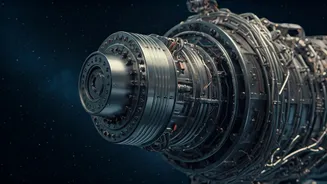
In a hallmark of ISRO's famed engineering efficiency, the SOLVE vehicle is not built entirely from scratch. Its solid motor is a modified version of the reliable strap-on boosters used on India's workhorse rocket, the Polar Satellite Launch Vehicle (PSLV). However, engineers at the Vikram Sarabhai Space Centre have made crucial adaptations for its new role. These include developing a special, slow-burning propellant to achieve the desired flight profile for a sub-orbital test and integrating a new thrust vector control system to steer the vehicle. This approach of adapting proven technology saves both time and resources while ensuring a high degree of reliability for these critical safety tests.
The Path to India's First Crewed Mission
The successful SOLVE motor test is another feather in the cap for the Gaganyaan programme, which aims to demonstrate India's capability to send astronauts into a low-Earth orbit of 400 km and bring them back safely. Before the first crewed flight, ISRO has planned a series of uncrewed missions to test every system and procedure. The data gathered from the SOLVE tests will be indispensable, ensuring the crew module's deceleration and recovery systems are flawless. This meticulous, step-by-step approach underscores the complexity of human spaceflight and ISRO's commitment to getting it right, moving India steadily closer to joining the elite club of nations with human spaceflight capabilities.