







An Unprecedented Hardware Boom
The generative AI gold rush has triggered a colossal demand for the physical hardware that powers it. Tech giants and startups alike are in an arms race to build and expand data centers capable of training and running complex AI models. This isn't a minor
upgrade; it's a fundamental re-architecting of the world's computing infrastructure, requiring hundreds of billions of dollars in investment. This has led to a voracious, almost insatiable, appetite for high-performance components like graphics processing units (GPUs), semiconductors, and fully assembled server racks. Companies have order books filled for years, with some chipmakers reportedly sold out until 2028. This sustained, high-volume demand for physical goods is the root cause of the current logistics crunch.
Why It Has to Fly
For these incredibly valuable and time-sensitive components, sea freight is simply not an option. A multi-week journey on a container ship is too slow when a delay of even a few hours can disrupt a multi-billion dollar data center construction schedule. The components, particularly advanced semiconductors and processors, are the lifeblood of the AI industry. Their speed to market is critical for companies racing to gain a competitive edge. Consequently, the entire AI hardware supply chain relies on air cargo for its speed and relative security. This has shifted the center of gravity for the air freight industry, making AI and tech hardware the primary driver of growth, supplanting the recent dominance of e-commerce.
The Asian Air Freight Squeeze
The pressure is most intense on key trade lanes originating in Asia, the world's electronics manufacturing hub. Air cargo capacity out of Taiwan, South Korea, Malaysia, and parts of China is exceptionally tight. Taiwan, a hub for semiconductor and AI server manufacturing, has seen its main air cargo hub in Taipei (TPE) operating at or beyond full capacity for months. The demand has caused air freight rates to soar, with reports citing year-over-year increases of over 30% on key routes. This bottleneck is not just about a lack of planes; it's about the finite space at logistics hubs and on aircraft, which is now being consumed by the AI boom.
Not Your Average Parcel
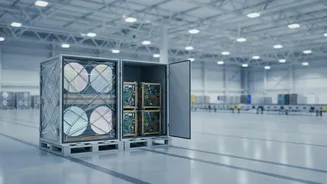
Shipping AI infrastructure is a complex logistical challenge. These are not small, easily stackable boxes. Fully assembled server racks are large, heavy, and extremely delicate, requiring specialized handling, custom crating, and careful coordination to prevent damage. Some of the machinery required to manufacture the most advanced chips has become so large that it is testing the physical limits of even the largest cargo aircraft. This means that each shipment takes up a disproportionate amount of space and weight capacity, further reducing the room available for other goods. Logistics providers now see themselves as strategic partners in the production line, where a single mishandled shipment can have massive financial consequences.
Ripple Effects Across Global Trade
The AI cargo boom is having a significant knock-on effect across other industries. With AI hardware commanding premium rates and priority space, other sectors that rely on air freight are feeling the pinch. Manufacturers of consumer electronics, automotive components, and even medical devices are now competing directly with the deep-pocketed tech giants for limited air cargo capacity. This competition can lead to delays and higher shipping costs for a wide range of products. In essence, the urgent need for digital infrastructure is creating very real physical constraints, forcing companies across all sectors to re-evaluate their supply chain strategies and potentially passing on higher logistics costs to consumers.