




The Puzzle of the Missing Minis
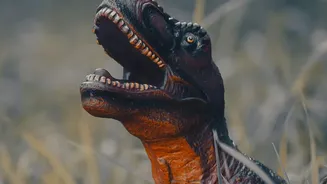
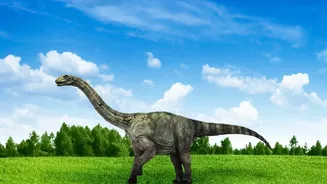
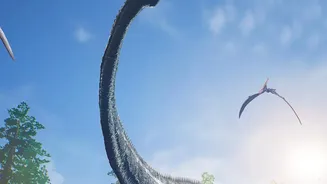
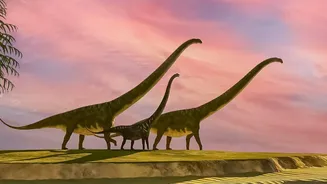
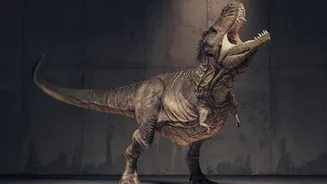
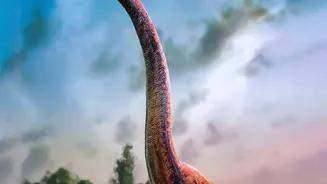
For decades, paleontologists have wrestled with a strange inconsistency. During the 180 million years that dinosaurs dominated the planet, they evolved into every conceivable shape and size, from the colossal Argentinosaurus to agile predators. Yet, they never
seemed to get truly small. While today’s world is filled with vertebrates weighing just a few grams—like shrews and hummingbirds—the smallest known non-avian dinosaurs were relative heavyweights. Even the most petite, like Microraptor, weighed around 400 or 450 grams, roughly the size of a large rabbit. This absence is odd because in most ecosystems, small-bodied species are typically the most numerous. Scientists wondered if this was just a quirk of the fossil record; perhaps the delicate bones of tiny dinosaurs were simply less likely to survive for millions of years. However, new research suggests this is not the case, as the fossils of tiny mammals and lizards from the same period are found regularly.
A New Explanation Emerges: Blame the Mammals
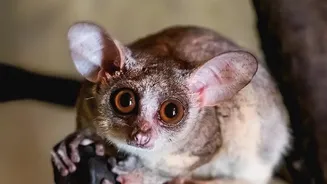
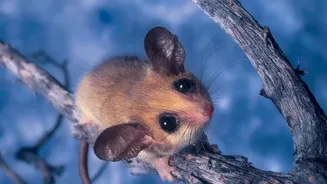
A groundbreaking new study published in the journal Evolution proposes a radical new theory: dinosaurs may have been prevented from evolving into smaller species because those ecological niches were already taken. The culprits? Our own distant ancestors—the small, furry mammals that scurried in the shadows of the dinosaurs. According to researchers from the American Museum of Natural History and Princeton University, while dinosaurs were keeping mammals from growing large, the mammals were returning the favor at the other end of the scale. These early mammals thrived in the small-bodied niches, creating intense competition for resources that effectively put up an evolutionary roadblock, preventing dinosaurs from shrinking down to mouse-size. It was a world where dinosaurs owned the day and the large-body roles, but mammals owned the night and the world of the very small.
Testing the Theory with Models
To reach this conclusion, scientists used sophisticated mathematical models. These models link an animal's body size to how efficiently it can convert food into energy and offspring. This energetic fitness model works on a simple trade-off: small animals are great at gathering energy for their size but less efficient at reproduction, while large animals are the opposite. When the researchers applied this model to living mammals, birds, and turtles, it accurately predicted their range of body sizes. However, when they ran the numbers for non-avian dinosaurs, the model failed completely. No matter how they adjusted the biological parameters, the model could not explain why dinosaurs stayed so comparatively large. This failure pointed to a conclusion that biology alone wasn't the answer. An external, ecological pressure must have been at play. The most plausible candidate was the constant, background competition from mammals already dominating the undergrowth.
The Exception That Proves the Rule: Birds
This theory also provides a compelling explanation for another great evolutionary story: the origin of birds. Birds are the living descendants of dinosaurs, and they managed to break the size barrier in a spectacular way, with some species like the bee hummingbird weighing less than two grams. The new research suggests that the evolution of flight was the key that unlocked this potential. By taking to the air, early birds escaped the ground-level competition with mammals. This newfound freedom allowed them to explore entirely new ecological opportunities and rapidly evolve into the miniature sizes that were seemingly forbidden to their land-bound relatives. In this view, the miniaturization seen in the bird lineage wasn't just a random trend but a direct result of accessing a new domain where the old rules of competition no longer applied.