

Why Rotational Strength Matters
Many standard workouts focus on forward-and-back or up-and-down motions, like in squats and crunches. While important, they can neglect a crucial element of fitness: rotational movement. Training in the transverse plane, which involves twisting and turning,
is essential for a well-rounded, functional core. This type of strength is vital for everyday activities like carrying groceries, doing yard work, or even just turning to look behind you. For athletes, rotational power is the engine behind swinging a golf club, tennis racket, or bat. By strengthening the muscles responsible for this rotation, particularly the obliques, you build a more resilient core that better supports your spine and reduces the risk of injury.
The Classic Bicycle Crunch: Form is Key
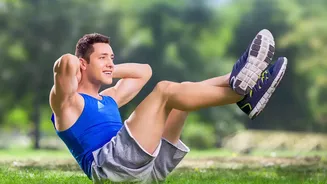
The bicycle crunch is a top-tier core exercise for a reason. Studies have shown it to be one of the most effective movements for activating the rectus abdominis (the 'six-pack' muscles) and the external obliques. To perform it correctly, lie on your back on a comfortable surface. Place your hands lightly behind your head with your elbows wide, avoiding the temptation to clasp your hands and pull on your neck. Lift your head and shoulders off the floor, bring your knees up to a tabletop position, and press your lower back into the mat. Begin the movement by twisting your torso, bringing your right elbow toward your left knee as you simultaneously straighten your right leg. The key is to control the motion, originating the twist from your core, not by yanking your elbow to your knee. Alternate sides in a smooth, pedalling motion.
Bicycle Crunch Mistakes to Avoid
Proper form is what makes the bicycle crunch so effective; poor form can lead to neck strain and a less impactful workout. The most common mistake is pulling on your head with your hands. This puts stress on your neck and takes the focus off your abdominals. Instead, think of your hands as a light cradle for your head. Another frequent error is speed. Rushing through the repetitions uses momentum rather than muscle, cheating you of the exercise’s benefits. Focus on a slow, controlled pace where you can feel your oblique muscles contract with each twist. Finally, ensure you are fully extending the straightened leg and getting a full rotation through your torso. Half-hearted movements will only yield half-hearted results.
The Dynamic Russian Twist
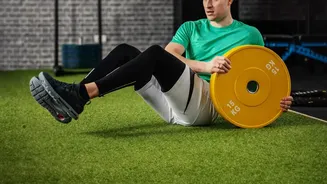
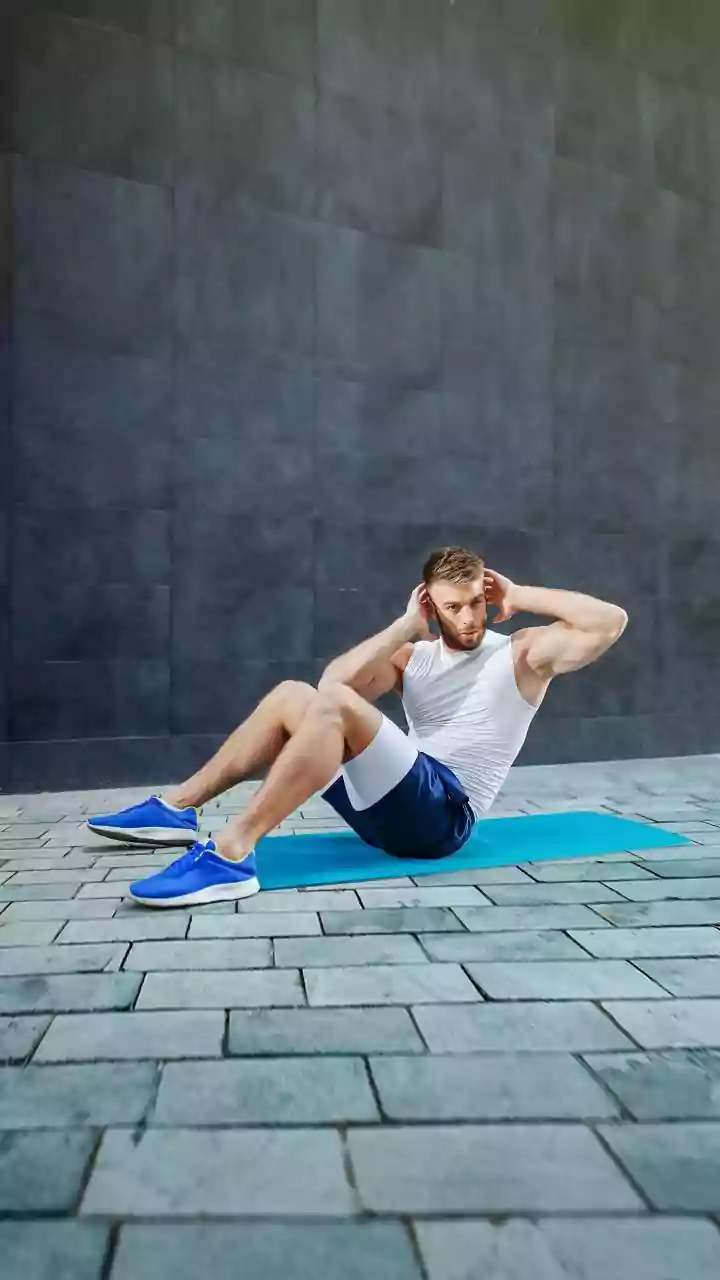
The Russian twist is another exceptional exercise for developing rotational strength and endurance in your core. To start, sit on the floor with your knees bent and feet flat. For beginners, keeping your feet on the ground provides stability. Lean back slightly until you feel your abdominals engage, maintaining a straight, long spine—avoid rounding or slouching. Clasp your hands together in front of your chest. From here, exhale and twist your torso to one side, allowing your gaze to follow your hands. Inhale as you return to the centre and then exhale as you twist to the opposite side. This completes one repetition. For an added challenge, you can lift your feet off the floor, crossing them for stability.
Avoiding Pitfalls in the Russian Twist
To get the most out of the Russian twist, focus on rotating from your torso and rib cage, not just swinging your arms from side to side. The movement should be deliberate and controlled. A common mistake is rounding the lower back, which can place undue stress on the spine. Consciously keep your chest lifted and your back straight throughout the exercise. If you find your form breaking down, it's better to reduce the range of motion or place your feet back on the floor than to continue with poor technique. While some people add weight, the bodyweight version is highly effective and safer for most individuals, ensuring the focus remains squarely on core engagement rather than momentum.
Integrating Into Your Routine
Both the bicycle crunch and the Russian twist are versatile enough to fit into any workout. You can use them as a core-focused finisher at the end of a strength or cardio session, or combine them into a dedicated ab circuit. For example, try performing three sets of 15-20 repetitions of bicycle crunches (each side counts as one rep) and three sets of 10-15 repetitions of Russian twists (each side counts as one rep). Focus on the quality of each repetition over the quantity. For those who find the standard bicycle crunch puts a strain on their neck, a standing variation offers a great alternative that still targets the obliques effectively. The key, as with any exercise, is consistency.