
Poha-Jalebi from Madhya Pradesh
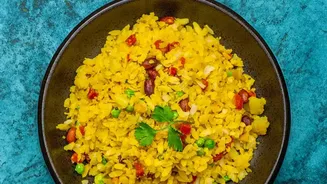
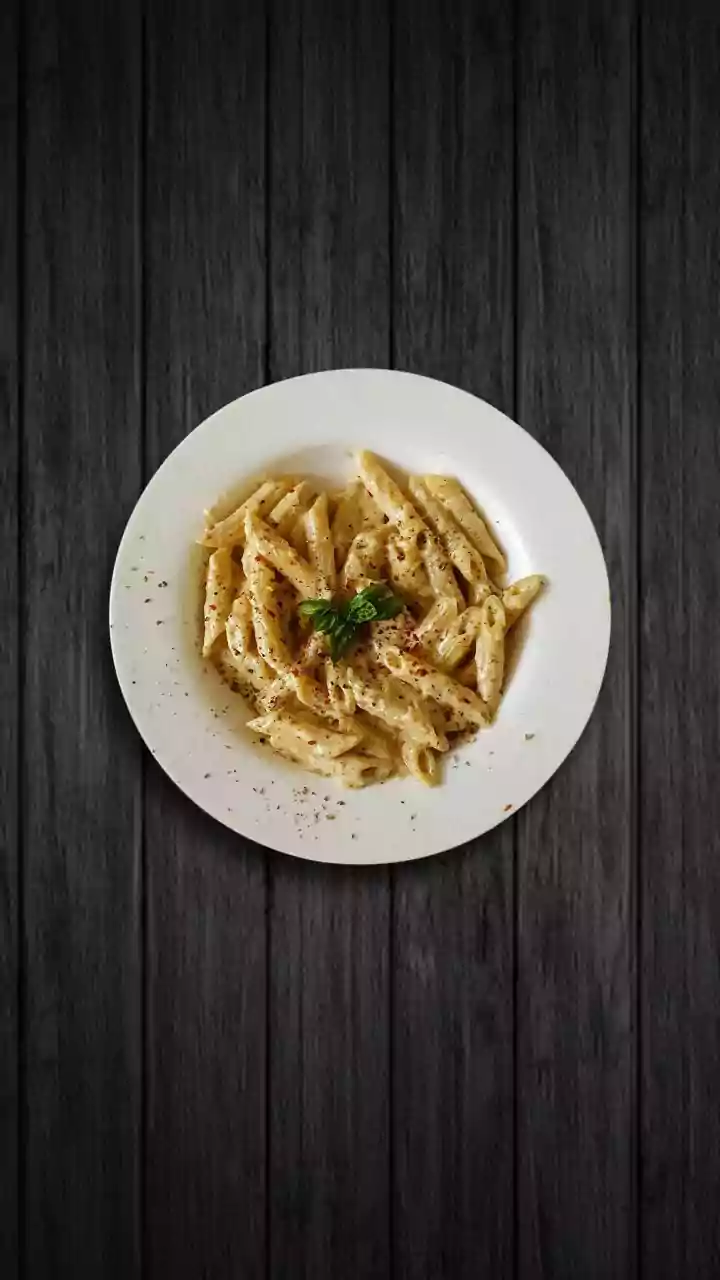
In the heart of India, particularly in cities like Indore and Bhopal, breakfast is a masterclass in balancing contrasts. Enter Poha-Jalebi, a combination that sounds unconventional on paper but makes perfect sense on the palate. The dish pairs light,
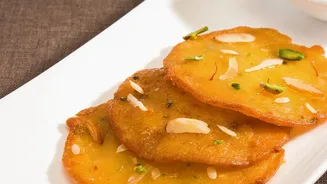
savoury poha—flattened rice steamed and tossed with turmeric, onions, and curry leaves—with the crisp, sugary spirals of hot jalebi. The poha, often garnished with crunchy sev, fennel seeds, and a special tangy spice mix called 'jeeravan', provides a fluffy and savoury base. When eaten with a piece of syrupy jalebi, the combination of sweet, salty, and tangy creates a flavour explosion that is beloved across the Malwa region. It’s a breakfast that’s both light and fulfilling, a cultural institution that represents the region's love for complex flavour pairings.
Kesari Bhath from Karnataka
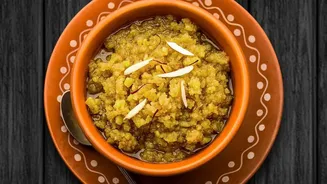
Travel south to Karnataka, and you’ll discover Kesari Bhath, a vibrant and fragrant sweet pudding that holds a cherished spot on the breakfast table. Made from semolina (rava or sooji), ghee, and sugar, this dish is the southern cousin of the North Indian Suji Halwa. What sets it apart is the use of saffron (kesar), which imparts its signature orange-yellow hue and a subtle, floral aroma. The rava is roasted in ghee until fragrant before being cooked with sugar and water or milk into a soft, fluffy consistency, often studded with cashews and raisins. While it's enjoyed as a dessert elsewhere, in Karnataka, Kesari Bhath is famously served for breakfast alongside its savoury counterpart, Khara Bhath (a spicy upma). This popular sweet and savoury duo, served on the same plate, is affectionately known as "Chow Chow Bath.".
Patishapta from Bengal
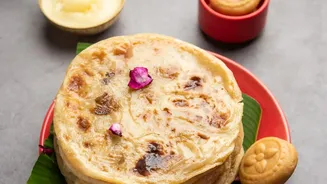
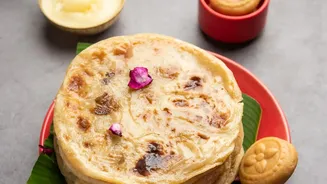
In the east, especially during the winter festival of Poush Parbon (Makar Sankranti), Bengali kitchens are filled with the aroma of freshly made 'pithe' or rice cakes. Among the most popular is the Patishapta, a delicate, soft crepe that serves as a delightful breakfast or dessert. The thin pancakes are typically made from a batter of rice flour, semolina (sooji), and all-purpose flour (maida). These crepes are then filled with a heavenly mixture of grated coconut cooked down with either date palm jaggery (Nolen Gur) or sugar until it becomes a sweet, sticky paste. Some variations also include khoya (reduced milk solids) in the filling for added richness. Each crepe is gently rolled around the filling, creating a soft, melt-in-your-mouth roll that is subtly sweet and deeply comforting.
Sheera from Maharashtra
A staple in Maharashtrian households, Sheera is a simple, versatile, and much-loved sweet that is often eaten for breakfast or as a comforting snack. Like its southern counterpart, Kesari Bhath, Sheera is made from semolina (rava), ghee, and sugar, but it is typically simpler in its preparation. The rava is roasted in ghee until it turns golden and aromatic, a crucial step that gives the dish its nutty flavour. It's then cooked with hot water or milk until it becomes soft and fluffy. Flavoured with cardamom and sometimes saffron, and garnished with nuts and raisins, Sheera is a quick and satisfying meal. It’s a dish filled with nostalgia for many, often prepared during festivals as a holy offering (prasad) but equally at home on the breakfast table, sometimes served with a tangy pickle to cut through the sweetness.