




From Earth's Lifeline to Lunar Independence
Traditionally, every move a spacecraft makes beyond Earth orbit has been meticulously tracked by giant antennas on the ground, part of NASA's Deep Space Network. Every course correction is calculated by teams of experts and beamed across hundreds of thousands
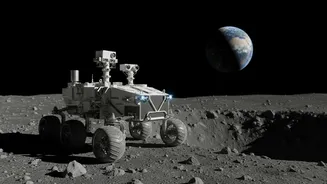
of kilometres. This method is reliable but slow and resource-intensive. It creates a bottleneck; you can only manage so many missions at once. For the Artemis program, which aims to establish a sustainable human presence on the Moon, this Earth-tethered approach isn't scalable. Future astronauts and robotic systems will need to operate with more independence, making decisions in real time without waiting for instructions from home. The goal is to create a system where spacecraft can navigate the lunar environment as seamlessly as we use GPS to drive across town.
Proof of Concept: A GPS Signal at the Moon
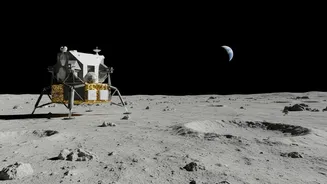
The first major breakthrough came from an experiment that was elegantly simple in its concept: could a receiver on the Moon pick up signals from Earth's existing Global Navigation Satellite System (GNSS), which includes GPS and Europe's Galileo system? The Lunar GNSS Receiver Experiment (LuGRE), an Italian-developed payload that flew on a commercial lander in 2025, answered with a resounding yes. LuGRE successfully acquired satellite signals and calculated its position in real-time while in transit and on the lunar surface. This was a landmark achievement. It proved that the faint signals from our navigation satellites, which primarily serve Earth, spill out far enough into space to be used for lunar navigation. This opens the door to a low-cost, high-efficiency positioning system without first having to build an entirely new satellite constellation around the Moon.
Building the Network: Relays and Smart Satellites
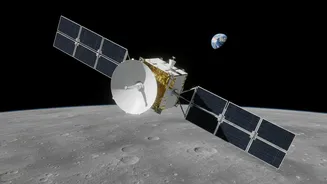
Proving the concept was just step one. Now, NASA and its commercial partners are building out the infrastructure. In July 2026, NASA delivered a key piece of hardware called NavCube3-mini to the company Intuitive Machines. This compact, powerful navigation receiver will fly aboard a lunar relay satellite, designed to provide consistent communication and navigation services for missions, especially around the challenging lunar South Pole where direct line-of-sight to Earth is often blocked. These relays will form a crucial network. At the same time, missions like CAPSTONE 02, slated for 2027, will test how two spacecraft can autonomously navigate and perform proximity operations like docking — skills essential for transferring crews from orbit to landers. These demonstrations are laying the practical groundwork for a fully networked lunar environment.
Sticking the Landing with Laser Precision
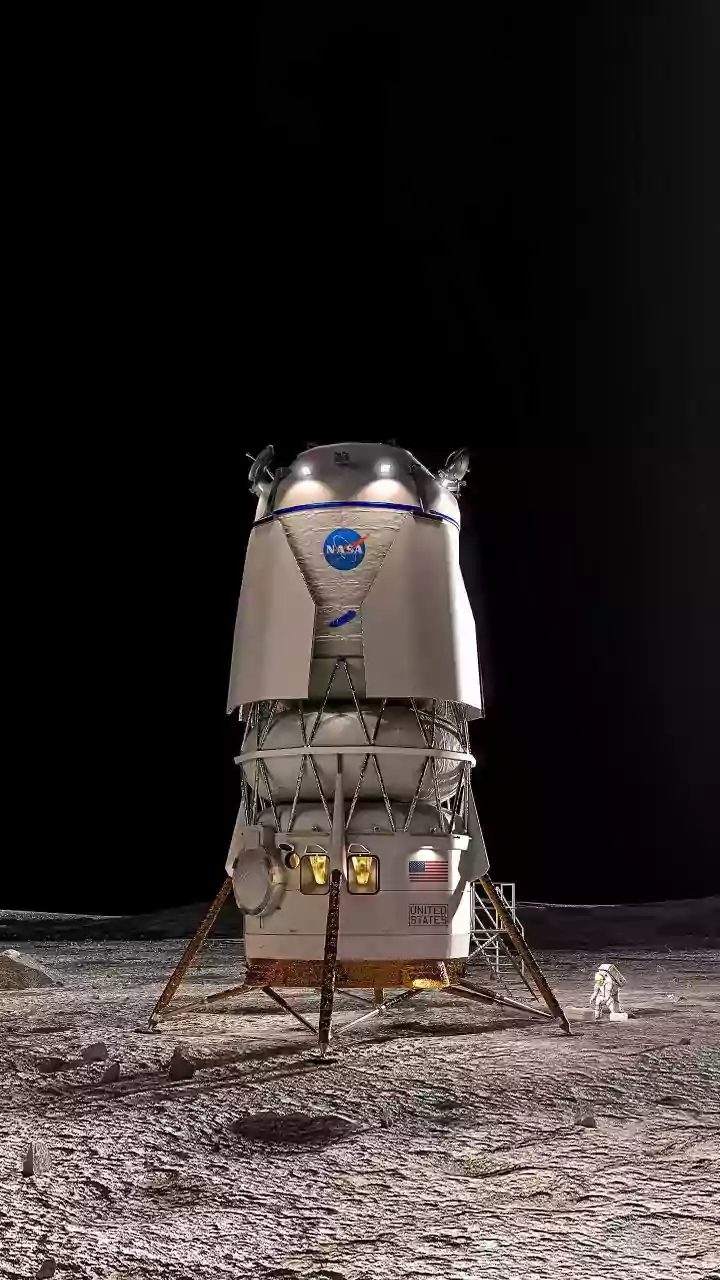
Navigating in orbit is one challenge; landing safely is another. The final moments of descent are among the most dangerous, requiring hyper-accurate data on altitude and velocity. To solve this, NASA has developed Navigation Doppler Lidar (NDL), a system that fires lasers at the lunar surface to get precise readings, independent of lighting conditions or dust kicked up by engine plumes. An NDL instrument flew on a 2024 mission and worked perfectly, validating the technology even though a software glitch prevented the lander from using its data. The next generation of this tech is already being commercialized, with systems like the LUNA sensor being prepared for upcoming landers to give them the ability to identify hazards and execute a soft, autonomous touchdown with unparalleled confidence.
The Big Picture: A Connected Lunar Ecosystem
These individual payloads and experiments are not isolated projects. They are the essential building blocks of LunaNet, an ambitious framework being developed by NASA in collaboration with international partners like the European Space Agency. LunaNet is envisioned as an “internet for the Moon,” a flexible and interoperable network providing communication and navigation services to any mission, whether governmental or commercial. This architecture will give astronauts and rovers situational awareness, real-time data, and even its own search-and-rescue capability. By creating a standardized, reliable network, NASA is moving beyond one-off missions and building the permanent infrastructure needed to support a bustling lunar economy and a new era of scientific discovery.